
Plant Min Zone: 2a
Plant Max Zone: 7b
Sunlight: Full Sun
Water / Rainfall: Low, Average
Soil Quality: Poor, Average
Bloom Season: None
Flower Color: None
Berry / Fruit Color: Brown-Beige
Spring Foliage Color: Blue, Silver-Grey
Summer Foliage Color: Blue, Silver-Grey
Fall Foliage Color: Blue, Silver-Grey
Evergreen Foliage: Yes
Winter Interest: Yes
Scented Flowers: No
Drought Tolerance: Medium
Wet-Feet Tolerance: Low
Humidity Tolerance: Low, Medium
Wind Tolerance: High
Poor Soil Tolerance: Rocky Soils, Acidic Soil (low PH)
Height: 2' - 4'
Width: 2' - 4'
Growth Rate: Extremely Slow
Service Life: Very Long: 10-20 years
Maintenance Need: Almost Zero Maintenance
Spreading Potential: Low
Yearly Trimming Tips: Slow Growing Shrub: No Trimming Needed for Many Years.
Plant Grouping Size: Specimen Planting of 1-3
Best Side of House: East Exposure, North Exposure
Extreme Planting Locations: Resistant to Rabbits
Ornamental Features: Bright Winter Color, Fine Texture, Exceptional / Colorful Foliage
Special Landscape Uses: None
Possible Pest Problems: Root Rot Disease, Insects, Spider Mites
Plant Limitations: Environmental Stress / Decline, Slow to Reach Mature Size, Needs Excellent Drainage
Shippable in 2026: YES
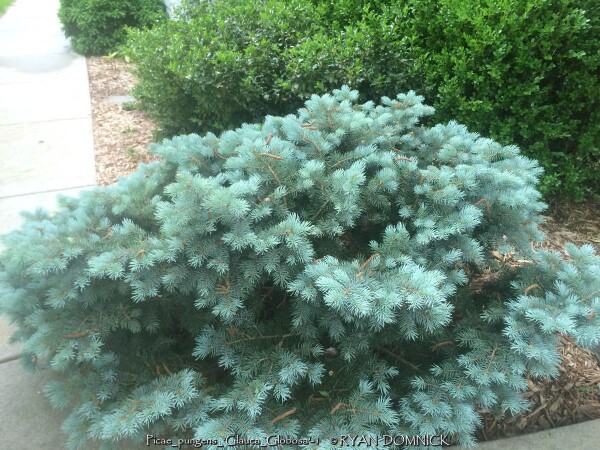
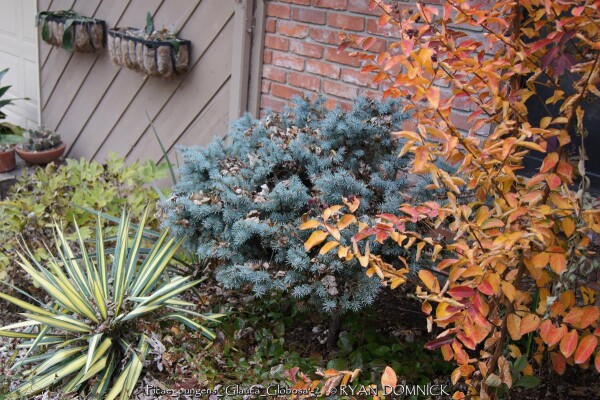
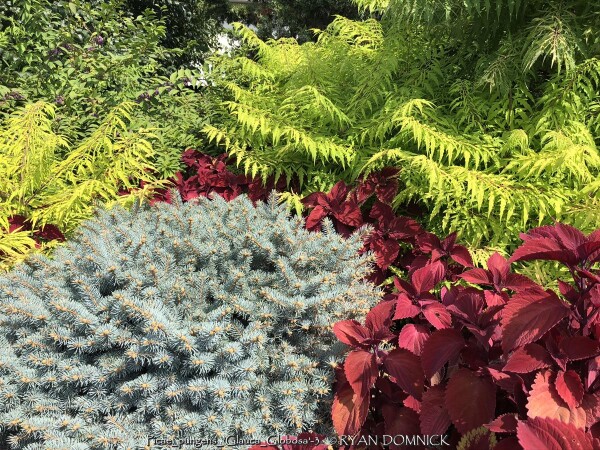
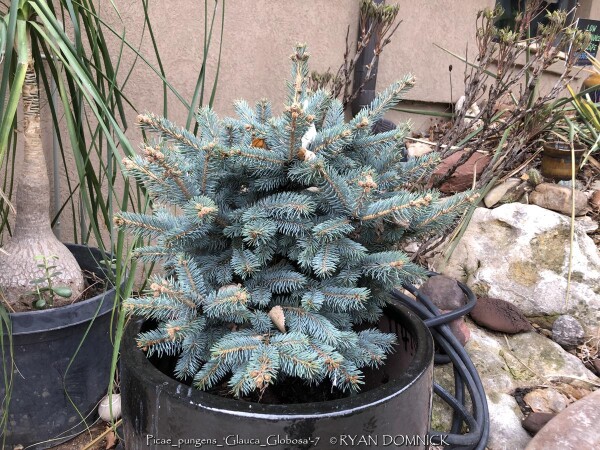
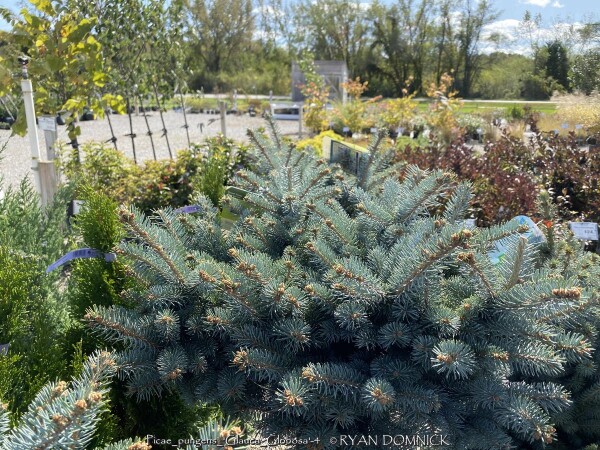
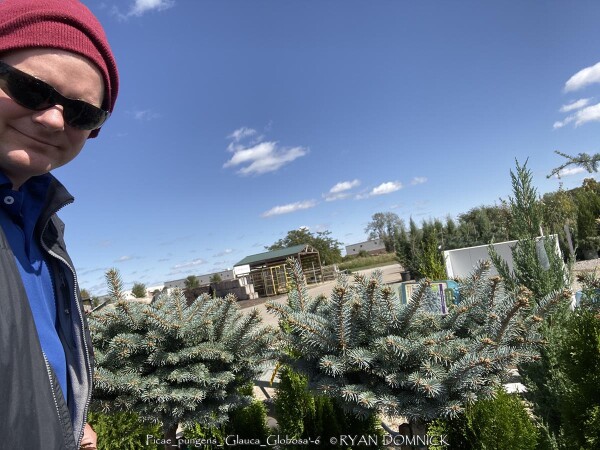
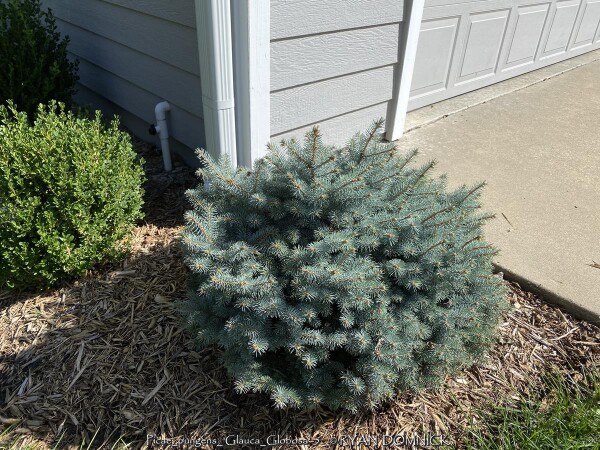
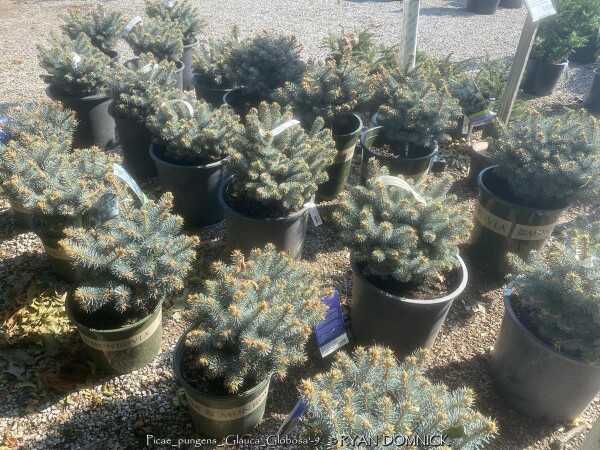
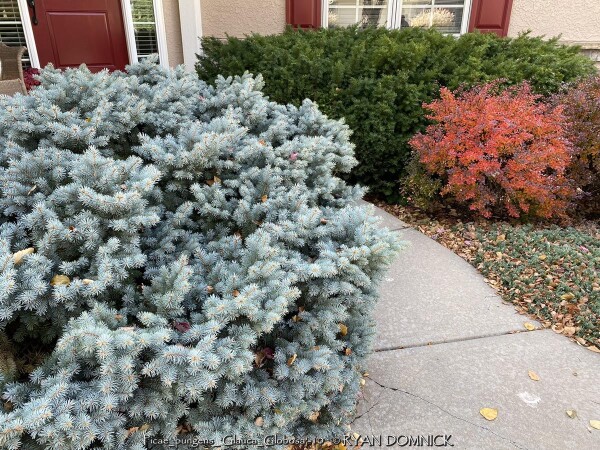
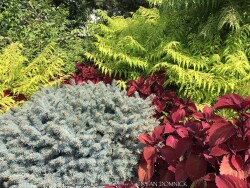
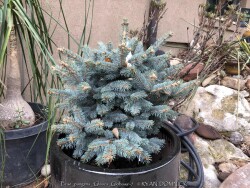
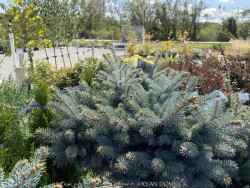
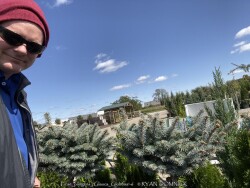
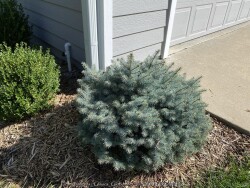
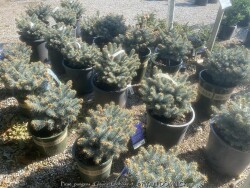
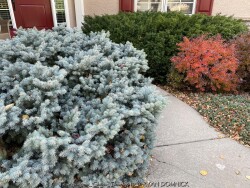
Blue Spruce (Picea pungens) is a truly beautiful and iconic specimen tree rated one of the most popular evergreens! Blue Spruce needles are bluish green with silvery undersides, rigid, and sharply pointed. It is native to the central Rocky Mountains in moist locations from 6000 to 11000 feet in elevation and commonly in ravines. Blue Spruce prefers good airflow, organic soil, and protection from afternoon sun and drying southwestern winds. Because this species is prone to drought and wind desiccation in Kansas, regular year-round watering during dry periods is important for maintaining good overall plant health. Drought tolerance is great however at higher elevations where cool night temperatures prevail. Ultra cold-hardy plants from northern climates normally dislike our long hot humid summers; although we are on the Southern and Eastern edge of this plants adaptability, it still survives reasonably well here. Due to its popularity, mature specimens can be found all throughout Kansas and even in Oklahoma (smaller and stunted). Generally this plant declines after a couple decades of Kansas climate but worth a try in well-cared for garden locations. Growth is slow even in ideal conditions. Look for a cold microclimate planting location such as East or North exposure. In the Kansas landscape, it will provide that classic Colorado mountains landscape theme. Several cultivars exist. Picea pungens 'Glauca Globosa' is an extreme dwarf form growing only 1-2" per year and maxing out at 4-5' after a few decades. The growth form is globular, often grafted on a high or low standard stock. High grafts can sometimes be slightly top-heavy and flop when young so staking is advised. Needle color is intensely silver-blue.