

***Description for this perennial available with future update!*** Eupatorium altissimum is also known as Tall Boneset / Eupatorium.

***Description for this perennial available with future update!***Little Joe Purple Eupatorium / Joe Pye, is also known as Eupatorium dubium 'Little Joe'

***Description for this perennial available with future update!***Gateway Purple Eupatorium / Joe Pye, is also known as Eupatorium maculatum 'Gateway'

The velvety maroon foliage colors and patterns of Red-leaf African Milk Bush (Euphorbia bicompacta var. rubra) are amazing. Usually used as a patio or house plant in Kansas. Grow in full sun to full shade with optional extra watering including that which comes from rainfall. Plants with time to acclimate will thrive in full sun but be careful not to rush it or sunburning will occur. Generally if moving outside for the summer, allow 2-3 weeks of part shade or morning sun before placing in full sun. Repotting may or may not be needed depending on how large you want the plant to grow; plants can continue to grow taller and tolerate extremely root-bound pots but may need wind bracing. Potted plants are hardy to at least 25 degrees F for a short time if kept dry so you are ok if you miss the first light frost. Do not allow the pot with rootball to freeze solid though. Then move into a cold garage, basement, or bright window over the winter with occasional watering. As a winter house plant, it will look presentable all winter long with just a few waterings. As a permanent house plant, provide bright light and allow the soil to dry between waterings for many years of carefree enjoyment. Potted plants are very low maintenance needing very occasional pruning or topping. Leaves are filled with a milky sap which seems to flow out very vigorously even with only the tiniest injury. All members of the genus Euphorbia produce a milky sap called latex that is toxic and can range from a mild irritant to very poisonous.

***Description for this plant available with future update!*** dog-tail cactus
***Description for this plant available with future update!*** dog-tail cactus

Donkeytail Spurge (Euphorbia myrsinites) is grown for its powder-blue/silver whorled foliage that is very architectural and symetrical. The stems creep along the ground in several directions from the main stem. Beautiful spring flowers are chartruse and foliage is solidly evergreen during winter and completely pest-free. Native to rocky and grassy places of southeastern Europe and Asia Minor, Donkeytail Spurge tolerates a wide range of growing conditions except excess moisture. Performance is best in poor soils, including rocky-sandy ones. Root rot can be a problem in poor drainage areas. It prefers full sun but can also grow well in full dry-shade. Individual plants tend to be short lived so allow some self seeding to occur within the group of plants. Due to self-seeding, it is considered a noxious weed in several western states and should not be planted in those areas. However, it is not a problem in Eastern Kansas or further East areas with over 35 inches of rainfall per year. Do not plant in rich moist soils or root rot will probably occur. Donkeytail Spurge is less adapted to consistent summer heat and humidity of zone 7b Southeast parts of the United States. With poisonous foliage, these plants resist deer and rabbit browsing. Wear gloves when handling this plant and avoid the milky sap. Great plant for berms or clammoring over retaining walls in hot West or South exposures in full sun or the opposite full dry-shade!
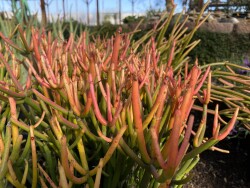
The Pencil Cactus (Euphorbia tirucalli) is a shrub with pencil-thick, green, smooth, succulent branches that provide photosynthesizes long after the foliage is shed. Usually grown as a patio or house plant in Kansas. Grow in full sun to full shade with optional extra watering including that which comes from rainfall. Plants with time to acclimate will thrive in full sun but be careful not to rush it or sunburning will occur. Generally if moving outside for the summer, allow 2-3 weeks of part shade or morning sun before placing in full sun. Repotting may or may not be needed depending on how large you want the plant to grow; plants can continue to grow taller and tolerate extremely root-bound pots but may need wind bracing. Potted plants are hardy to at least 25 degrees F for a short time if kept dry so you are ok if you miss the first light frost. Do not allow the pot with rootball to freeze solid though. Then move into a cold garage, basement, or bright window over the winter with occasional watering. As a winter house plant, it will look presentable all winter long with just a few waterings. As a permanent house plant, provide bright light and allow the soil to dry between waterings for many years of carefree enjoyment. Potted plants are very low maintenance needing very occasional pruning or topping. Stems are filled with a toxic milky sap which seems to flow out very vigorously even with only the tiniest injury. All members of the genus Euphorbia produce a milky sap called latex that is toxic and can range from a mild irritant to very poisonous. Firesticks Pencil Cactus (Euphorbia tirucalli 'Firesticks') is a highly ornamental variety that is more of a chartreuse color with bright orange and red tips developing in response to cold night temperatures.

African Milk Tree (Euphorbia trigona) is a an easy care succulent tree that originates from West Africa. Its triangular columns make a fascinating architectural addition to the room or patio. Usually grown as a patio or house plant in Kansas. Grow in full sun to full shade with optional extra watering including that which comes from rainfall. Plants with time to acclimate will thrive in full sun but be careful not to rush it or sunburning will occur. Generally if moving outside for the summer, allow 2-3 weeks of part shade or morning sun before placing in full sun. Repotting may or may not be needed depending on how large you want the plant to grow; plants can continue to grow taller and tolerate extremely root-bound pots but may need wind bracing. Potted plants are hardy to at least 28 degrees F for a short time if kept dry so you are ok if you miss the first light frost. Do not allow the pot with rootball to freeze solid though. Then move into a cold garage, basement, or bright window over the winter with occasional watering. As a winter house plant, it will look presentable all winter long with just a few waterings. As a permanent house plant, provide bright light and allow the soil to dry between waterings for many years of carefree enjoyment. Potted plants are very low maintenance needing very occasional pruning or topping. Stems are filled with a toxic milky sap which seems to flow out very vigorously even with only the tiniest injury. All members of the genus Euphorbia produce a milky sap called latex that is toxic and can range from a mild irritant to very poisonous. No insect pests will bother this plant.

African Milk Tree (Euphorbia trigona) is a an easy care succulent tree that originates from West Africa. Its triangular columns make a fascinating architectural addition to the room or patio. Usually grown as a patio or house plant in Kansas. Grow in full sun to full shade with optional extra watering including that which comes from rainfall. Plants with time to acclimate will thrive in full sun but be careful not to rush it or sunburning will occur. Generally if moving outside for the summer, allow 2-3 weeks of part shade or morning sun before placing in full sun. Repotting may or may not be needed depending on how large you want the plant to grow; plants can continue to grow taller and tolerate extremely root-bound pots but may need wind bracing. Potted plants are hardy to at least 28 degrees F for a short time if kept dry so you are ok if you miss the first light frost. Do not allow the pot with rootball to freeze solid though. Then move into a cold garage, basement, or bright window over the winter with occasional watering. As a winter house plant, it will look presentable all winter long with just a few waterings. As a permanent house plant, provide bright light and allow the soil to dry between waterings for many years of carefree enjoyment. Potted plants are very low maintenance needing very occasional pruning or topping. Stems are filled with a toxic milky sap which seems to flow out very vigorously even with only the tiniest injury. All members of the genus Euphorbia produce a milky sap called latex that is toxic and can range from a mild irritant to very poisonous. No insect pests will bother this plant. Red African Milk Tree Cactus (Euphorbia trigona 'Rubra') is a fabulous red-leaf cultivar with reddish-maroon stems.