

***Shrub descriptions available with future update!***Myrica cerifera ‘JBG 1000’ Bayside Bonito®, also known as Bayside Bonito Hardy Southern Wax Myrtle is a new evergreen addition to our Lawrence, KS zone 6 display garden. Very salt tolerant for areas near roads where salting is frequent in winter. Bayside Bonito® Southern Wax Myrtle is a big, dense, native evergreen screen without the mess—because it’s a male selection, it won’t drop fruit or scatter seedlings.
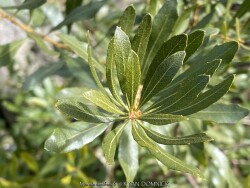
***Shrub descriptions available with future update!***Morella cerifera, also known as Hardy Southern Wax Myrtle is a new evergreen addition to our Lawrence, KS zone 6 display garden. Very salt tolerant for areas near roads where salting is frequent in winter. ***Description for this plant available with future update!***

Blue Candle Cacti (Myrtillocactus geometrizans ) are known for its brilliant powder blue skin. If you touch it however, the powdery silver color permanently rubs off leaving a green skin underneath. Native to tropical deciduous forests in Mexico, it's usually grown as a patio or house plant in Kansas. In the wild, established blue candle cacti are hardy to 25 degrees F for short periods of time. Grow in full sun with occasional extra watering including that which comes from rainfall. Repotting may or may not be needed depending on how large you want the plant to grow; plants can continue to grow taller and tolerate extremely root-bound pots but may need wind bracing. If repotting, make sure to use a sharp draining medium organic cactus mix with plenty of sand and perlite. To play is safe, potted plants are best moved in before night temperatures get below 45 degrees F. It is important to avoid the combination of wet and cold. Before extreme cold occurs, move to a bright interior window over the winter with no watering and keep above freezing. As a winter house plant, it will look presentable all winter long with just no waterings. As a permanent house plant, provide bright light and allow the soil to dry between waterings for many years of carefree enjoyment. Plants grown permanently indoors may begin to elongate stretching for light and lose their spine color. It can be hard to reproduce the intense UV sunlight they need so moving outside for the summer is best. Generally if moving outside for the summer, allow 1-2 weeks of part shade or morning sun before placing in full sun. Plants with time to acclimate will thrive in full sun but be careful not to rush it or sunburning will occur. Potted plants are very low maintenance. I have never seen any insect problems on this plant.
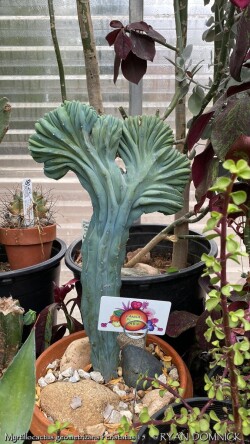
Dinosaur Back Cactus (Myrtillocactus geometrizans f. cristatus) are known for its brilliant powder blue skin on stems that crest and create waves as it grows. If you touch it however, the powdery silver color permanently rubs off leaving a green skin underneath. Native to tropical deciduous forests in Mexico, it's usually grown as a patio or house plant in Kansas. In the wild, established plants are hardy to 25 degrees F for short periods of time. Grow in full sun with occasional extra watering including that which comes from rainfall. Repotting may or may not be needed depending on how large you want the plant to grow; plants can continue to grow taller and tolerate extremely root-bound pots but may need wind bracing. If repotting, make sure to use a sharp draining medium organic cactus mix with plenty of sand and perlite. To play is safe, potted plants are best moved in before night temperatures get below 45 degrees F. It is important to avoid the combination of wet and cold. Before extreme cold occurs, move to a bright interior window over the winter with no watering and keep above freezing. As a winter house plant, it will look presentable all winter long with just no waterings. As a permanent house plant, provide bright light and allow the soil to dry between waterings for many years of carefree enjoyment. Plants grown permanently indoors may begin to elongate stretching for light and lose their spine color. It can be hard to reproduce the intense UV sunlight they need so moving outside for the summer is best. Generally if moving outside for the summer, allow 1-2 weeks of part shade or morning sun before placing in full sun. Plants with time to acclimate will thrive in full sun but be careful not to rush it or sunburning will occur. Potted plants are very low maintenance. I have never seen any insect problems on this plant. Dino is rare and will command a higher price than most other houseplants.