

***Description for this plant available with future update!*** Echinocereus viridiflorus is also known as Green Flowered Hegdehog Cactus (Cold Hardy)>>>>>> With extremely well drained soils and proper siting, this cactus seems to take our excess rainfall in Eastern Kansas. These and other hardy barrel cacti are perfect for a dry mounded xeriscape gardens under south facing roof overhangs where it gets no winter moisture. We are also testing this outside in our Lawrence, KS (zone 6a) crevice garden among other cold-hardy cacti, succulents, and yucca! Watch for future updates-Jan-2025

Grown for its beautiful bluish-green skin and relatively few spines, San Pedro Cactus (Echinopsis / Trichocereus pachanoi) is usually a patio or house plant in Kansas. Because it grows naturally in the Peruvian Andes Mountains at high altitude and with high rainfall, it can withstand temperatures far below that of many other cacti. In the wild, this species is hardy to 15-20 degrees F for short periods of time. Grow in full sun with optional extra watering including that which comes from rainfall. Repotting may or may not be needed depending on how large you want the plant to grow; plants can continue to grow taller and tolerate extremely root-bound pots but may need wind bracing. If repotting, make sure to use a sharp draining medium organic cactus mix with plenty of sand and perlite. To play is safe, potted plants are best moved in before night temperatures get below 45 degrees F. It is important to avoid the combination of wet and cold. Before extreme cold occurs, move to a bright interior window over the winter with no watering and keep above freezing. As a winter house plant, it will look presentable all winter long with just no waterings.(also to prevent lanky winter growth) As a permanent house plant, provide bright light and allow the soil to dry between waterings for many years of carefree enjoyment. Plants grown permanently indoors may begin to elongate stretching for light producing weak new growth. It can be hard to reproduce the intense UV sunlight they need so moving outside for the summer is best. Generally if moving outside for the summer, allow 1-2 weeks of part shade or morning sun before placing in full sun. Plants with time to acclimate will thrive in full sun but be careful not to rush it or sunburning will occur. Potted plants are very low maintenance. I have never seen any insect problems on this plant. The San Pedro cactus contains a number of alkaloids, including the well-studied chemical mescaline. In the US, it is currently legal to cultivate the San Pedro cactus for gardening and ornamental purposes, but not for consumption.

Grown for its beautiful bluish-green skin and relatively few spines, San Pedro Cactus (Echinopsis / Trichocereus pachanoi) is usually a patio or house plant in Kansas. Because it grows naturally in the Peruvian Andes Mountains at high altitude and with high rainfall, it can withstand temperatures far below that of many other cacti. In the wild, this species is hardy to 15-20 degrees F for short periods of time. Grow in full sun with optional extra watering including that which comes from rainfall. Repotting may or may not be needed depending on how large you want the plant to grow; plants can continue to grow taller and tolerate extremely root-bound pots but may need wind bracing. If repotting, make sure to use a sharp draining medium organic cactus mix with plenty of sand and perlite. To play is safe, potted plants are best moved in before night temperatures get below 45 degrees F. It is important to avoid the combination of wet and cold. Before extreme cold occurs, move to a bright interior window over the winter with no watering and keep above freezing. As a winter house plant, it will look presentable all winter long with just no waterings.(also to prevent lanky winter growth) As a permanent house plant, provide bright light and allow the soil to dry between waterings for many years of carefree enjoyment. Plants grown permanently indoors may begin to elongate stretching for light producing weak new growth. It can be hard to reproduce the intense UV sunlight they need so moving outside for the summer is best. Generally if moving outside for the summer, allow 1-2 weeks of part shade or morning sun before placing in full sun. Plants with time to acclimate will thrive in full sun but be careful not to rush it or sunburning will occur. Potted plants are very low maintenance. I have never seen any insect problems on this plant. The San Pedro cactus contains a number of alkaloids, including the well-studied chemical mescaline. In the US, it is currently legal to cultivate the San Pedro cactus for gardening and ornamental purposes, but not for consumption.

Grown for its beautiful bluish-green skin and relatively few spines, San Pedro Cactus (Echinopsis / Trichocereus pachanoi) is usually a patio or house plant in Kansas. Because it grows naturally in the Peruvian Andes Mountains at high altitude and with high rainfall, it can withstand temperatures far below that of many other cacti. In the wild, this species is hardy to 15-20 degrees F for short periods of time. Grow in full sun with optional extra watering including that which comes from rainfall. Repotting may or may not be needed depending on how large you want the plant to grow; plants can continue to grow taller and tolerate extremely root-bound pots but may need wind bracing. If repotting, make sure to use a sharp draining medium organic cactus mix with plenty of sand and perlite. To play is safe, potted plants are best moved in before night temperatures get below 45 degrees F. It is important to avoid the combination of wet and cold. Before extreme cold occurs, move to a bright interior window over the winter with no watering and keep above freezing. As a winter house plant, it will look presentable all winter long with just no waterings.(also to prevent lanky winter growth) As a permanent house plant, provide bright light and allow the soil to dry between waterings for many years of carefree enjoyment. Plants grown permanently indoors may begin to elongate stretching for light producing weak new growth. It can be hard to reproduce the intense UV sunlight they need so moving outside for the summer is best. Generally if moving outside for the summer, allow 1-2 weeks of part shade or morning sun before placing in full sun. Plants with time to acclimate will thrive in full sun but be careful not to rush it or sunburning will occur. Potted plants are very low maintenance. I have never seen any insect problems on this plant. The San Pedro cactus contains a number of alkaloids, including the well-studied chemical mescaline. In the US, it is currently legal to cultivate the San Pedro cactus for gardening and ornamental purposes, but not for consumption.

Grown for its beautiful bluish-green skin and relatively few spines, San Pedro Cactus (Echinopsis / Trichocereus pachanoi) is usually a patio or house plant in Kansas. Because it grows naturally in the Peruvian Andes Mountains at high altitude and with high rainfall, it can withstand temperatures far below that of many other cacti. In the wild, this species is hardy to 15-20 degrees F for short periods of time. Grow in full sun with optional extra watering including that which comes from rainfall. Repotting may or may not be needed depending on how large you want the plant to grow; plants can continue to grow taller and tolerate extremely root-bound pots but may need wind bracing. If repotting, make sure to use a sharp draining medium organic cactus mix with plenty of sand and perlite. To play is safe, potted plants are best moved in before night temperatures get below 45 degrees F. It is important to avoid the combination of wet and cold. Before extreme cold occurs, move to a bright interior window over the winter with no watering and keep above freezing. As a winter house plant, it will look presentable all winter long with just no waterings.(also to prevent lanky winter growth) As a permanent house plant, provide bright light and allow the soil to dry between waterings for many years of carefree enjoyment. Plants grown permanently indoors may begin to elongate stretching for light producing weak new growth. It can be hard to reproduce the intense UV sunlight they need so moving outside for the summer is best. Generally if moving outside for the summer, allow 1-2 weeks of part shade or morning sun before placing in full sun. Plants with time to acclimate will thrive in full sun but be careful not to rush it or sunburning will occur. Potted plants are very low maintenance. I have never seen any insect problems on this plant. The San Pedro cactus contains a number of alkaloids, including the well-studied chemical mescaline. In the US, it is currently legal to cultivate the San Pedro cactus for gardening and ornamental purposes, but not for consumption.

Sea Urchin Cactus (Echinopsis sp.) is a large genus of cacti native to South America, sometimes known as hedgehog cactus. Grown for its beautiful tubular flowers, it's usually a patio or house plant in Kansas. In the wild, some species are hardy to 15-20 degrees F for short periods of time. Grow in full sun with no extra watering except that which comes from rainfall. Repotting may or may not be needed depending on how large you want the plant to grow; plants can continue to grow taller and tolerate extremely root-bound pots but may need wind bracing. If repotting, make sure to use a sharp draining low organic cactus mix with plenty of sand and perlite. To play is safe, potted plants are best moved in before night temperatures get below 45 degrees F. It is important to avoid the combination of wet and cold. Before extreme cold occurs, move to a bright interior window over the winter with no watering and keep above freezing. As a winter house plant, it will look presentable all winter long with just no waterings. As a permanent house plant, provide bright light and allow the soil to dry between waterings for many years of carefree enjoyment. Plants grown permanently indoors may begin to elongate stretching for light and lose their spine color. It can be hard to reproduce the intense UV sunlight they need so moving outside for the summer is best. Generally if moving outside for the summer, allow 1-2 weeks of part shade or morning sun before placing in full sun. Plants with time to acclimate will thrive in full sun but be careful not to rush it or sunburning will occur. Potted plants are very low maintenance. I have never seen any insect problems on this plant.

***Shrub descriptions available with future update!*** Elaegnus pungens 'Fruitlandii' is also known as Silverberry Elaegnus >>>>>>>>>>>>Repeated or successive cold winters with complete foliage loss seem to be an issue with this and many evergreen zone 6/7 plants. One occasional difficult winter followed by mild winters is more tolerable. This is, however, a very vigorous growing plant so generally will recover in one summer with decent watering and fertilizer.

***Shrub descriptions available with future update!*** Elaegnus pungens 'Fruitlandii' is also known as Silverberry Elaegnus >>>>>>>>>>>>Repeated or successive cold winters with complete foliage loss seem to be an issue with this and many evergreen zone 6/7 plants. One occasional difficult winter followed by mild winters is more tolerable. This is, however, a very vigorous growing plant so generally will recover in one summer with decent watering and fertilizer.

***Shrub descriptions available with future update!***Variegated Shrub Aralia, is also known as Eleutherococcus / Acanthopanax sieboldianus 'Variegatus'
***Description for this plant available with future update!***

Barrenwort (Epimedium) features compact dainty mounds of green to colored weed-resistant foliage. Wispy flowers appear above emerging foliage in mid-spring. Improved breeding has resulted in many different flower colors even including orange. Semi-evergreen foliage can sometimes look bedraggled by late summer if there is too much overhead watering and humidity. Barrenwort prefers average to dry garden conditions and even thrive and dry shade. Plantings can thrive for decades if in the right spot; there is no such thing as overcrowding for Barrenwort. When planted in mass, growth is slow at first but eventually a cake-like rhizome system will form and completely smother out any weeds and compete well with trees for water and nutrients. While barrenwort can tolerate full sun, they prefer part to full shade. Sun burning is possible with temperatures over 100° and there are better plants to use in hot areas. Due to slow spreading growth, you shouldn't leave very much room in-between barrenwort plants or you will be waiting many years for the patch to fill in. Weeds can be a problem in that open area between plants if spacing is too wide. We recommend 9-12" spacing and use for small nooks in the shade garden. If planning for a larger area, still figure on the tight spacing but allow for a higher budget that you will consider a permanent investment. Barrenwort is a real trooper for the dry shade garden!
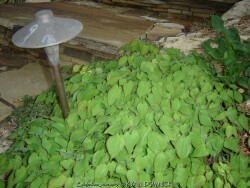
Barrenwort (Epimedium) features compact dainty mounds of green to colored weed-resistant foliage. Wispy flowers appear above emerging foliage in mid-spring. Improved breeding has resulted in many different flower colors even including orange. Semi-evergreen foliage can sometimes look bedraggled by late summer if there is too much overhead watering and humidity. Barrenwort prefers average to dry garden conditions and even thrive and dry shade. Plantings can thrive for decades if in the right spot; there is no such thing as overcrowding for Barrenwort. When planted in mass, growth is slow at first but eventually a cake-like rhizome system will form and completely smother out any weeds and compete well with trees for water and nutrients. While barrenwort can tolerate full sun, they prefer part to full shade. Sun burning is possible with temperatures over 100° and there are better plants to use in hot areas. Due to slow spreading growth, you shouldn't leave very much room in-between barrenwort plants or you will be waiting many years for the patch to fill in. Weeds can be a problem in that open area between plants if spacing is too wide. We recommend 9-12" spacing and use for small nooks in the shade garden. If planning for a larger area, still figure on the tight spacing but allow for a higher budget that you will consider a permanent investment. Barrenwort is a real trooper for the dry shade garden! Epimedium x rubrum has reddish new growth and red flowers.

Barrenwort (Epimedium) features compact dainty mounds of green to colored weed-resistant foliage. Wispy flowers appear above emerging foliage in mid-spring. Improved breeding has resulted in many different flower colors even including orange. Semi-evergreen foliage can sometimes look bedraggled by late summer if there is too much overhead watering and humidity. Barrenwort prefers average to dry garden conditions and even thrive and dry shade. Plantings can thrive for decades if in the right spot; there is no such thing as overcrowding for Barrenwort. When planted in mass, growth is slow at first but eventually a cake-like rhizome system will form and completely smother out any weeds and compete well with trees for water and nutrients. While barrenwort can tolerate full sun, they prefer part to full shade. Sun burning is possible with temperatures over 100° and there are better plants to use in hot areas. Due to slow spreading growth, you shouldn't leave very much room in-between barrenwort plants or you will be waiting many years for the patch to fill in. Weeds can be a problem in that open area between plants if spacing is too wide. We recommend 9-12" spacing and use for small nooks in the shade garden. If planning for a larger area, still figure on the tight spacing but allow for a higher budget that you will consider a permanent investment. Barrenwort is a real trooper for the dry shade garden! Epimedium x versicolor 'Sulphureum' is a faster spreading, more robust yellow flowering variety. Albeit still very slow compared to other perennials.

The Zigzag Cactus / Fishbone Cactus, also known as Rhipsalis salicornioides, is a epiphyte jungle cactus native to South America. . It produces thin, flat, succulent leaves that resemble a beer bottle. Originating from a dry climates but not a true desert, it is much more moisture tolerant than a typical derert barrel cactus. Succulents are usually spineless and grown for their beautiful shapes, color and texture. Cacti are known for their spines, unusual shapes and beautiful flowers. Both succulents and cacti store water in their fleshy tissues. And can survive long periods without water. Cacti and succulents are usually grown as a deck/patio plant or house plant in Kansas. Grow in full sun with little to no extra watering except that which comes from rainfall. Generally, plants may be brought out in Late May through Early October in our zone 6a Lawrence, KS climate. To play is safe, potted plants are best moved in before autumn leaves begin to drop and before night temperatures get below 45 degrees F. It is very important to avoid the combination of wet and cold. Move to a bright interior window over the winter with little to no watering and keep above 50 degrees F. As a winter house plant, it will look presentable all winter long with little to no waterings. As a permanent house plant, provide bright light and allow the soil to dry completely between waterings and you will get many years of carefree enjoyment. Plants grown permanently indoors may eventually begin to elongate stretching for light and lose their spine color. It can be hard to reproduce the intense UV sunlight they need when growing indoors so moving outside for the summer is best. Generally if moving outside for the summer, allow 1-2 weeks of part shade or morning sun before placing in full sun. Plants with time to acclimate will thrive in full sun but be careful not to rush it or sunburning may occur. Repotting may or may not be needed depending on how large you want the plant to grow; plants can continue to grow taller and tolerate extremely root-bound pots but may need wind bracing. If repotting, make sure to use a sharp draining low organic cactus mix with plenty of sand and perlite but avoid peat moss. The “soil” most commercial cacti are potted in to too peaty and light weight. This soil becomes hydrophobic and shrinks after becoming bone dry and difficult to re wet again. Cacti never grow in peat-based soils in nature; this “Soil” is only good for shipping because of the light weight. Potted plants are very low maintenance but watch for scale and mealybugs that may hide beneath the cover of spines. The best pest removal approach is to periodically wash the cactus off. Achieve this with a water nozzle or hose breaker turned mostly off to increase the pressure from the blast of water. This high-pressured water kills the pests without damaging the thick cactus skin. Here are some little-known or rare factoids about cacti: 1. The "spines" are actually modified leaves filled with sap at first, then quickly drying out to form the spines! 2. Many cacti have bright colored flowers that mainly attract bees, while some tubular flowering types attract hummingbirds and bats. 3. Late on the evolutionary timeline, cacti fossils are rare to non-existent. Cacti are native almost exclusively to the Americas, while succulents can include a much larger plant palette be from any dry area in the world. 4. Some cactus plants have been known to survive more than 2 years without water. 5. Some cacti first evolved in a dry climate that later became wetter again. For example: several jungle species live as epiphytes in trees to achieve the fast drainage they need.

The Queen of the Night / Dutchman's Pipe Cactus, also known as Epiphyllum oxypetalum, is a epiphyte jungle cactus native to South America. It produces thin, flat, succulent winged stems that resemble a flattened paddle. Hanging flowers only open at night and are highly fragrant attracting bats. Originating from a dry climates but not a true desert, it is much more moisture tolerant than a typical derert barrel cactus. Succulents are usually spineless and grown for their beautiful shapes, color and texture. Cacti are known for their spines, unusual shapes and beautiful flowers. Both succulents and cacti store water in their fleshy tissues. And can survive long periods without water. Cacti and succulents are usually grown as a deck/patio plant or house plant in Kansas. Grow in full sun with little to no extra watering except that which comes from rainfall. Generally, plants may be brought out in Late May through Early October in our zone 6a Lawrence, KS climate. To play is safe, potted plants are best moved in before autumn leaves begin to drop and before night temperatures get below 45 degrees F. It is very important to avoid the combination of wet and cold. Move to a bright interior window over the winter with little to no watering and keep above 50 degrees F. As a winter house plant, it will look presentable all winter long with little to no waterings. As a permanent house plant, provide bright light and allow the soil to dry completely between waterings and you will get many years of carefree enjoyment. Plants grown permanently indoors may eventually begin to elongate stretching for light and lose their spine color. It can be hard to reproduce the intense UV sunlight they need when growing indoors so moving outside for the summer is best. Generally if moving outside for the summer, allow 1-2 weeks of part shade or morning sun before placing in full sun. Plants with time to acclimate will thrive in full sun but be careful not to rush it or sunburning may occur. Repotting may or may not be needed depending on how large you want the plant to grow; plants can continue to grow taller and tolerate extremely root-bound pots but may need wind bracing. If repotting, make sure to use a sharp draining low organic cactus mix with plenty of sand and perlite but avoid peat moss. The “soil” most commercial cacti are potted in to too peaty and light weight. This soil becomes hydrophobic and shrinks after becoming bone dry and difficult to re wet again. Cacti never grow in peat-based soils in nature; this “Soil” is only good for shipping because of the light weight. Potted plants are very low maintenance but watch for scale and mealybugs that may hide beneath the cover of spines. The best pest removal approach is to periodically wash the cactus off. Achieve this with a water nozzle or hose breaker turned mostly off to increase the pressure from the blast of water. This high-pressured water kills the pests without damaging the thick cactus skin. Here are some little-known or rare factoids about cacti: 1. The "spines" are actually modified leaves filled with sap at first, then quickly drying out to form the spines! 2. Many cacti have bright colored flowers that mainly attract bees, while some tubular flowering types attract hummingbirds and bats. 3. Late on the evolutionary timeline, cacti fossils are rare to non-existent. Cacti are native almost exclusively to the Americas, while succulents can include a much larger plant palette be from any dry area in the world. 4. Some cactus plants have been known to survive more than 2 years without water. 5. Some cacti first evolved in a dry climate that later became wetter again. For example: several jungle species live as epiphytes in trees to achieve the fast drainage they need.

***Description for this plant available with future update!*** Epipremnum aureum 'Jade' is also known as Jade Pothos (Tropical).

***Description for this plant available with future update!*** Epipremnum aureum 'Neon' is also known as Neon Pothos (Tropical).

Horsetail Reed (Equisetum hyemale) is a very primitive "Dinosaur" plant with a one-of-a-kind appearance. Tube-like segmented stems grow vertical creating a dense bamboo-like appearance when grown properly in a pot or edging. The evergreen stems (down to -30 degrees F) are particularly noticeable in winter and can provide significant interest to the landscape. It is mostly used as a native erosion control plant in large areas along streams and wet wooded areas. For the home garden, the species is generally too aggressive to mix with other plants unless contained. The best use is as a marginal water garden plant in a sealed container. Horsetail rhizomes cannot spread thru open water or hop over an edge in the open air. If planted in the garden and once established, it is extremely difficult to remove by digging because its rhizomes spread wide and deep. Roundup is not effective against primitive plants such as horsetail and mosses. If planted in the garden, use professional soil barriers or no-fail sealed planters (no drainage holes ok) to restrict growth. Native to large portions of Eurasia, Canada and the U.S., including Kansas, equisetum is the single surviving genus of a class of primitive vascular plants dating back to the mid-Devonian period (350 + million years ago). As a plant evolved before twigs and leaves, Horsetail Reed is a non-flowering, seedless plant that reproduces by spores.

***Description for this perennial available with future update!***Robin's Plantain / Fleabane, is also known as Erigeron pulchellus var. pulchellus 'Lynnhaven Carpet'
***Description for this perennial available with future update!*** Eryngium planum 'Blue Glitter' is also known as Blue Glitter Sea Holly.

***Description for this perennial available with future update!***Rattlesnake Master / Eryngium, is also known as Eryngium yuccifolium

***Description for this hardy tropical available with future update!*** Erythrina x bidwillii is also known as Red Hybrid Coral Bean >>>>>>>>>>>In our trial gardens in Lawrence, KS (zone 6a), an established specimen planted on the south wall of a house with 6-12" of leaf mulch survived -17 degrees F. During the arctic blast of February, 2021, lows down to -17 degrees F on Feb 16th, 2021 were recorded. The longevity of this cold blast was also impressive: 10 days on a row with highs of 10-15 degrees F or lower, 8 nights of lows in the single digits and negatives, and 36 strait hours of 0 degrees F and mostly lower.
***Description for this plant available with future update!*** With extremely well drained soils and proper siting, this cactus seems to take our excess rainfall in Eastern Kansas. These and other hardy barrel cacti are perfect for a dry mounded xeriscape gardens under south facing roof overhangs where it gets no winter moisture. We are also testing this outside in our Lawrence, KS (zone 6a) crevice garden among other cold-hardy cacti, succulents, and yucca! Watch for future updates-Jan-2025
***Description for this plant available with future update!*** With extremely well drained soils and proper siting, this cactus seems to take our excess rainfall in Eastern Kansas. These and other hardy barrel cacti are perfect for a dry mounded xeriscape gardens under south facing roof overhangs where it gets no winter moisture. We are also testing this outside in our Lawrence, KS (zone 6a) crevice garden among other cold-hardy cacti, succulents, and yucca! Watch for future updates-Jan-2025

***Description for this hardy tropical available with future update!*** Eucomis 'Purple Reign' is also known as Purple Reign Pineapple Lily / Eucomis.

Safari Adventure Pineapple Lily (Eucomis comosa 'Safari Adventure') is typically grown for their wide tropical foliage and pineapple-like flowers. Deep purple foliage contrasts well with many other flower colors. The plants are temperate and subtropical herbaceous perennial bulbs native to areas with a summer wet season and dry winter. Pineapple Lily are hardy outside as a perennial when established and with minimal effort at least up to zone 6a. During the growing season, fertilize, water regularly, and plant in full sun. Plant these bulbs in the ground at least 6-8" deep with 3-4" of mulch to enjoy a wonderful tropical effect! Foliage may look bedwraggled by fall so it is ok to cut back foliage at that time. They can also be grown as a flowering summer patio plant. If growing as a potted plant and trying to overwinter, allowing the foliage to frost is ok, it will not kill the root system. However, do not allow the pot with rootball to freeze solid or go below 20 degrees for more than a few hours; move into a cold garage or basement over the winter with no watering. Cut back and allow to go dormant and place entire pot back out in April or May with a time-release fertilizer. Another more labor intensive way to overwinter pineapple lily is to remove them from the dirt, dust with fungicide, place in box with sawdust, and keep in the refrigerator. We consider this method old-fashioned and too much work but ok if you only want to save a few bulbs. If digging from the ground in colder zones, just save a big chunk with the dirt intact and place into a large pot in the garage.

Sparkling Burgundy Pineapple Lily (Eucomis comosa 'Sparkling Burgundy') are typically grown for their wide tropical foliage and pineapple-like flowers. Deep purple foliage contrasts well with many other flower colors. The plants are temperate and subtropical herbaceous perennial bulbs native to areas with a summer wet season and dry winter. Pineapple Lily are hardy outside as a perennial when established and with minimal effort at least up to zone 6a. During the growing season, fertilize, water regularly, and plant in full sun. Plant these bulbs in the ground at least 6-8" deep with 3-4" of mulch to enjoy a wonderful tropical effect! Foliage may look bedwraggled by fall so it is ok to cut back foliage at that time. They can also be grown as a flowering summer patio plant. If growing as a potted plant and trying to overwinter, allowing the foliage to frost is ok, it will not kill the root system. However, do not allow the pot with rootball to freeze solid or go below 20 degrees for more than a few hours; move into a cold garage or basement over the winter with no watering. Cut back and allow to go dormant and place entire pot back out in April or May with a time-release fertilizer. Another more labor intensive way to overwinter pineapple lily is to remove them from the dirt, dust with fungicide, place in box with sawdust, and keep in the refrigerator. We consider this method old-fashioned and too much work but ok if you only want to save a few bulbs. If digging from the ground in colder zones, just save a big chunk with the dirt intact and place into a large pot in the garage. In our display garden in Lawrence, KS (zone 6a), an established specimen planted over 4-6" deep and mulched 2-3" with wood mulch survived -17 degrees F. During the arctic blast of February, 2021, lows down to -17 degrees F on Feb 16th, 2021 were recorded. The longevity of this cold blast was also impressive: 10 days on a row with highs of 10-15 degrees F or lower, 8 nights of lows in the single digits and negatives, and 36 straight hours of 0 degrees F and mostly lower. This eucomis has survived for over 10 years and other extreme cold blasts in the past.

Giant Pineapple Lily (Eucomis pallidiflora ssp. pole-evansii) are typically grown for their wide tropical foliage and giant pineapple-like flowers. Everything about this pineapple lily is large! Bright green foliage upto 3 feet tall contrasts well with many other flower colors. The plants are temperate and subtropical herbaceous perennial bulbs native to areas with a summer wet season and dry winter. Pineapple Lily are hardy outside as a perennial when established and with minimal effort at least up to zone 6a. During the growing season, fertilize, water regularly, and plant in full sun. Plant these bulbs in the ground at least 8-12" deep with 3-4" of mulch to enjoy a wonderful tropical effect! Foliage may look bedwraggled by fall so it is ok to cut back foliage at that time. They can also be grown as a flowering summer patio plant. If growing as a potted plant and trying to overwinter, allowing the foliage to frost is ok, it will not kill the root system. However, do not allow the pot with rootball to freeze solid or go below 20 degrees for more than a few hours; move into a cold garage or basement over the winter with no watering. Cut back and allow to go dormant and place entire pot back out in April or May with a time-release fertilizer. Another more labor intensive way to overwinter pineapple lily is to remove them from the dirt, dust with fungicide, place in box with sawdust, and keep in the refrigerator. We consider this method old-fashioned and too much work but ok if you only want to save a few bulbs. If digging from the ground in colder zones, just save a big chunk with the dirt intact and place into a large pot in the garage. In our display garden in Lawrence, KS (zone 6a), an established specimen planted over 4-6" deep and mulched 2-3" with wood mulch survived -17 degrees F. During the arctic blast of February, 2021, lows down to -17 degrees F on Feb 16th, 2021 were recorded. The longevity of this cold blast was also impressive: 10 days on a row with highs of 10-15 degrees F or lower, 8 nights of lows in the single digits and negatives, and 36 straight hours of 0 degrees F and mostly lower. This eucomis has survived for over 3 years now.

***Shrub descriptions available with future update!*** Euonymus alatus 'Fire Ball' is also known as Fire Ball Improved Burning Bush >>>>>>>>>>>> Spring Meadow Nursery says "Better stem hardiness than typical dwarf burning bush. Fire Ball® burning bush is an improved selection of compact burning bush with tighter branching and superior hardiness. Other varieties of burning bush may experience die-back during harsh winters; Fire Ball® euonymus has experienced zero damage even in the coldest of Midwestern winters"

***Shrub descriptions available with future update!***Native Strawberry Bush, is also known as Euonymus americanus
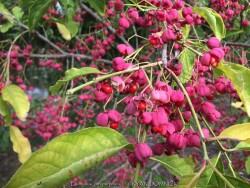

Purple Wintercreeper (Euonymus fortunei 'Coloratus') makes a durable evergreen groundcover that starts off slow, but grows quickly after a few years to forms a dense, weed-smothering mat of foliage. As one of the most dry-shade tolerant plants there is, it's thick leathery leaves seem to handle everything nature has to throw at it! That being said, beware that this is an extremely vigorous plant that crowds out most weeds and is itself weed-like, with a very spreading growth habit. After establishment, it is high maintenance if it has already filled the space and you don't want it to spread any further: it even resists Round-up! It will climb trees if you allow it, generally using it for support to allow its mature form to develop and flowering to occur. From there, red-orange seeds develop that are spread everywhere and will overrun nearby native forests in Eastern Kansas. For the home garden, the species is generally too aggressive to mix with other plants. At our plant nursery, since we cannot eradicate it, we have allowed it to cover a tall fence along the back of our property where it has crept in from the neighboring woods. It does form a nice evergreen screen as it weaves into the trees.

***Description for this perennial available with future update!***Phantom Dwarf Purple Eupatorium, is also known as Eupatorium 'Phantom'

***Description for this perennial available with future update!*** Eupatorium altissimum is also known as Tall Boneset / Eupatorium.

***Description for this perennial available with future update!***Little Joe Purple Eupatorium / Joe Pye, is also known as Eupatorium dubium 'Little Joe'

***Description for this perennial available with future update!***Gateway Purple Eupatorium / Joe Pye, is also known as Eupatorium maculatum 'Gateway'

The velvety maroon foliage colors and patterns of Red-leaf African Milk Bush (Euphorbia bicompacta var. rubra) are amazing. Usually used as a patio or house plant in Kansas. Grow in full sun to full shade with optional extra watering including that which comes from rainfall. Plants with time to acclimate will thrive in full sun but be careful not to rush it or sunburning will occur. Generally if moving outside for the summer, allow 2-3 weeks of part shade or morning sun before placing in full sun. Repotting may or may not be needed depending on how large you want the plant to grow; plants can continue to grow taller and tolerate extremely root-bound pots but may need wind bracing. Potted plants are hardy to at least 25 degrees F for a short time if kept dry so you are ok if you miss the first light frost. Do not allow the pot with rootball to freeze solid though. Then move into a cold garage, basement, or bright window over the winter with occasional watering. As a winter house plant, it will look presentable all winter long with just a few waterings. As a permanent house plant, provide bright light and allow the soil to dry between waterings for many years of carefree enjoyment. Potted plants are very low maintenance needing very occasional pruning or topping. Leaves are filled with a milky sap which seems to flow out very vigorously even with only the tiniest injury. All members of the genus Euphorbia produce a milky sap called latex that is toxic and can range from a mild irritant to very poisonous.
***Description for this plant available with future update!*** dog-tail cactus
***Description for this plant available with future update!*** dog-tail cactus

Donkeytail Spurge (Euphorbia myrsinites) is grown for its powder-blue/silver whorled foliage that is very architectural and symetrical. The stems creep along the ground in several directions from the main stem. Beautiful spring flowers are chartruse and foliage is solidly evergreen during winter and completely pest-free. Native to rocky and grassy places of southeastern Europe and Asia Minor, Donkeytail Spurge tolerates a wide range of growing conditions except excess moisture. Performance is best in poor soils, including rocky-sandy ones. Root rot can be a problem in poor drainage areas. It prefers full sun but can also grow well in full dry-shade. Individual plants tend to be short lived so allow some self seeding to occur within the group of plants. Due to self-seeding, it is considered a noxious weed in several western states and should not be planted in those areas. However, it is not a problem in Eastern Kansas or further East areas with over 35 inches of rainfall per year. Do not plant in rich moist soils or root rot will probably occur. Donkeytail Spurge is less adapted to consistent summer heat and humidity of zone 7b Southeast parts of the United States. With poisonous foliage, these plants resist deer and rabbit browsing. Wear gloves when handling this plant and avoid the milky sap. Great plant for berms or clammoring over retaining walls in hot West or South exposures in full sun or the opposite full dry-shade!

The Pencil Cactus (Euphorbia tirucalli) is a shrub with pencil-thick, green, smooth, succulent branches that provide photosynthesizes long after the foliage is shed. Usually grown as a patio or house plant in Kansas. Grow in full sun to full shade with optional extra watering including that which comes from rainfall. Plants with time to acclimate will thrive in full sun but be careful not to rush it or sunburning will occur. Generally if moving outside for the summer, allow 2-3 weeks of part shade or morning sun before placing in full sun. Repotting may or may not be needed depending on how large you want the plant to grow; plants can continue to grow taller and tolerate extremely root-bound pots but may need wind bracing. Potted plants are hardy to at least 25 degrees F for a short time if kept dry so you are ok if you miss the first light frost. Do not allow the pot with rootball to freeze solid though. Then move into a cold garage, basement, or bright window over the winter with occasional watering. As a winter house plant, it will look presentable all winter long with just a few waterings. As a permanent house plant, provide bright light and allow the soil to dry between waterings for many years of carefree enjoyment. Potted plants are very low maintenance needing very occasional pruning or topping. Stems are filled with a toxic milky sap which seems to flow out very vigorously even with only the tiniest injury. All members of the genus Euphorbia produce a milky sap called latex that is toxic and can range from a mild irritant to very poisonous. Firesticks Pencil Cactus (Euphorbia tirucalli 'Firesticks') is a highly ornamental variety that is more of a chartreuse color with bright orange and red tips developing in response to cold night temperatures.

African Milk Tree (Euphorbia trigona) is a an easy care succulent tree that originates from West Africa. Its triangular columns make a fascinating architectural addition to the room or patio. Usually grown as a patio or house plant in Kansas. Grow in full sun to full shade with optional extra watering including that which comes from rainfall. Plants with time to acclimate will thrive in full sun but be careful not to rush it or sunburning will occur. Generally if moving outside for the summer, allow 2-3 weeks of part shade or morning sun before placing in full sun. Repotting may or may not be needed depending on how large you want the plant to grow; plants can continue to grow taller and tolerate extremely root-bound pots but may need wind bracing. Potted plants are hardy to at least 28 degrees F for a short time if kept dry so you are ok if you miss the first light frost. Do not allow the pot with rootball to freeze solid though. Then move into a cold garage, basement, or bright window over the winter with occasional watering. As a winter house plant, it will look presentable all winter long with just a few waterings. As a permanent house plant, provide bright light and allow the soil to dry between waterings for many years of carefree enjoyment. Potted plants are very low maintenance needing very occasional pruning or topping. Stems are filled with a toxic milky sap which seems to flow out very vigorously even with only the tiniest injury. All members of the genus Euphorbia produce a milky sap called latex that is toxic and can range from a mild irritant to very poisonous. No insect pests will bother this plant.

African Milk Tree (Euphorbia trigona) is a an easy care succulent tree that originates from West Africa. Its triangular columns make a fascinating architectural addition to the room or patio. Usually grown as a patio or house plant in Kansas. Grow in full sun to full shade with optional extra watering including that which comes from rainfall. Plants with time to acclimate will thrive in full sun but be careful not to rush it or sunburning will occur. Generally if moving outside for the summer, allow 2-3 weeks of part shade or morning sun before placing in full sun. Repotting may or may not be needed depending on how large you want the plant to grow; plants can continue to grow taller and tolerate extremely root-bound pots but may need wind bracing. Potted plants are hardy to at least 28 degrees F for a short time if kept dry so you are ok if you miss the first light frost. Do not allow the pot with rootball to freeze solid though. Then move into a cold garage, basement, or bright window over the winter with occasional watering. As a winter house plant, it will look presentable all winter long with just a few waterings. As a permanent house plant, provide bright light and allow the soil to dry between waterings for many years of carefree enjoyment. Potted plants are very low maintenance needing very occasional pruning or topping. Stems are filled with a toxic milky sap which seems to flow out very vigorously even with only the tiniest injury. All members of the genus Euphorbia produce a milky sap called latex that is toxic and can range from a mild irritant to very poisonous. No insect pests will bother this plant. Red African Milk Tree Cactus (Euphorbia trigona 'Rubra') is a fabulous red-leaf cultivar with reddish-maroon stems.

***Description for this perennial available with future update!***Variegated Fallopia, is also known as Fallopia japonica 'Variegata'

***Description for this plant available with future update!*** Farfugium japonicum 'Aureomaculatum' is also known as Yellow Variegated Leopard Plant / Tractor Seat Plant.

***Description for this plant available with future update!*** Farfugium japonicum 'Gigantea' is also known as Giant Leopard Plant / Tractor Seat Plant.

Dragon Head Bamboo (Fargesia rufa) is a wonderful relatively new bamboo introduction with bright green leaves, red sheaths on new canes, and most importantly, a CLUMPING growth habit. This plant creates a soft textured tropical lush appearance in the garden. This unique and interesting plant is evergreen to -5 degree F and grows to about 2-3 feet in Eastern Kansas. (the published 6-10 feet is only achieved in desirable more stable climates like Oregon) Fargesia rufa provides shelter for birds, is not troubled by any diseases, insects, or animals, and is resistant to drought and heat after established. In Eastern Kansas, typically our 40 inches of rainfall is sufficient without extra water if planted in good soils. It is best grown in organically rich, acidic, well-drained soils in part shade but tolerates full shade (not dry-shade). It prefers cool summer climates; although we are on the Southern edge of this plants adaptability, it still survives reasonably well here. Look for a cold microclimate planting location such as East or North exposure. It needs some morning sun but lots of protection from hot afternoon sun. Does not perform well in the hot and humid summers of the southeastern U.S. or anywhere south of zone 6b. I have witnesses plants die in zone 7a from summer heat exhaustion. Mulch in winter will provide protection for the roots and expect occasional die-back when temperatures hit -5 to -10 degrees F. Repeated or successive cold winters with complete foliage loss seem to be an issue with this and many evergreen zone 6/7 plants. One occasional difficult winter followed by mild winters is more tolerable. This plant, however, will generally recover in one summer with decent watering and fertilizer. Plants do not "run" in the landscape like traditional bamboo and are not invasive; think of it as an evergreen ornamental grass with a nice compact fountain-like appearance.

Dragon Head Bamboo (Fargesia rufa) is a wonderful relatively new bamboo introduction with bright green leaves, red sheaths on new canes, and most importantly, a CLUMPING growth habit. This plant creates a soft textured tropical lush appearance in the garden. This unique and interesting plant is evergreen to -5 degree F and grows to about 2-3 feet in Eastern Kansas. (the published 6-10 feet is only achieved in desirable more stable climates like Oregon) Fargesia rufa provides shelter for birds, is not troubled by any diseases, insects, or animals, and is resistant to drought and heat after established. In Eastern Kansas, typically our 40 inches of rainfall is sufficient without extra water if planted in good soils. It is best grown in organically rich, acidic, well-drained soils in part shade but tolerates full shade (not dry-shade). It prefers cool summer climates; although we are on the Southern edge of this plants adaptability, it still survives reasonably well here. Look for a cold microclimate planting location such as East or North exposure. It needs some morning sun but lots of protection from hot afternoon sun. Does not perform well in the hot and humid summers of the southeastern U.S. or anywhere south of zone 6b. I have witnesses plants die in zone 7a from summer heat exhaustion. Mulch in winter will provide protection for the roots and expect occasional die-back when temperatures hit -5 to -10 degrees F. Repeated or successive cold winters with complete foliage loss seem to be an issue with this and many evergreen zone 6/7 plants. One occasional difficult winter followed by mild winters is more tolerable. This plant, however, will generally recover in one summer with decent watering and fertilizer. Plants do not "run" in the landscape like traditional bamboo and are not invasive; think of it as an evergreen ornamental grass with a nice compact fountain-like appearance.
Fire Barrel Cacti (Ferocactus sp.) are known for their bright red spines. Native to the Mojave desert south to the desert of Baja California, it's usually grown as a patio or house plant in Kansas. In the wild, some fire barrel species are hardy to 20 degrees F. Grow in full sun with no extra watering except that which comes from rainfall. Repotting may or may not be needed depending on how large you want the plant to grow; plants can continue to grow taller and tolerate extremely root-bound pots but may need wind bracing. If repotting, make sure to use a sharp draining low organic cactus mix with plenty of sand and perlite. Potted plants are hardy to at least 25 degrees F for a short time if kept dry so you are ok if you miss the first light frost. Do not allow the pot with rootball to freeze solid though. Before extreme cold occurs, move to a bright interior window over the winter with no watering and keep above freezing. As a winter house plant, it will look presentable all winter long with just no waterings.(also to prevent lanky winter growth) As a permanent house plant, provide bright light and allow the soil to dry between waterings for many years of carefree enjoyment. Plants grown permanently indoors may begin to elongate stretching for light and lose their spine color. It can be hard to reproduce the intense UV sunlight they need so moving outside for the summer is best. Generally if moving outside for the summer, allow 1-2 weeks of part shade or morning sun before placing in full sun. Plants with time to acclimate will thrive in full sun but be careful not to rush it or sunburning will occur. Potted plants are very low maintenance but watch for scale and mealybugs that may hide beneath the cover of spines.

Fire Barrel Cacti (Ferocactus sp.) are known for their bright red spines. Native to the Mojave desert south to the desert of Baja California, it's usually grown as a patio or house plant in Kansas. In the wild, some fire barrel species are hardy to 20 degrees F. Grow in full sun with no extra watering except that which comes from rainfall. Repotting may or may not be needed depending on how large you want the plant to grow; plants can continue to grow taller and tolerate extremely root-bound pots but may need wind bracing. If repotting, make sure to use a sharp draining low organic cactus mix with plenty of sand and perlite. Potted plants are hardy to at least 25 degrees F for a short time if kept dry so you are ok if you miss the first light frost. Do not allow the pot with rootball to freeze solid though. Before extreme cold occurs, move to a bright interior window over the winter with no watering and keep above freezing. As a winter house plant, it will look presentable all winter long with just no waterings.(also to prevent lanky winter growth) As a permanent house plant, provide bright light and allow the soil to dry between waterings for many years of carefree enjoyment. Plants grown permanently indoors may begin to elongate stretching for light and lose their spine color. It can be hard to reproduce the intense UV sunlight they need so moving outside for the summer is best. Generally if moving outside for the summer, allow 1-2 weeks of part shade or morning sun before placing in full sun. Plants with time to acclimate will thrive in full sun but be careful not to rush it or sunburning will occur. Potted plants are very low maintenance but watch for scale and mealybugs that may hide beneath the cover of spines.