

The common fig (Ficus carica) is native to an area extending from Asiatic Turkey to northern India. In Kansas, plant in a protected area near the house on south or west side but will survive in other locations in full hot sun. As an edible, ornamental plant, figs are an attractive bush-like plant with sandpapery green sometimes deeply lobed leaves. There is a slight and pleasant aroma when brushing against the foliage. Fruits are dark purple to maroon. Figs love full hot sun and are very drought tolerant but will produce more fruit if watered during the summer. Expect fig tree to die to the ground each year and start growing in May a bit later than other plants. Regrowth is rapid and established figs will have dozens of 5-6' water sprouts loaded with a few hundred fruits by September. You will always get a late summer/fall crop because fruit can come from new wood. If growing as a potted patio plant, grow in full sun with plenty of water during the summer. Then in late fall before temperatures get below 20 degrees F, move into a cold garage or basement over the winter with minimal watering. Do not allow the pot with rootball to freeze solid or go below 15 degrees for more than a few hours. By March or April, the fig will be trying to grow and you may put back outside (protect from late frosts) and you will also have a spring fruit crop. Eat fresh, freeze for fruit smoothies, or dry in sun or food dehydrator. In our trial gardens in Lawrence, KS (zone 6a), several established specimens planted 5-10 years ago and mulched 1-3" with wood mulch survived -17 degrees F. During the arctic blast of February, 2021, lows down to -17 degrees F on Feb 16th, 2021 were recorded. The longevity of this cold blast was also impressive: 10 days on a row with highs of 10-15 degrees F or lower, 8 nights of lows in the single digits and negatives, and 36 straight hours of 0 degrees F and mostly lower. Brown Turkey fig (Ficus carica 'Brown Turkey') is considered to be one of the hardiest edible figs producing reliable fruits. It's stems are hardy to 10°F and the roots are hardy to -15°F. Sometimes if prolonged September cold-fronts occur and temperatures are too low at night, green fruits will disappointingly stop ripening. Look for a hot planting location microclimate such as a West or South wall to encourage fruit to ripen. Ripening does not continue to progress if harvested early (when fruit has any green coloring present).
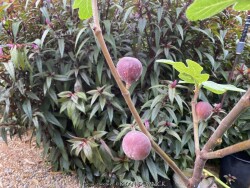
The common fig (Ficus carica) is native to an area extending from Asiatic Turkey to northern India. In Kansas, plant in a protected area near the house on south or west side but will survive in other locations in full hot sun. As an edible, ornamental plant, figs are an attractive bush-like plant with sandpapery green sometimes deeply lobed leaves. There is a slight and pleasant aroma when brushing against the foliage. Fruits are dark purple to maroon. Figs love full hot sun and are very drought tolerant but will produce more fruit if watered during the summer. Expect fig tree to die to the ground each year and start growing in May a bit later than other plants. Regrowth is rapid and established figs will have dozens of 5-6' water sprouts loaded with a few hundred fruits by September. You will always get a late summer/fall crop because fruit can come from new wood. If growing as a potted patio plant, grow in full sun with plenty of water during the summer. Then in late fall before temperatures get below 20 degrees F, move into a cold garage or basement over the winter with minimal watering. Do not allow the pot with rootball to freeze solid or go below 15 degrees for more than a few hours. By March or April, the fig will be trying to grow and you may put back outside (protect from late frosts) and you will also have a spring fruit crop. Eat fresh, freeze for fruit smoothies, or dry in sun or food dehydrator. In our trial gardens in Lawrence, KS (zone 6a), several established specimens planted 5-10 years ago and mulched 1-3" with wood mulch survived -17 degrees F. During the arctic blast of February, 2021, lows down to -17 degrees F on Feb 16th, 2021 were recorded. The longevity of this cold blast was also impressive: 10 days on a row with highs of 10-15 degrees F or lower, 8 nights of lows in the single digits and negatives, and 36 straight hours of 0 degrees F and mostly lower. 'Chicago Hardy' is considered to be one of the hardiest edible figs producing reliable fruits. It's stems are hardy to 10°F and the roots are hardy to -20°F. Sometimes if prolonged September cold-fronts occur and temperatures are too low at night, green fruits will disappointingly stop ripening. Look for a hot planting location microclimate such as a West or South wall to encourage fruit to ripen. Ripening does not continue to progress if harvested early (when fruit has any green coloring present).

The common fig (Ficus carica) is native to an area extending from Asiatic Turkey to northern India. In Kansas, plant in a protected area near the house on south or west side but will survive in other locations in full hot sun. As an edible, ornamental plant, figs are an attractive bush-like plant with sandpapery green sometimes deeply lobed leaves. There is a slight and pleasant aroma when brushing against the foliage. Fruits are dark purple to maroon. Figs love full hot sun and are very drought tolerant but will produce more fruit if watered during the summer. Expect fig tree to die to the ground each year and start growing in May a bit later than other plants. Regrowth is rapid and established figs will have dozens of 5-6' water sprouts loaded with a few hundred fruits by September. You will always get a late summer/fall crop because fruit can come from new wood. If growing as a potted patio plant, grow in full sun with plenty of water during the summer. Then in late fall before temperatures get below 20 degrees F, move into a cold garage or basement over the winter with minimal watering. Do not allow the pot with rootball to freeze solid or go below 15 degrees for more than a few hours. By March or April, the fig will be trying to grow and you may put back outside (protect from late frosts) and you will also have a spring fruit crop. Eat fresh, freeze for fruit smoothies, or dry in sun or food dehydrator. In our trial gardens in Lawrence, KS (zone 6a), several established specimens planted 5-10 years ago and mulched 1-3" with wood mulch survived -17 degrees F. During the arctic blast of February, 2021, lows down to -17 degrees F on Feb 16th, 2021 were recorded. The longevity of this cold blast was also impressive: 10 days on a row with highs of 10-15 degrees F or lower, 8 nights of lows in the single digits and negatives, and 36 straight hours of 0 degrees F and mostly lower. 'Chicago Hardy' is considered to be one of the hardiest edible figs producing reliable fruits. It's stems are hardy to 10°F and the roots are hardy to -20°F. Sometimes if prolonged September cold-fronts occur and temperatures are too low at night, green fruits will disappointingly stop ripening. Look for a hot planting location microclimate such as a West or South wall to encourage fruit to ripen. Ripening does not continue to progress if harvested early (when fruit has any green coloring present).
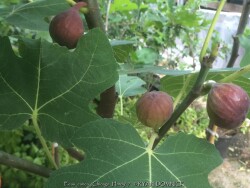
The common fig (Ficus carica) is native to an area extending from Asiatic Turkey to northern India. In Kansas, plant in a protected area near the house on south or west side but will survive in other locations in full hot sun. As an edible, ornamental plant, figs are an attractive bush-like plant with sandpapery green sometimes deeply lobed leaves. There is a slight and pleasant aroma when brushing against the foliage. Fruits are dark purple to maroon. Figs love full hot sun and are very drought tolerant but will produce more fruit if watered during the summer. Expect fig tree to die to the ground each year and start growing in May a bit later than other plants. Regrowth is rapid and established figs will have dozens of 5-6' water sprouts loaded with a few hundred fruits by September. You will always get a late summer/fall crop because fruit can come from new wood. If growing as a potted patio plant, grow in full sun with plenty of water during the summer. Then in late fall before temperatures get below 20 degrees F, move into a cold garage or basement over the winter with minimal watering. Do not allow the pot with rootball to freeze solid or go below 15 degrees for more than a few hours. By March or April, the fig will be trying to grow and you may put back outside (protect from late frosts) and you will also have a spring fruit crop. Eat fresh, freeze for fruit smoothies, or dry in sun or food dehydrator. In our trial gardens in Lawrence, KS (zone 6a), several established specimens planted 5-10 years ago and mulched 1-3" with wood mulch survived -17 degrees F. During the arctic blast of February, 2021, lows down to -17 degrees F on Feb 16th, 2021 were recorded. The longevity of this cold blast was also impressive: 10 days on a row with highs of 10-15 degrees F or lower, 8 nights of lows in the single digits and negatives, and 36 straight hours of 0 degrees F and mostly lower. 'Chicago Hardy' is considered to be one of the hardiest edible figs producing reliable fruits. It's stems are hardy to 10°F and the roots are hardy to -20°F. Sometimes if prolonged September cold-fronts occur and temperatures are too low at night, green fruits will disappointingly stop ripening. Look for a hot planting location microclimate such as a West or South wall to encourage fruit to ripen. Ripening does not continue to progress if harvested early (when fruit has any green coloring present).
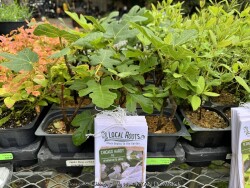
The common fig (Ficus carica) is native to an area extending from Asiatic Turkey to northern India. In Kansas, plant in a protected area near the house on south or west side but will survive in other locations in full hot sun. As an edible, ornamental plant, figs are an attractive bush-like plant with sandpapery green sometimes deeply lobed leaves. There is a slight and pleasant aroma when brushing against the foliage. Fruits are dark purple to maroon. Figs love full hot sun and are very drought tolerant but will produce more fruit if watered during the summer. Expect fig tree to die to the ground each year and start growing in May a bit later than other plants. Regrowth is rapid and established figs will have dozens of 5-6' water sprouts loaded with a few hundred fruits by September. You will always get a late summer/fall crop because fruit can come from new wood. If growing as a potted patio plant, grow in full sun with plenty of water during the summer. Then in late fall before temperatures get below 20 degrees F, move into a cold garage or basement over the winter with minimal watering. Do not allow the pot with rootball to freeze solid or go below 15 degrees for more than a few hours. By March or April, the fig will be trying to grow and you may put back outside (protect from late frosts) and you will also have a spring fruit crop. Eat fresh, freeze for fruit smoothies, or dry in sun or food dehydrator. In our trial gardens in Lawrence, KS (zone 6a), several established specimens planted 5-10 years ago and mulched 1-3" with wood mulch survived -17 degrees F. During the arctic blast of February, 2021, lows down to -17 degrees F on Feb 16th, 2021 were recorded. The longevity of this cold blast was also impressive: 10 days on a row with highs of 10-15 degrees F or lower, 8 nights of lows in the single digits and negatives, and 36 straight hours of 0 degrees F and mostly lower. 'Chicago Hardy' is considered to be one of the hardiest edible figs producing reliable fruits. It's stems are hardy to 10°F and the roots are hardy to -20°F. Sometimes if prolonged September cold-fronts occur and temperatures are too low at night, green fruits will disappointingly stop ripening. Look for a hot planting location microclimate such as a West or South wall to encourage fruit to ripen. Ripening does not continue to progress if harvested early (when fruit has any green coloring present).

The common fig (Ficus carica) is native to an area extending from Asiatic Turkey to northern India. In Kansas, plant in a protected area near the house on south or west side but will survive in other locations in full hot sun. As an edible, ornamental plant, figs are an attractive bush-like plant with sandpapery green sometimes deeply lobed leaves. There is a slight and pleasant aroma when brushing against the foliage. Fruits are dark purple to maroon. Figs love full hot sun and are very drought tolerant but will produce more fruit if watered during the summer. Expect fig tree to die to the ground each year and start growing in May a bit later than other plants. Regrowth is rapid and established figs will have dozens of 5-6' water sprouts loaded with a few hundred fruits by September. You will always get a late summer/fall crop because fruit can come from new wood. If growing as a potted patio plant, grow in full sun with plenty of water during the summer. Then in late fall before temperatures get below 20 degrees F, move into a cold garage or basement over the winter with minimal watering. Do not allow the pot with rootball to freeze solid or go below 15 degrees for more than a few hours. By March or April, the fig will be trying to grow and you may put back outside (protect from late frosts) and you will also have a spring fruit crop. Eat fresh, freeze for fruit smoothies, or dry in sun or food dehydrator. In our trial gardens in Lawrence, KS (zone 6a), three specimens planted in 2020 and mulched 1-3" with wood mulch. Surprisingly, they survived -17 degrees F. During that arctic blast of February, 2021, lows down to -17 degrees F on Feb 16th, 2021 were recorded. The longevity of this cold blast was also impressive: 10 days on a row with highs of 10-15 degrees F or lower, 8 nights of lows in the single digits and negatives, and 36 straight hours of 0 degrees F and mostly lower. Magnolia Large Fruiting Fig (Ficus carica 'Magnolia') has slightly larger more deeply lobed foliage that is more ornamental. The fruit is large with brown skin and amber pulp. Pick the fruit just before maturity for a perfect flavor and to avoid souring and splitting. Sometimes if prolonged September cold-fronts occur and temperatures are too low at night, green fruits will disappointingly stop ripening. Look for a hot planting location microclimate such as a West or South wall to encourage fruit to ripen. Ripening does not continue to progress if harvested early (when fruit has any green coloring present).
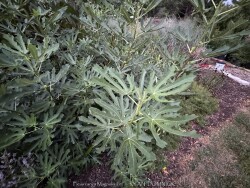
The common fig (Ficus carica) is native to an area extending from Asiatic Turkey to northern India. In Kansas, plant in a protected area near the house on south or west side but will survive in other locations in full hot sun. As an edible, ornamental plant, figs are an attractive bush-like plant with sandpapery green sometimes deeply lobed leaves. There is a slight and pleasant aroma when brushing against the foliage. Fruits are dark purple to maroon. Figs love full hot sun and are very drought tolerant but will produce more fruit if watered during the summer. Expect fig tree to die to the ground each year and start growing in May a bit later than other plants. Regrowth is rapid and established figs will have dozens of 5-6' water sprouts loaded with a few hundred fruits by September. You will always get a late summer/fall crop because fruit can come from new wood. If growing as a potted patio plant, grow in full sun with plenty of water during the summer. Then in late fall before temperatures get below 20 degrees F, move into a cold garage or basement over the winter with minimal watering. Do not allow the pot with rootball to freeze solid or go below 15 degrees for more than a few hours. By March or April, the fig will be trying to grow and you may put back outside (protect from late frosts) and you will also have a spring fruit crop. Eat fresh, freeze for fruit smoothies, or dry in sun or food dehydrator. In our trial gardens in Lawrence, KS (zone 6a), three specimens planted in 2020 and mulched 1-3" with wood mulch. Surprisingly, they survived -17 degrees F. During that arctic blast of February, 2021, lows down to -17 degrees F on Feb 16th, 2021 were recorded. The longevity of this cold blast was also impressive: 10 days on a row with highs of 10-15 degrees F or lower, 8 nights of lows in the single digits and negatives, and 36 straight hours of 0 degrees F and mostly lower. Magnolia Large Fruiting Fig (Ficus carica 'Magnolia') has slightly larger more deeply lobed foliage that is more ornamental. The fruit is large with brown skin and amber pulp. Pick the fruit just before maturity for a perfect flavor and to avoid souring and splitting. Sometimes if prolonged September cold-fronts occur and temperatures are too low at night, green fruits will disappointingly stop ripening. Look for a hot planting location microclimate such as a West or South wall to encourage fruit to ripen. Ripening does not continue to progress if harvested early (when fruit has any green coloring present).
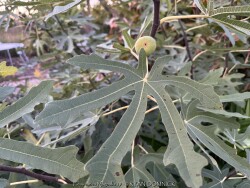
The common fig (Ficus carica) is native to an area extending from Asiatic Turkey to northern India. In Kansas, plant in a protected area near the house on south or west side but will survive in other locations in full hot sun. As an edible, ornamental plant, figs are an attractive bush-like plant with sandpapery green sometimes deeply lobed leaves. There is a slight and pleasant aroma when brushing against the foliage. Fruits are dark purple to maroon. Figs love full hot sun and are very drought tolerant but will produce more fruit if watered during the summer. Expect fig tree to die to the ground each year and start growing in May a bit later than other plants. Regrowth is rapid and established figs will have dozens of 5-6' water sprouts loaded with a few hundred fruits by September. You will always get a late summer/fall crop because fruit can come from new wood. If growing as a potted patio plant, grow in full sun with plenty of water during the summer. Then in late fall before temperatures get below 20 degrees F, move into a cold garage or basement over the winter with minimal watering. Do not allow the pot with rootball to freeze solid or go below 15 degrees for more than a few hours. By March or April, the fig will be trying to grow and you may put back outside (protect from late frosts) and you will also have a spring fruit crop. Eat fresh, freeze for fruit smoothies, or dry in sun or food dehydrator. In our trial gardens in Lawrence, KS (zone 6a), three specimens planted in 2020 and mulched 1-3" with wood mulch. Surprisingly, they survived -17 degrees F. During that arctic blast of February, 2021, lows down to -17 degrees F on Feb 16th, 2021 were recorded. The longevity of this cold blast was also impressive: 10 days on a row with highs of 10-15 degrees F or lower, 8 nights of lows in the single digits and negatives, and 36 straight hours of 0 degrees F and mostly lower. Magnolia Large Fruiting Fig (Ficus carica 'Magnolia') has slightly larger more deeply lobed foliage that is more ornamental. The fruit is large with brown skin and amber pulp. Pick the fruit just before maturity for a perfect flavor and to avoid souring and splitting. Sometimes if prolonged September cold-fronts occur and temperatures are too low at night, green fruits will disappointingly stop ripening. Look for a hot planting location microclimate such as a West or South wall to encourage fruit to ripen. Ripening does not continue to progress if harvested early (when fruit has any green coloring present).

***Description for this plant available with future update!*** Ficus elastica is also known as Indian Rubberplant (Tropical).

Chinese Parasol Tree (Firmiana simplex) is typically grown as a hardy tropical with huge green leaves and bright green stems that last through winter. This "die to the ground each winter" tree is even more impressive from water strout shoots from the ground. When grown in Kansas, it can be used as summer patio plant tolerating root-boundness well. Water regularly and place in full sun or part shade and enjoy all summer long into late fall. Potted plants are hardy to at least 25 degrees F for a short time if kept dry so you can wait awhile to move these in for the winter. Do not allow the pot with rootball to freeze solid though. Move into a cold garage or basement over the winter. Provide minimal watering and allow the foliage to go dormant and drop off if not already. Bright green stems will remain and add interest during winter. Place back out in April or May with a time-release fertilizer. Landscapers mainly plant Chinese Parasol "Tree" as a die-back to the ground woody perennial "tree". Even without mulch, it is easy to overwinter Firmiana simplex in the ground in Kansas as a woody perennial; complete die-back happens every 1-2 years. The resulting water sprouts from the ground create a bold tropical effect with robust bright green shoots resembling pool cue sticks reaching 5-8' in one season from a 3gal container! We have measured leaves up to 36" long aranded in whorls along the stems. Plants can exceed 15 feet with two consecutive years with no die-back when planted on a South wall. In Eastern Kansas, typically our 40 inches of rainfall is sufficient without extra water in good soils. Chinese Parasol Tree has been planted in our trial gardens and at several residential gardens in Lawrence, KS (zone 6a) 5-10 years ago. During the arctic blast of February, 2021, lows down to -17 degrees F on Feb 16th, 2021 were recorded. The longevity of this cold blast was also impressive: 10 days on a row with highs of 10-15 degrees F or lower, 8 nights of lows in the single digits and negatives, and 36 straight hours of 0 degrees F and mostly lower. Most plants survived with complete die-back and new spring water sprouts. This species is an aggressive, invasive weed in the warmer parts of North America south of zone 7b but not in Kansas because seeds never have a chance to form. Taking 5-7 years to reach flowering size, die-back is much more frequent than that in zone 6. Wow, what a "releaf"!
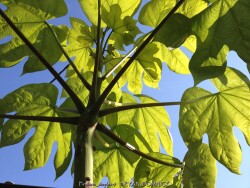
Chinese Parasol Tree (Firmiana simplex) is typically grown as a hardy tropical with huge green leaves and bright green stems that last through winter. This "die to the ground each winter" tree is even more impressive from water strout shoots from the ground. When grown in Kansas, it can be used as summer patio plant tolerating root-boundness well. Water regularly and place in full sun or part shade and enjoy all summer long into late fall. Potted plants are hardy to at least 25 degrees F for a short time if kept dry so you can wait awhile to move these in for the winter. Do not allow the pot with rootball to freeze solid though. Move into a cold garage or basement over the winter. Provide minimal watering and allow the foliage to go dormant and drop off if not already. Bright green stems will remain and add interest during winter. Place back out in April or May with a time-release fertilizer. Landscapers mainly plant Chinese Parasol "Tree" as a die-back to the ground woody perennial "tree". Even without mulch, it is easy to overwinter Firmiana simplex in the ground in Kansas as a woody perennial; complete die-back happens every 1-2 years. The resulting water sprouts from the ground create a bold tropical effect with robust bright green shoots resembling pool cue sticks reaching 5-8' in one season from a 3gal container! We have measured leaves up to 36" long aranded in whorls along the stems. Plants can exceed 15 feet with two consecutive years with no die-back when planted on a South wall. In Eastern Kansas, typically our 40 inches of rainfall is sufficient without extra water in good soils. Chinese Parasol Tree has been planted in our trial gardens and at several residential gardens in Lawrence, KS (zone 6a) 5-10 years ago. During the arctic blast of February, 2021, lows down to -17 degrees F on Feb 16th, 2021 were recorded. The longevity of this cold blast was also impressive: 10 days on a row with highs of 10-15 degrees F or lower, 8 nights of lows in the single digits and negatives, and 36 straight hours of 0 degrees F and mostly lower. Most plants survived with complete die-back and new spring water sprouts. This species is an aggressive, invasive weed in the warmer parts of North America south of zone 7b but not in Kansas because seeds never have a chance to form. Taking 5-7 years to reach flowering size, die-back is much more frequent than that in zone 6. Wow, what a "releaf"!

Show Off® Forsythia (Forsythia x Mindor 'Show Off') "shows off" its bright yellow early spring flowers. Improved flower display compared to older varieties. Compact. Deer resistant. Good for cut displays. An excellent specimen plant for mixed borders and foundations. Prefers a good loose soil, but will do well in any soil. pH adaptable and withstands city conditions and is air pollution tolerant. Pruning is best done immediately after flowering. Old stems can be removed or can be cut back to the ground. Shaping should be done at this time. Prefers medium moisture. Fertilize in early spring by applying a slow release fertilizer specialized for trees and shrubs. Follow the label for recommended rate of application. This little beauty will be a blast of early spring color from the ground up! Show Off is not your typical forsythia! It is compact and full of blooms from the ground to the end of every stem. Older varieties can become out of control and often become victims of bad pruning; this little beauty will stay small so there is less need to prune. Now you can have a nice tight, compact forsythia hedge without doing any work! A real improvement over older varieties, Show Off is a very showy choice for the early spring garden. In Eastern Kansas, this cultivar performs WELL with just about everything nature has to challenge it! All Proven Winners® plants are legally propagated, healthy and vigorous, true to name, and tagged with color pictures and growing information.
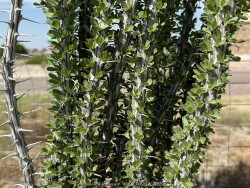
Ocotillo in also known as Fouquieria splendens Not a true cactus but more of a drought deciduous shrub, ocotillo is native to the Mojave desert south to the desert of Baja California, it's usually grown as a patio or house plant in Kansas. In the wild, established species are hardy to 10 degrees F. Grow in full sun with no extra watering except that which comes from rainfall. Repotting may or may not be needed depending on how large you want the plant to grow; plants can continue to grow taller and tolerate extremely root-bound pots but may need wind bracing. If repotting, make sure to use a sharp draining low organic cactus mix with plenty of sand and perlite. Potted plants are hardy to at least 25 degrees F for a short time if kept dry so you are ok if you miss the first light frost. Do not allow the pot with rootball to freeze solid though. Before extreme cold occurs, move to a bright interior window over the winter with no watering and keep above freezing. As a winter house plant, it will look presentable all winter long with just no waterings.(also to prevent lanky winter growth) As a permanent house plant, provide bright light and allow the soil to dry between waterings for many years of carefree enjoyment. Plants grown permanently indoors may begin to elongate stretching for light and lose their color. It can be hard to reproduce the intense UV sunlight they need so moving outside for the summer is best. Generally if moving outside for the summer, allow 1-2 weeks of part shade or morning sun before placing in full sun. Plants with time to acclimate will thrive in full sun but be careful not to rush it or sunburning will occur. Potted plants are very low maintenance.
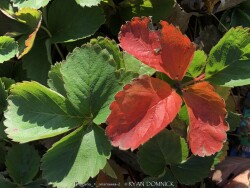
***Description for this plant available with future update!***

Arizona Sun Blanket Flower (Gaillardia aristata 'Arizona Sun') is an improved variety with an intense covering of red and yellow flowers in the summer. Blooming usually starts during the heat of summer and continues until frost. Foliage is mint green and attractive. Blanket flower is native to dry sandy areas of the lower great plains including Texas, New Mexico, and Arizona. Because of its desert heritage, it resents cold wet winters and needs well drained sandy, silty, or rocky soil. Short periods of extra water is tolerated in the heat of summer especially after blooming has started. It will typically grow in any soil and bloom like crazy during the summer making it very useful even as an annual if planted in the wrong soil type. In Kansas landscapes, it is commonly used as an annual or short-lived perennial where lots of color is needed in full sun. Self-seeding is possible in areas that are not mulched. Gaillardia combines nicely with any blue or purple flower including catmint, false indigo, plumbago.

These succulents are usually spineless and grown for their beautiful shapes, color and texture. Gasteria / Haworthia / Aloe are usually grown as small patio or house plants in Kansas. In the wild, some species are hardy to below 20 degrees F. Grow in part sun to full shade with little extra watering except that which comes from rainfall. Repotting may or may not be needed depending on how large you want the plant to grow; plants can continue to grow and tolerate extremely root-bound pots but will eventually need thinned or repotted. If repotting, make sure to use a sharp draining low organic cactus mix with plenty of sand and perlite. To play is safe, potted plants are best moved in before night temperatures get below 45 degrees F. It is important to avoid the combination of wet and cold. Move to a bright interior window over the winter with no watering and keep above freezing. As a winter house plant, it will look presentable all winter long with just a few waterings. As a permanent house plant, provide bright light and allow the soil to dry between waterings for many years of carefree enjoyment. Generally if moving outside for the summer, keep in part to full shade. Some species will acclimate and thrive in full sun but be careful not to rush it or sunburning will occur; move into sun gradually over a few weeks. Potted plants are very low maintenance but avoid too much water or plants will rot.

***Description for this perennial available with future update!*** Gaura lindheimeri is also known as White / Pink Native Gaura.

***Description for this plant available with future update!*** Geranium / Pelargonium sp. is also known as Mixed Geranium (Tropical).

Geranium macrorrhizum, commonly called Bigroot Geranium is native to the Southeast Alps and the Balkans. It features highly aromatic fuzzy leaves that leave you wanting another sniff after crushing a leaf in your hand. Early summer pink, rose, or white flowers form depending on the cultivar. It forms a weed-suppressing mat of rhizomatous semi-evergreen perennial that typically grows to 12" tall but spreads to 24" wide. Root rot can be a problem in poor drainage areas. Bigroot Geranium is the most drought tolerant of the hardy geraniums earning a spot in the dry shade garden; it cannot handle extreme drought or extremely rootbound soils though. It prefers average to dry garden conditions with dappled or morning sun. Sun burning is possible with temperatures over 100° so avoid full afternoon sun. Plantings can thrive for decades if in the right spot as there is no such thing as overcrowding for Big Root Geranium. When planted in mass, growth is slow at first but eventually a cake-like rhizome system will form and completely smother out any weeds and compete well with trees for water and nutrients. The growth rate is slow at first so space new plants relatively close together is desiring this effect.

***Description for this perennial available with future update!***
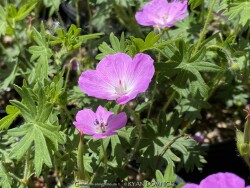
***Description for this perennial available with future update!*** Geranium sanguineum is also known as Hardy Geranium / Bloody Cranesbill.

***Description for this perennial available with future update!***Prairie Smoke Geum, is also known as Geum triflorum

***Tree descriptions available with future update!***>>>Ginkgo, is also known as Ginkgo biloba. Ginkgo is not tolerant of late-spring frosts, because there are no reserve vegetative buds‚¬€they leaf out all at once. When such a frost destroys these buds and leaves, it can take until midsummer before the tree has had enough time to produce new ones.

***Tree descriptions available with future update!*** Ginkgo biloba 'Autumn Gold' is also known as Autumn Gold Male Ginkgo

Raintree Hardy Gladiolus (Gladiolus 'Raintree') are typically grown for their mid-summer flowers and vertical iris-leaf foliage. The plants are temperate and subtropical herbaceous perennial bulbs native to areas with a summer wet season and dry winter. Gladiolus are hardy outside as a perennial when established and with minimal effort at least up to zone 6a. During the growing season, fertilize, water regularly, and plant in full sun. Plant these bulbs in the ground at least 6-8" deep with 3-4" of mulch to enjoy a wonderful tropical flowering effect! Foliage may look bedwraggled by fall so it is ok to cut back foliage at that time. They can also be grown as a flowering summer patio plant. If growing as a potted plant and trying to overwinter, allowing the foliage to frost is ok, it will not kill the root system. However, do not allow the pot with rootball to freeze solid or go below 20 degrees for more than a few hours; move into a cold garage or basement over the winter with no watering. Cut back and allow to go dormant and place entire pot back out in April or May with a time-release fertilizer. Another more labor intensive way to overwinter gladiolus is to remove them from the dirt, dust with fungicide, place in box with sawdust, and keep in the refrigerator. We consider this method old-fashioned and too much work but ok if you only want to save a few bulbs. If digging from the ground in colder zones, just save a big chunk with the dirt intact and place into a large pot in the garage. In a customer's garden in Lawrence, KS (zone 6a), four established specimens planted over 4-6" deep and mulched 2-3" with wood mulch survived -17 degrees F. During the arctic blast of February, 2021, lows down to -17 degrees F on Feb 16th, 2021 were recorded. The longevity of this cold blast was also impressive: 10 days on a row with highs of 10-15 degrees F or lower, 8 nights of lows in the single digits and negatives, and 36 straight hours of 0 degrees F and mostly lower. We plan to propagate these 'Raintree' clones in 2022-2023.
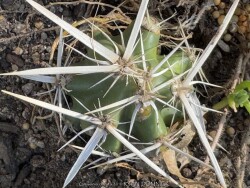
***Description for this plant available with future update!*** Grusonia clavata is also known as Dagger Club Cholla Cactus (Cold Hardy).
***Description for this plant available with future update!*** Grusonia clavata is also known as Dagger Club Cholla Cactus (Cold Hardy).
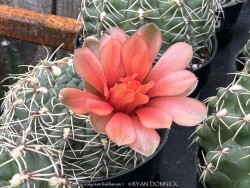
***Description for this plant available with future update!*** Gymnocalycium baldianum is also known as Chin Cactus (Tropical)>>>>>> With extremely well drained soils and proper siting, this cactus seems to take our excess rainfall in Eastern Kansas. These and other hardy barrel cacti are perfect for a dry mounded xeriscape gardens under south facing roof overhangs where it gets no winter moisture. We are also testing this outside in our Lawrence, KS (zone 6a) crevice garden among other cold-hardy cacti, succulents, and yucca! Watch for future updates-Jan-2025
***Description for this plant available with future update!*** With extremely well drained soils and proper siting, this cactus seems to take our excess rainfall in Eastern Kansas. These and other hardy barrel cacti are perfect for a dry mounded xeriscape gardens under south facing roof overhangs where it gets no winter moisture. We are also testing this outside in our Lawrence, KS (zone 6a) crevice garden among other cold-hardy cacti, succulents, and yucca! Watch for future updates-Jan-2025

***Tree descriptions available with future update!***Kentucky Coffeetree, is also known as Gymnocladus dioicus

Elephant's Tongue Plant (Haemanthus albiflos) has attractive exceptionally wide medium green, wide, glossy, curved foliage along with occasional white flowers. It is native to seasonal semi-dry coastal cliffs in South Africa hardy to 23-25 degrees F. It is best used as a houseplant or summer patio plant in Kansas. Place in part to full shade in areas where occasional extra watering can happen including that which comes from rainfall. Repotting may or may not be needed depending on how large you want the plant to grow; plants can continue to grow thicker and tolerate extremely root-bound pots. Potted plants are hardy to at least 30 degrees F for a short time but try not to miss the first light frost. Move into a cold garage, basement, or bright window over the winter with occasional watering. Flowering is more reliable with root-bound plants but rarely occurs. As a winter house plant, it will look presentable all winter long with just a few waterings. As a permanent house plant, provide bright light and allow the soil to dry between waterings for many years (even decades) of carefree enjoyment. Potted plants grow very slow and are very low maintenance needing only old leaves removed once per year. Elephant's tongue is relatively rare and will command a higher price than most other houseplants.
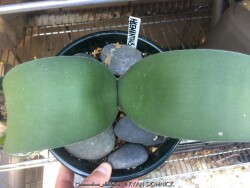
Elephant's Tongue Plant (Haemanthus albiflos) has attractive exceptionally wide medium green, wide, glossy, curved foliage along with occasional white flowers. It is native to seasonal semi-dry coastal cliffs in South Africa hardy to 23-25 degrees F. It is best used as a houseplant or summer patio plant in Kansas. Place in part to full shade in areas where occasional extra watering can happen including that which comes from rainfall. Repotting may or may not be needed depending on how large you want the plant to grow; plants can continue to grow thicker and tolerate extremely root-bound pots. Potted plants are hardy to at least 30 degrees F for a short time but try not to miss the first light frost. Move into a cold garage, basement, or bright window over the winter with occasional watering. Flowering is more reliable with root-bound plants but rarely occurs. As a winter house plant, it will look presentable all winter long with just a few waterings. As a permanent house plant, provide bright light and allow the soil to dry between waterings for many years (even decades) of carefree enjoyment. Potted plants grow very slow and are very low maintenance needing only old leaves removed once per year. Elephant's tongue is relatively rare and will command a higher price than most other houseplants.
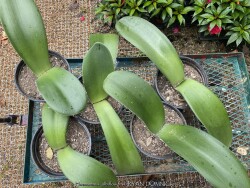
Elephant's Tongue Plant (Haemanthus albiflos) has attractive exceptionally wide medium green, wide, glossy, curved foliage along with occasional white flowers. It is native to seasonal semi-dry coastal cliffs in South Africa hardy to 23-25 degrees F. It is best used as a houseplant or summer patio plant in Kansas. Place in part to full shade in areas where occasional extra watering can happen including that which comes from rainfall. Repotting may or may not be needed depending on how large you want the plant to grow; plants can continue to grow thicker and tolerate extremely root-bound pots. Potted plants are hardy to at least 30 degrees F for a short time but try not to miss the first light frost. Move into a cold garage, basement, or bright window over the winter with occasional watering. Flowering is more reliable with root-bound plants but rarely occurs. As a winter house plant, it will look presentable all winter long with just a few waterings. As a permanent house plant, provide bright light and allow the soil to dry between waterings for many years (even decades) of carefree enjoyment. Potted plants grow very slow and are very low maintenance needing only old leaves removed once per year. Elephant's tongue is relatively rare and will command a higher price than most other houseplants.
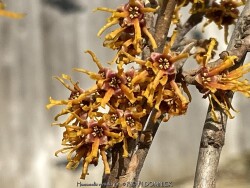
***Shrub descriptions available with future update!*** Hamamelis vernalis is also known as Ozark Witchhazel Shrub.
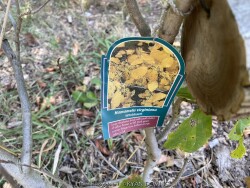
***Tree descriptions available with future update!*** Hamamelis virginiana is also known as Virginiana Yellow Tree Witchhazel
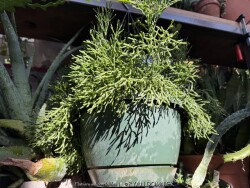
The Dancing Bones Cactus, also known as Rhipsalis salicornioides, is a epiphyte jungle cactus native to South America. . It produces thin, flat, succulent leaves that resemble a beer bottle. Originating from a dry climates but not a true desert, it is much more moisture tolerant than a typical derert barrel cactus. Succulents are usually spineless and grown for their beautiful shapes, color and texture. Cacti are known for their spines, unusual shapes and beautiful flowers. Both succulents and cacti store water in their fleshy tissues. And can survive long periods without water. Cacti and succulents are usually grown as a deck/patio plant or house plant in Kansas. Grow in full sun with little to no extra watering except that which comes from rainfall. Generally, plants may be brought out in Late May through Early October in our zone 6a Lawrence, KS climate. To play is safe, potted plants are best moved in before autumn leaves begin to drop and before night temperatures get below 45 degrees F. It is very important to avoid the combination of wet and cold. Move to a bright interior window over the winter with little to no watering and keep above 50 degrees F. As a winter house plant, it will look presentable all winter long with little to no waterings. As a permanent house plant, provide bright light and allow the soil to dry completely between waterings and you will get many years of carefree enjoyment. Plants grown permanently indoors may eventually begin to elongate stretching for light and lose their spine color. It can be hard to reproduce the intense UV sunlight they need when growing indoors so moving outside for the summer is best. Generally if moving outside for the summer, allow 1-2 weeks of part shade or morning sun before placing in full sun. Plants with time to acclimate will thrive in full sun but be careful not to rush it or sunburning may occur. Repotting may or may not be needed depending on how large you want the plant to grow; plants can continue to grow taller and tolerate extremely root-bound pots but may need wind bracing. If repotting, make sure to use a sharp draining low organic cactus mix with plenty of sand and perlite but avoid peat moss. The “soil” most commercial cacti are potted in to too peaty and light weight. This soil becomes hydrophobic and shrinks after becoming bone dry and difficult to re wet again. Cacti never grow in peat-based soils in nature; this “Soil” is only good for shipping because of the light weight. Potted plants are very low maintenance but watch for scale and mealybugs that may hide beneath the cover of spines. The best pest removal approach is to periodically wash the cactus off. Achieve this with a water nozzle or hose breaker turned mostly off to increase the pressure from the blast of water. This high-pressured water kills the pests without damaging the thick cactus skin. Here are some little-known or rare factoids about cacti: 1. The "spines" are actually modified leaves filled with sap at first, then quickly drying out to form the spines! 2. Many cacti have bright colored flowers that mainly attract bees, while some tubular flowering types attract hummingbirds and bats. 3. Late on the evolutionary timeline, cacti fossils are rare to non-existent. Cacti are native almost exclusively to the Americas, while succulents can include a much larger plant palette be from any dry area in the world. 4. Some cactus plants have been known to survive more than 2 years without water. 5. Some cacti first evolved in a dry climate that later became wetter again. For example: several jungle species live as epiphytes in trees to achieve the fast drainage they need.

English Ivy (Hedera helix) is planted for its evergreen dark green foliage. This is one of the most deep shade tolerant plants available. It makes a durable evergreen groundcover that starts off slow, but grows quickly after a few years to forms a dense, weed-smothering mat of foliage. As one of the most dry-shade tolerant plants there is, it's thick leathery leaves seem to handle everything nature has to throw at it! That being said, beware that this is an extremely vigorous plant that crowds out most weeds and is itself weed-like, with a very spreading growth habit. After establishment, it is high maintenance if it has already filled the space and you don't want it to spread any further: it even resists Round-up! It will climb trees if you allow it, generally using it for support to allow its mature form to develop and flowering to occur. For the home garden, the species is generally too aggressive to mix with other plants. We have more requests on "how to eradicate it" than "wanting to purchase it".

Hardy Ginger (Hedychium) are typically grown for their late summer flowers and vertical wide-leaf foliage. The plants are large tropical and subtropical herbaceous perennials with a rhizomatous rootstock native to areas with a summer monsoon and dry winter. They can be grown as flowering summer patio plants. If growing as a potted plant and trying to overwinter, allowing the foliage to frost is ok, it will not kill the root system. However, do not allow the pot with rootball to freeze solid or go below 20 degrees for more than a few hours; move into a cold garage or basement over the winter with no watering. Cut back and allow to go dormant and place entire pot back out in April or May with a time-release fertilizer. Another more labor intensive way to overwinter cannas is to remove them from the dirt, dust with fungicide, place in box with sawdust, and keep in the refrigerator. We consider this method old-fashioned and too much work but ok if you only want to save a few pieces. If digging from the ground, just save a big chunk with the dirt intact and place into a large pot in the garage. During the growing season, fertilize, water regularly, and place in full sun. You may also plant these in the ground for an enormous tropical effect! It is possible to overwinter these in the ground in Kansas by mulching 6-12" thick over deeply planted rhizomes. New growth may be slightly delayed but probably quick to regain full height. Native habitat for most hedychiums aligns well with our dry winters and warm humid summers. In our trial gardens in Lawrence, KS (zone 6a), we will be testing several varieties in 2022-2023. Famous plantsman, Tony Avent, owner of Plant Delights Nursery in Raleigh, North Carolina, advised us that hedychiums should survive fine here in the ground when mulched like cannas.
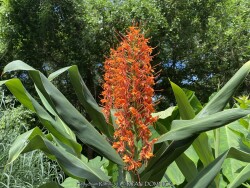
Hardy Ginger (Hedychium) are typically grown for their late summer flowers and vertical wide-leaf foliage. The plants are large tropical and subtropical herbaceous perennials with a rhizomatous rootstock native to areas with a summer monsoon and dry winter. They can be grown as flowering summer patio plants. If growing as a potted plant and trying to overwinter, allowing the foliage to frost is ok, it will not kill the root system. However, do not allow the pot with rootball to freeze solid or go below 20 degrees for more than a few hours; move into a cold garage or basement over the winter with no watering. Cut back and allow to go dormant and place entire pot back out in April or May with a time-release fertilizer. Another more labor intensive way to overwinter cannas is to remove them from the dirt, dust with fungicide, place in box with sawdust, and keep in the refrigerator. We consider this method old-fashioned and too much work but ok if you only want to save a few pieces. If digging from the ground, just save a big chunk with the dirt intact and place into a large pot in the garage. During the growing season, fertilize, water regularly, and place in full sun. You may also plant these in the ground for an enormous tropical effect! It is possible to overwinter these in the ground in Kansas by mulching 6-12" thick over deeply planted rhizomes. New growth may be slightly delayed but probably quick to regain full height. Native habitat for most hedychiums aligns well with our dry winters and warm humid summers. In our trial gardens in Lawrence, KS (zone 6a), we will be testing several varieties in 2022-2023. Famous plantsman, Tony Avent, owner of Plant Delights Nursery in Raleigh, North Carolina, advised us that hedychiums should survive fine here in the ground when mulched like cannas. Hedychium 'Raffillii' features bright orange flowers that can reach 18 inches above the 5-6 feet canes.
Hardy Ginger (Hedychium) are typically grown for their late summer flowers and vertical wide-leaf foliage. The plants are large tropical and subtropical herbaceous perennials with a rhizomatous rootstock native to areas with a summer monsoon and dry winter. They can be grown as flowering summer patio plants. If growing as a potted plant and trying to overwinter, allowing the foliage to frost is ok, it will not kill the root system. However, do not allow the pot with rootball to freeze solid or go below 20 degrees for more than a few hours; move into a cold garage or basement over the winter with no watering. Cut back and allow to go dormant and place entire pot back out in April or May with a time-release fertilizer. Another more labor intensive way to overwinter cannas is to remove them from the dirt, dust with fungicide, place in box with sawdust, and keep in the refrigerator. We consider this method old-fashioned and too much work but ok if you only want to save a few pieces. If digging from the ground, just save a big chunk with the dirt intact and place into a large pot in the garage. During the growing season, fertilize, water regularly, and place in full sun. You may also plant these in the ground for an enormous tropical effect! It is possible to overwinter these in the ground in Kansas by mulching 6-12" thick over deeply planted rhizomes. New growth may be slightly delayed but probably quick to regain full height. Native habitat for most hedychiums aligns well with our dry winters and warm humid summers. In our trial gardens in Lawrence, KS (zone 6a), we will be testing several varieties in 2022-2023. Famous plantsman, Tony Avent, owner of Plant Delights Nursery in Raleigh, North Carolina, advised us that hedychiums should survive fine here in the ground when mulched like cannas. Hedychium 'Vanilla Ice' features bright orange flowers that can reach 18 inches above the 5-6 feet canes.
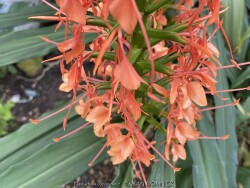
Hardy Ginger (Hedychium) are typically grown for their late summer flowers and vertical wide-leaf foliage. The plants are large tropical and subtropical herbaceous perennials with a rhizomatous rootstock native to areas with a summer monsoon and dry winter. They can be grown as flowering summer patio plants. If growing as a potted plant and trying to overwinter, allowing the foliage to frost is ok, it will not kill the root system. However, do not allow the pot with rootball to freeze solid or go below 20 degrees for more than a few hours; move into a cold garage or basement over the winter with no watering. Cut back and allow to go dormant and place entire pot back out in April or May with a time-release fertilizer. Another more labor intensive way to overwinter cannas is to remove them from the dirt, dust with fungicide, place in box with sawdust, and keep in the refrigerator. We consider this method old-fashioned and too much work but ok if you only want to save a few pieces. If digging from the ground, just save a big chunk with the dirt intact and place into a large pot in the garage. During the growing season, fertilize, water regularly, and place in full sun. You may also plant these in the ground for an enormous tropical effect! It is possible to overwinter these in the ground in Kansas by mulching 6-12" thick over deeply planted rhizomes. New growth may be slightly delayed but probably quick to regain full height. Native habitat for most hedychiums aligns well with our dry winters and warm humid summers. In our trial gardens in Lawrence, KS (zone 6a), we will be testing several varieties in 2022-2023. Famous plantsman, Tony Avent, owner of Plant Delights Nursery in Raleigh, North Carolina, advised us that hedychiums should survive fine here in the ground when mulched like cannas. Hedychium coccineum features orange flowers.

Hardy Ginger (Hedychium) are typically grown for their late summer flowers and vertical wide-leaf foliage. The plants are large tropical and subtropical herbaceous perennials with a rhizomatous rootstock native to areas with a summer monsoon and dry winter. They can be grown as flowering summer patio plants. If growing as a potted plant and trying to overwinter, allowing the foliage to frost is ok, it will not kill the root system. However, do not allow the pot with rootball to freeze solid or go below 20 degrees for more than a few hours; move into a cold garage or basement over the winter with no watering. Cut back and allow to go dormant and place entire pot back out in April or May with a time-release fertilizer. Another more labor intensive way to overwinter cannas is to remove them from the dirt, dust with fungicide, place in box with sawdust, and keep in the refrigerator. We consider this method old-fashioned and too much work but ok if you only want to save a few pieces. If digging from the ground, just save a big chunk with the dirt intact and place into a large pot in the garage. During the growing season, fertilize, water regularly, and place in full sun. You may also plant these in the ground for an enormous tropical effect! It is possible to overwinter these in the ground in Kansas by mulching 6-12" thick over deeply planted rhizomes. New growth may be slightly delayed but probably quick to regain full height. Native habitat for most hedychiums aligns well with our dry winters and warm humid summers. In our trial gardens in Lawrence, KS (zone 6a), we will be testing several varieties in 2022-2023. Famous plantsman, Tony Avent, owner of Plant Delights Nursery in Raleigh, North Carolina, advised us that hedychiums should survive fine here in the ground when mulched like cannas. Butterfly Ginger (Hedychium gardnerianum) is native to the Himalayas in India, Nepal, and Bhutan. The very fragrant pale yellow and red flowers are held in dense spikes above the foliage. Foliage and stems are massive; reaching 6-8 feet tall.
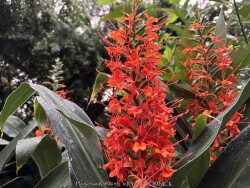
Hardy Ginger (Hedychium) are typically grown for their late summer flowers and vertical wide-leaf foliage. The plants are large tropical and subtropical herbaceous perennials with a rhizomatous rootstock native to areas with a summer monsoon and dry winter. They can be grown as flowering summer patio plants. If growing as a potted plant and trying to overwinter, allowing the foliage to frost is ok, it will not kill the root system. However, do not allow the pot with rootball to freeze solid or go below 20 degrees for more than a few hours; move into a cold garage or basement over the winter with no watering. Cut back and allow to go dormant and place entire pot back out in April or May with a time-release fertilizer. Another more labor intensive way to overwinter cannas is to remove them from the dirt, dust with fungicide, place in box with sawdust, and keep in the refrigerator. We consider this method old-fashioned and too much work but ok if you only want to save a few pieces. If digging from the ground, just save a big chunk with the dirt intact and place into a large pot in the garage. During the growing season, fertilize, water regularly, and place in full sun. You may also plant these in the ground for an enormous tropical effect! It is possible to overwinter these in the ground in Kansas by mulching 6-12" thick over deeply planted rhizomes. New growth may be slightly delayed but probably quick to regain full height. Native habitat for most hedychiums aligns well with our dry winters and warm humid summers. In our trial gardens in Lawrence, KS (zone 6a), we will be testing several varieties in 2022-2023. Famous plantsman, Tony Avent, owner of Plant Delights Nursery in Raleigh, North Carolina, advised us that hedychiums should survive fine here in the ground when mulched like cannas.

Maximilian's Sunflower is a very tall and showy wildflower native to the Great Plains in central North America and Canada. It has a distinctive fold down the mid-rib center of the narrow leaf. The leaf may be up to 12" long, slightly curved, and arranged in a whorl around the unbranching stems. In rich soils with average moisture, it reaches up to 10 feet tall and towers above surrounding vegetation when in bloom. In Eastern Kansas, typically our 40 inches of rainfall is sufficient without extra water. It is best suited for full sun and dry to medium soils to control height and to avoid floppiness. Like most other Sunflower species, Maximilian's Sunflower attracts a several different species of bees and butterflies. This species spreads by rhizomes and may spread too vigorously for most gardens, and therefore needs plenty of room. It is best used for naturalizing, roadway ditch plantings, buffer zones, or as as large isolated clumps. Cut or mow all foliage down in the winter, mowing around it during the growing season generally stops the yearly spread.

Willow-Leaved Sunflower is a herbaceous perennial with very fine textured leaves and golden sunflowers native to the central United States, primarily in the Great Plains and Ozark Plateau. Extremely fine textured leaves are a bright green and resemble Amsonia Hubrichtii. Upon close inspection, the foliage is quite a bit longer and sways in the breeze more readily. Mature plants have multiple and branched stems from the ground creating a nice bush like effect. This alone could be a main reason to grow this plant. In late summer, golden flowers emerge at the top of the plant covering the foliage for about 4 to 6 weeks. As with any plant in the Sunflower family, pollinators go crazy over the flowers. Willow-leaf sunflower thrives in most garden soils except extremely wet or extremely dry ones but prefers rocky outcrops with heavy soil. Full sun is needed to avoid possible floppiness, even then, some staking but be required if strong winds whip the tall flowering stalks. The only maintenance is at some point in the winter trim back to the ground. Use in the landscape as a specimen plant or a small grouping where are you really went to attract attention. Combine with any course textured plant or just about any other flower except other late blooming gold flowers. Several new cultivars exist with different shades of flowers and shorter, more compact growth heights.
***Description for this perennial available with future update!*** Heliopsis helianthoides var. scabra 'Bleeding Hearts' is also known as Bleeding Hearts Ox-eye Sunflower / False Sunflower.
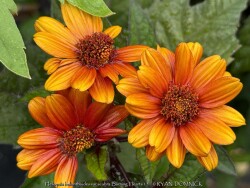
***Description for this perennial available with future update!*** Heliopsis helianthoides var. scabra 'Burning Hearts' is also known as Burning Hearts Ox-eye Sunflower / False Sunflower.

Lenten Rose (Helleborus) are the ultimate dry-shade plant for eastern Kansas landscapes. Most hellebores are native to mountainous wooded regions of Europe with limestone bedrock and calcareous, humus-rich soils. They have everything a gardener might ask for; beautiful spring flowers, dependable dark green foliage, evergreen during winter, appreciation for alkaline soils, and ease of care with very low maintenance. Hellebores are one of the first perennials to start growing in the spring with flowering occurring even with hard freezes. Flowers last incredibly long 2 to 3 months and finally turn greenish in June. No deadheading is needed because the foliage just absorbs the flower stalks as they fade. Summer and fall foliage is dark green, dependable, and pest-free. Evergreen foliage is hardy to about 0°F. If it gets colder than that, hellebores will be deciduous with no detrimental effects. Desirable self-seeding may gently occur around mother plants. Hellebores do have an Achilles heel however; they cannot tolerate wet or poorly drained soils, not even slightly. In areas with too much rainfall or poorly drained soils, foliage diseases and root rot are likely to occur. Hellebores are also not the best choice for full sun, while they will survive, they will get foliage burn in the summer when over 100°F in afternoon sun. With poisonous foliage, these plants resist deer and rabbit browsing. What a great plant for the dry shade garden! There are many improved flowering cultivars to choose from now. Helleborus 'Ivory Prince' is a selection chosen for its quick growing nature. Burgundy-pink buds open to creamy, white flowers that mature with pink highlights in early spring. Blooms face up and outward from the reddish stems over evergreen foliage. Prominent veining on leathery evergreen foliage is showy even when not in bloom. Great in our trial gardens to far.

Lenten Rose (Helleborus) is the ultimate dry-shade plant for eastern Kansas landscapes. Most hellebores are native to mountainous wooded regions of Europe with limestone bedrock and calcareous, humus-rich soils. They have everything a gardener might ask for; beautiful spring flowers, dependable dark green foliage, evergreen during winter, appreciation for alkaline soils, and ease of care with very low maintenance. Hellebores are one of the first perennials to start growing in the spring with flowering occurring even with hard freezes. Flowers last incredibly long 2 to 3 months and finally turn greenish in June. No deadheading is needed because the foliage just absorbs the flower stalks as they fade. Summer and fall foliage is dark green, dependable, and pest-free. Evergreen foliage is hardy to about 0°F. If it gets colder than that, hellebores will be deciduous with no detrimental effects. Desirable self-seeding may gently occur around mother plants. Hellebores do have an Achilles heel however; they cannot tolerate wet or poorly drained soils, not even slightly. In areas with too much rainfall or poorly drained soils, foliage diseases and root rot are likely to occur. Hellebores are also not the best choice for full sun, while they will survive, they will get foliage burn in the summer when over 100°F in afternoon sun. With poisonous foliage, these plants resist deer and rabbit browsing. What a great plant for the dry shade garden! There are many improved flowering cultivars to choose from now. Helleborus 'Sandy Shores' HONEYMOON® is a new series from Walters Gardens hybridizer Hans Hansen. In his breeding work, he selects for plants with notable vigor, showy floral displays with large numbers of blossoms per plant, and rich flower colors.'Sandy Shores' bears 2½-3", single pale apricot flowers with a lovely rosy pink color on the backs.
Lenten Rose (Helleborus) is the ultimate dry-shade plant for eastern Kansas landscapes. Most hellebores are native to mountainous wooded regions of Europe with limestone bedrock and calcareous, humus-rich soils. They have everything a gardener might ask for; beautiful spring flowers, dependable dark green foliage, evergreen during winter, appreciation for alkaline soils, and ease of care with very low maintenance. Hellebores are one of the first perennials to start growing in the spring with flowering occurring even with hard freezes. Flowers last incredibly long 2 to 3 months and finally turn greenish in June. No deadheading is needed because the foliage just absorbs the flower stalks as they fade. Summer and fall foliage is dark green, dependable, and pest-free. Evergreen foliage is hardy to about 0°F. If it gets colder than that, hellebores will be deciduous with no detrimental effects. Desirable self-seeding may gently occur around mother plants. Hellebores do have an Achilles heel however; they cannot tolerate wet or poorly drained soils, not even slightly. In areas with too much rainfall or poorly drained soils, foliage diseases and root rot are likely to occur. Hellebores are also not the best choice for full sun, while they will survive, they will get foliage burn in the summer when over 100°F in afternoon sun. With poisonous foliage, these plants resist deer and rabbit browsing. What a great plant for the dry shade garden! There are many improved flowering cultivars to choose from now. Helleborus 'Spring Sparkle Red' (Sparkle Series) is a new series with lovely red flowers.