
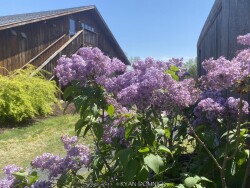
>>>>> Purple Persian Lilac, is also known as Syringa x persica. This lilac has wonderful fragrance and good fall color. The smaller-than-usual growth of this shrub makes it easy to place in the front of a border, or use as a low hedge along the drive or sidewalk.
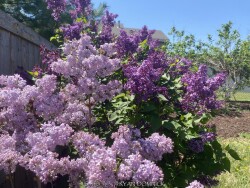
>>>>>Ultra cold-hardy plants from northern climates normally dislike our long hot humid summers; although we are on the Southern edge of this plants adaptability, it still survives reasonably well here. Look for a cold microclimate planting location such as East or North exposure.>>>>>
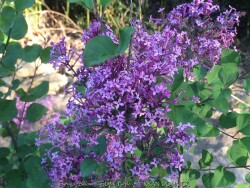
Bloomerang Reblooming Dark Purple Lilac, is also known as Syringa x 'Bloomerang Dark Purple'
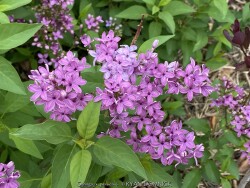
Purple Persian Lilac, is also known as Syringa x persica
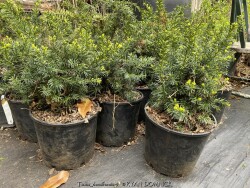
Capitata Upright Pyramidal Yew, is also known as Taxus cuspidata 'Capitata'
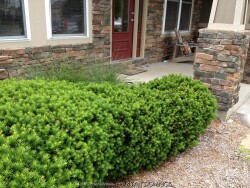
Densiformis Hedge Yew (Taxus x media 'Densiformis') is an evergreen shrub with small flat needle-like dark green leaves. Small red "fruits" form on mature plants with proper pollination and in the absence of pruning. This yew is of hybrid origin along with many varieties ranging from small shrubs to small trees. Taxus x media varieties grow rather slowly and lend themself excellently to being pruned into hedges as long as not too much is taken off at one time. After a plant achieves a certain height, you may keep it that size indefinitely with 3 to 4 times per year pruning. Yews prefer part shade with rich to average well-drained soil and average moisture. Yews planted in the full sun will survive but develop an burnt yellowish green color when temperatures exceed 100°F. This is usually a problem in zone 6 or further south as there are many better choices for full sun (morning sun is okay). In zones 4-5, full sun is probably okay. Yews are best known for their tolerance to dry shade even under root bound conditions. They will not survive more than a couple years under a roof overhang due to lack of moisture in the winter and spider mite problems. In the Eastern and Southeastern United States, Yews have many problems including root rot, insect and disease issues. None of these are a problem in Kansas or Oklahoma with lower rainfall amounts and less humidity. In the landscape, yews offer a year-round structure. They definitely help provide a background for more interesting plants with colorful foliage and flowers. They are also very well known and used in formal garden designs. We prefer to see them less pruned and then there more natural state. A word of caution is that yews are poisonous.
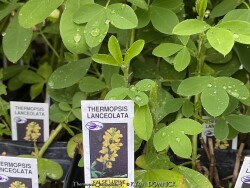
Yellow False Lupine / Lanceleaf Thermopsis, is also known as Thermopsis lanceolata. This plant has beautiful green narrow leaves and black stems on new emerging plants before flowering. Thermopsis lanceolata, the tapered false lupin, is a species of flowering plant in the legume family Fabaceae, native to Russia, Kazakhstan, Mongolia, Nepal and China.
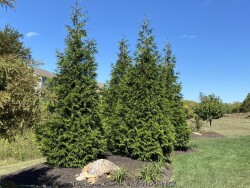
***Tree descriptions available with future update!***
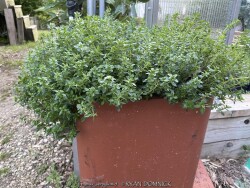
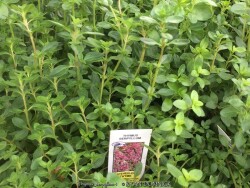
Red Creeping Thyme, is also known as Thymus serpyllum 'Coccineum'
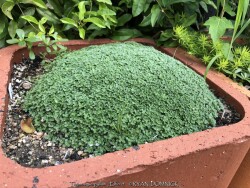
Elfin Miniature Creeping Thyme, is also known as Thymus serpyllum 'Elfin'
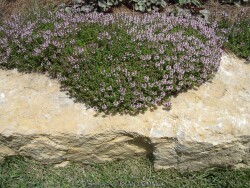
Pink Creeping Thyme, is also known as Thymus serpyllum 'Pink Chintz'
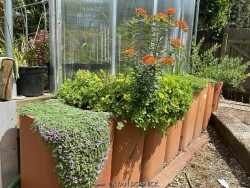
Creeping Thyme (Mixed Varieties), is also known as Thymus sp.
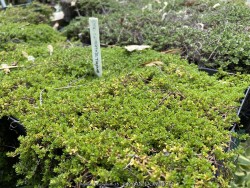
Creeping Thyme (Mixed Varieties) flat, is also known as Thymus sp.
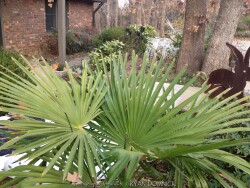
Chinese Windmill Palm (Tropical), is also known as Trachycarpus fortunei
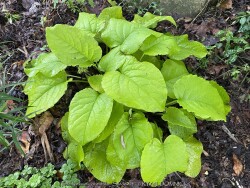
Sundew Oriental Borage / Black Sea Comfrey (Trachystemon orientalis 'Sundew') is a perennial with large textured bright chartreuse leaves with amazing contrasting light blue flowers. It is native from Bulgaria to the Caucasus and Turkey. This variety spreads very slowly by creeping rhizomes and forms an attractive groundcover. Foliage darkens slightly to green in summer and forms a quite dense and tight weed resistant covering. Comfrey prefers rich average to moist well-drained soils with part sun to full shade. However, being a tolerant plant, is very adaptable to both dry and moist locations and will grow quite nicely in dry shade. It is not particular as to soil type or pH. and is highly tolerant of urban pollution and will even thrive in inner city environments. There is virtually no maintenance unless you want to mow down the dead foliage in the winter. It is also suggested to deadhead the flowers after blooming as they are not attractive. But if you don't, they will die back on their own and get swallowed up by the foliage. There are no pest, disease, or browser problems. Considered one of the best plants for solving your most difficult dry-shade landscape challenges. Trachystemon orientalis 'Sundew' has persisted through over a decade in our Lawrence, KS display garden with no problems. Our original display garden plant came from Plant Delights Nursery in North Carolina.
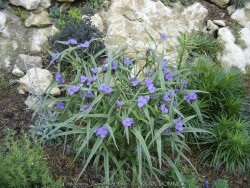
Native Blue Spiderwort, is also known as Tradescantia virginiana
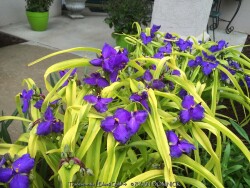
Blue & Gold Spiderwort, is also known as Tradescantia x andersoniana 'Blue and Gold'
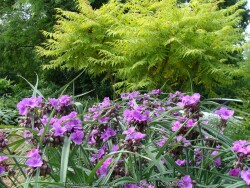
Concord Grape Spiderwort, is also known as Tradescantia x andersoniana 'Concord Grape'
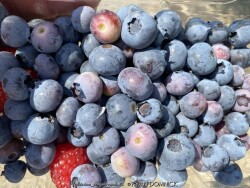
Mixed Highbush Blueberry (Forrest Keeling Hybrids), is also known as Vaccinium corymbosum
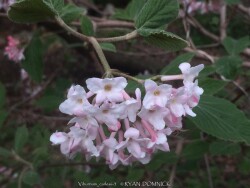
***Shrub descriptions available with future update!***
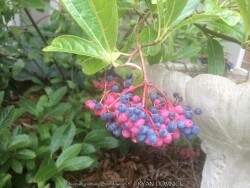
***Shrub descriptions available with future update!***
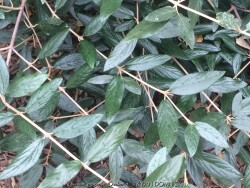
>>>>>Decker Prague Evergreen Viburnum (Viburnum pragense 'Decker') is a hybrid between leatherleaf viburnum and €â€â‚¬â€â‚¬â€â‚¬â€â‚¬â€-The key difference is that Prague viburnum is slightly faster growing and more consistent reliable evergreen foliage. Foliage is more of a green color during the winter and very glossy. Craig viburnum has more narrow denser foliage. It can be easily pruned into a green wall or large hedge for screening.
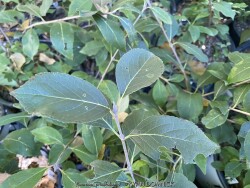
Blackhaw Native Viburnum, is also known as Viburnum prunifolium
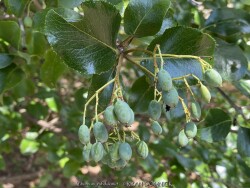
Rusty Blackhaw Native Viburnum, is also known as Viburnum rufidulum
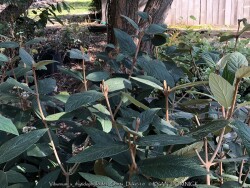
Leatherleaf viburnum is a large semi-evergreen shrub with leathery leaves and cream white flowers. Foliage emerges light green with powdery white material on the backside of the leaf. Foliage darkens to a medium green by summer and finally turning to a purplish winter color. About half of the foliage drops in the winter but is still effective enough for a partial screening. Flowers bloom mostly in spring but sporadically throughout the year. If pollination occurs, red fruits follow in the late summer thru fall creating quite a show. More than one variety is typically required for pollination. Leatherleaf viburnum prefers medium to rich garden soil in full to part sun. Being one of the toughest viburnums around, it can handle much less than ideal conditions including dry shade. Typically our are 40 inches of rainfall per year in eastern Kansas is enough without extra water. However, during times of drought, the foliage will wilt and growth will stop. Luckily the foliage is able to survive in a wilted state for a long time (usually up to two or three weeks) before actually dying. This gives you plenty of notice that it needs water. There is virtually no maintenance except rejuvenation on very old plants. Yearly fertilizer application is appreciated. When given plenty of room to grow, Leatherleaf Viburnum can reach up to 8 or 12 feet tall and wide after 20-30 years. Eventually old canes become unproductive and should be removed allowing young vigorous canes to develop. Leatherleaf viburnum grows slow at first especially in rough soils but the key thing is that it will survive and grow faster when established. Cold hardiness is not a problem in Lawrence Kansas zone 6a but in colder climates expect winterkill down to the ground in some years. Considered one of the best plants for solving your most difficult dry-shade landscape challenges. Several improved cultivars exist. Darts Duke Leatherleaf Viburnum (Viburnum x rhytidophylloides 'Dart's Duke') features larger dark green foliage, larger flowers, better density, and pink cottony flock on the back of new leaves and new stems instead of white. All Proven Winners® plants are legally propagated, healthy and vigorous, true to name, and tagged with color pictures and growing information.
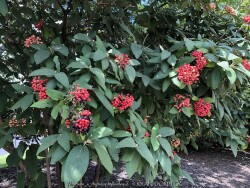
Leatherleaf viburnum is a large semi-evergreen shrub with leathery leaves and cream white flowers. Foliage emerges light green with powdery white material on the backside of the leaf. Foliage darkens to a medium green by summer and finally turning to a purplish winter color. About half of the foliage drops in the winter but is still effective enough for a partial screening. Flowers bloom mostly in spring but sporadically throughout the year. If pollination occurs, red fruits follow in the late summer thru fall creating quite a show. More than one variety is typically required for pollination. Leatherleaf viburnum prefers medium to rich garden soil in full to part sun. Being one of the toughest viburnums around, it can handle much less than ideal conditions including dry shade. Typically our are 40 inches of rainfall per year in eastern Kansas is enough without extra water. However, during times of drought, the foliage will wilt and growth will stop. Luckily the foliage is able to survive in a wilted state for a long time (usually up to two or three weeks) before actually dying. This gives you plenty of notice that it needs water. There is virtually no maintenance except rejuvenation on very old plants. Yearly fertilizer application is appreciated. When given plenty of room to grow, Leatherleaf Viburnum can reach up to 8 or 12 feet tall and wide after 20-30 years. Eventually old canes become unproductive and should be removed allowing young vigorous canes to develop. Leatherleaf viburnum grows slow at first especially in rough soils but the key thing is that it will survive and grow faster when established. Cold hardiness is not a problem in Lawrence Kansas zone 6a but in colder climates expect winterkill down to the ground in some years. Considered one of the best plants for solving your most difficult dry-shade landscape challenges. Several improved cultivars exist. Red Balloon Leatherleaf Viburnum (Viburnum x rhytidophylloides 'Red Balloon') features significant improvements. In spring, large, lacy white flower clusters cover the plant, followed by green fruit which turns brilliant red in late summer. The thick, leathery foliage lends a distinguished, handsome look to the plant all season. This viburnum will develop some berries without another variety as a pollinator, but you'll get more fruit if planted around 'Mohican' or 'Alleghany.' Proven Winners® plants are legally propagated, healthy and vigorous, true to name, and tagged with color pictures and growing information.
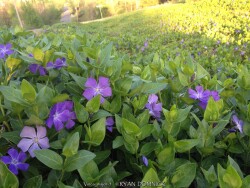
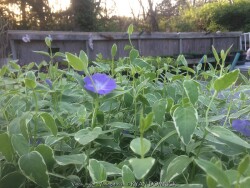
Variegated Vinca Major, is also known as Vinca major 'Variegata'
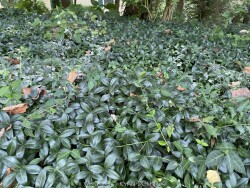
Vinca Minor / Periwinkle is an evergreen groundcover native to central and southern Europe but naturalized and has become invasive in parts of North America. The evergreen leaves are a glossy dark green with a leathery texture. The 5-petal violet-purple flowers are produced mainly from early spring to mid summer but with a few flowers still produced into the autumn. Landscape uses include small scale groundcovers and hillside areas in full to part shade. In full sun, foliage burn occurs in late summer and with slow recovery, weeds find an opportunity to invade. Due to slow spreading growth in our Kansas climate, you shouldn't leave very much room in-between vinca plants or you will be waiting many years for the patch to fill in. Weeds can again be a problem in that open area between plants if spacing is too wide. We recommend 9-12" spacing and use for small nooks in the shade garden. If planning for a larger area, still figure on the tight spacing but allow for a higher budget that you will consider a permanent investment. However, a serious vine stem canker (blight / disease), limits its use in our area and can damage or kill large patches. Good air circulation and limiting night-time irrigation can reduce the prevalence of this disease. Generally this plant declines after a few years of Kansas climate but worth a try in perfect soils in well-tended shade gardens. The canker disease and competition with weeds seem to be an issue. Roundup effectively eraticates patchy leftover remnant growth after disease runs its course when clearing the area for better groundcover species.
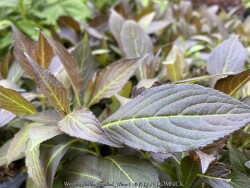
***Shrub descriptions available with future update!***
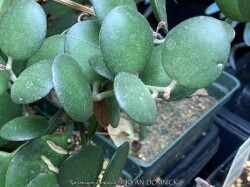
Silver Dollar Plant (Xerosicyos danguyi) are unique because they have perfectly round leaves and vining stems. These tropical vines have a few requirements in order to thrive but nothing too hard. Give them bright indirect light and water only when dry. They are usually grown as a house plant in Kansas but can be moved outside if kept in full to part shade. Leaves can sunburn but morning or filtered sun is ok! Xerosicyos danguyi is native to West and South-West Madagascar. In the wild, this species subarid bushland forest and dunes that occasionally frost. Potted plants are hardy to at least 25 degrees F for a short time if kept dry so you are ok if you miss the first light frost. Do not allow the pot with rootball to freeze solid though. Move into a cold garage, basement, or bright window over the winter with occasional watering. As a winter house plant, it will look presentable all winter long with just a few waterings. Repotting may or may not be needed depending on how large you want the plant to grow; plants can continue to grow in the same pot for years. If repotting, make sure to use a sharp draining medium organic cactus mix with plenty of sand and perlite. To play is safe, outside potted plants are best moved in before night temperatures get below 35 degrees F. It is important to avoid the combination of wet and cold. Potted plants are very low maintenance; I have never seen a pest on this plant. This is relatively rare plant never seen at the big box stores and will command a higher price than most other houseplants.
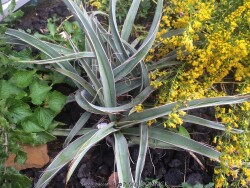
Bluish-green curved leaves from this yucca (Yucca baccata) make an excellent architectural statement. Used as a patio plant in Kansas, place in full sun with no extra watering except from rainfall. Repotting may or may not be needed depending on how large you want the plant to grow. Potted plants are hardy to at least -5 to -15 degrees F if kept dry so you can wait awhile to move these in for the winter. Then move into a cold garage, basement, or bright window over the winter with NO watering. You may also leave this plant outside if under a dry overhang all winter and freeze solid if desired. A suggestion to make this plant a lot more safe around your eyeballs is to clip the new spines off as the new leaves slowly unfurl. It is suggested to buy a large plant to start with as growth is slow. I have never seen this species flower in Kansas, but if it does, the young flower stalks can be cooked and eaten, with the tough outer rind discarded. The fruit can be also be eaten raw or cooked. Yucca baccata occurs in a large area of the North American deserts and exhibits much variation across its range. Yucca baccata specimens we sell are from the higher, mountainous regions of the Rocky Mountains with increased winter hardiness. Having desert heritage, it resents poor drainage and winter moisture. To counteract that in Kansas, plant in full sun on berm or south-facing wall with poor sandy or rocky soil with no irrigation. A large 2-3' wide specimen has flourished in our display garden in Lawrence, KS for over 15 years. It is planted partially under a south facing roof overhang and has survived -16 degrees F and a week of single digit highs in February, 2021. Amazing that a yucca native to areas receiving 4-5" of rain per year can grow in a climate receiving 10 times more rain!
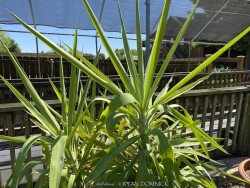
Green sword-like leaves from this yucca (Yucca elephantipes) make an excellent architectural statement. This yucca is native to Mexico and Guatamala but used as a patio plant in Kansas. Place in full sun to part sun with optional extra watering including that which comes from rainfall. Repotting may or may not be needed depending on how large you want the plant to grow; plants can continue to grow taller and tolerate extremely root-bound pots but may need wind bracing. Potted plants are hardy to at least 25 degrees F for a short time if kept dry so you are ok if you miss the first light frost. Do not allow the pot with rootball to freeze solid though. Move into a cold garage, basement, or bright window over the winter with occasional watering. As a winter house plant, it will look presentable all winter long with just a few waterings. Luckily monocarpic flowering will never occur in a potted yucca so you don't have to worry about death after flowering. Potted plants are very low maintenance needing only old leaves trimmed once per year.
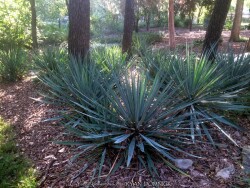
Adam's Needle Yucca (Yucca filamentosa) is a slow-growing broadleaf evergreen perennial. Blue-green leaves form rosettes about 2-3 feet tall and wide. Tall white flower spikes reliably appear on mature plants in May and June. If pollination is successful, attractive seed heads form later turning to black before cracking open. Although yuccas are more typical of western deserts and grasslands, this one is native to central and eastern United States. Tough as nails, yuccas are the ideal plant for a no-maintenance garden. Normally a plant has specific requirements for success but Adam's needle yucca has only one: it cannot tolerate growing in standing water or really wet soil. Plant in full sun to dry shade in any soil! In the landscape yuccas are often seen planted alone by a mailbox or neglected old landscape because they have outlived the original owners and the landscape service life. The root system of decades old plants may take up the underground volume of a large trash can. Yuccas look best when combined with other flowering plants providing texture and color. In mass plantings, yucca can create an interesting architectural look. Combined with ornamental grasses, yuccas can create stunning contrasts with winter grass colors of pink, orange and rust. Yucca flowers are pollinated exclusively by the yucca moth and deserve a place in native plant and pollinator gardens. This is a true 4-season "Once it's there, it's there forever" plant! Considered one of the best plants for solving your most difficult dry-shade landscape challenges.
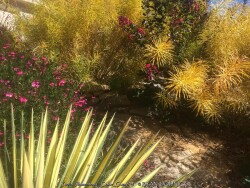
Adam's needle yucca (Yucca filamentosa) is a slow-growing broadleaf evergreen perennial. Blue-green leaves form rosettes about 2-3 feet tall and wide. Tall white flower spikes reliably appear on mature plants in May and June. If pollination is successful, attractive seed heads form later turning to black before cracking open. Although yuccas are more typical of western deserts and grasslands, this one is native to central and eastern United States. Tough as nails, yuccas are the ideal plant for a no-maintenance garden. Normally a plant has specific requirements for success but Adam's needle yucca has only one: it cannot tolerate growing in standing water or really wet soil. Plant in full sun to dry shade in any soil! In the landscape yuccas are often seen planted alone by a mailbox or neglected old landscape because they have outlived the original owners and the landscape service life. The root system of decades old plants may take up the underground volume of a large trash can. Yuccas look best when combined with other flowering plants providing texture and color. In mass plantings, yucca can create an interesting architectural look. Combined with ornamental grasses, yuccas can create stunning contrasts with winter grass colors of pink, orange and rust. Yucca flowers are pollinated exclusively by the yucca moth and deserve a place in native plant and pollinator gardens. This is a true 4-season "Once it's there, it's there forever" plant! Color Guard Yucca (Yucca filamentosa 'Color Guard') is a beautiful variegated variety with a bright yellow stripe down the middle of the leaf. The yellow color turns pinkish red with full winter sun and cold temperatures creating a stunning effect. Landscape designers often count on this variety for winter color!
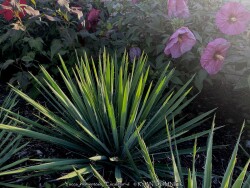
Adam's Needle Yucca (Yucca filamentosa) is a slow-growing broadleaf evergreen perennial. Blue-green leaves form rosettes about 2-3 feet tall and wide. Tall white flower spikes reliably appear on mature plants in May and June. If pollination is successful, attractive seed heads form later turning to black before cracking open. Although yuccas are more typical of western deserts and grasslands, this one is native to central and eastern United States. Tough as nails, yuccas are the ideal plant for a no-maintenance garden. Normally a plant has specific requirements for success but Adam's needle yucca has only one: it cannot tolerate growing in standing water or really wet soil. Plant in full sun to dry shade in any soil! In the landscape yuccas are often seen planted alone by a mailbox or neglected old landscape because they have outlived the original owners and the landscape service life. The root system of decades old plants may take up the underground volume of a large trash can. Yuccas look best when combined with other flowering plants providing texture and color. In mass plantings, yucca can create an interesting architectural look. Combined with ornamental grasses, yuccas can create stunning contrasts with winter grass colors of pink, orange and rust. Yucca flowers are pollinated exclusively by the yucca moth and deserve a place in native plant and pollinator gardens. This is a true 4-season "Once it's there, it's there forever" plant! 'Excalibur' is a beautiful compact bluish variety with lots of attractive curly white filaments on the edge of the leaves.
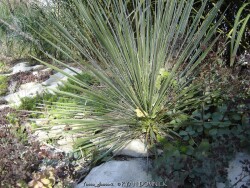
Pale green sword-like leaves from this yucca (Yucca glauca) make an excellent architectural statement with needle-like evergreen foliage. Over time, this yucca will form colonies of evergreen rosettes in its native habitat. Yucca glauca is the most cold-hardy yucca occuring in a large area of the North American great plains and short-grass prairies. The native habitat ranges from Texas to Canada and covers central Kansas predominantly in areas receiving 10-20" of rain per year. Having desert heritage, it resents poor drainage and winter moisture but will usually tolerate normal Eastern Kansas rainfall if planted in full sun on berm or south-facing wall with no extra irrigation. Use is primarily reserved for cactus or xeriscape gardens needing the fine needle-like texture of evergreen foliage and/or where Adam's needle yucca foliage might be too wide. Avoid placing near trees as fall clean-up of leaves can be a problem. Avoid use where children or pets play; needles are sharp and unforgiving! A large 2-3' wide specimen has flourished in our display garden in Lawrence, KS for over 15 years and flowered many times. Flowers are quite attractive and full of medicinal and edible uses for those inclined to learn more. Amazing that a yucca native to areas receiving as little as 10" of rain per year can grow in a climate receiving 40" of rain!
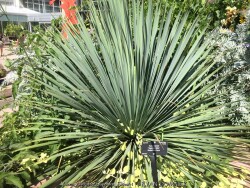
Powder Blue sword-like leaves from this yucca (Yucca rostrata 'Sapphire Skies') make an excellent architectural statement. Used as a patio plant in Kansas, place in full sun with no extra watering except from rainfall. Repotting may or may not be needed depending on how large you want the plant to grow. Potted plants are hardy to at least 0-5 degrees F if kept dry so you can wait awhile to move these in for the winter. Then move into a cold garage, basement, or bright window over the winter with NO watering. Luckily monocarpic flowering will never occur in a potted yucca so you don't have to worry about death after flowering. A suggestion to make this plant a lot more safe around your eyeballs is to clip the new spines off as the new leaves slowly unfurl. These spines are however softer and less dangerous than other yuccas. Although un-tested by the author, this yucca could survive in the ground in a microclimate under a south facing roof overhang kept completely dry in the winter and controlled water in the summer. It is suggested to buy a large plant to start with as growth is extremely slow, about 1-2" height per year. Many yuccas, including this one, may also be grown from rhizomes, stem cuttings, or by digging offsets from the side of established plants. Having desert heritage, it resents poor drainage and winter moisture. To counteract that in Kansas, plant in full sun on berm with poor sandy or rocky soil with no irrigation.
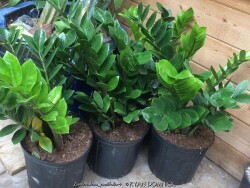
***Description for this plant available with future update!***