

***Description for this perennial available with future update!*** Penstemon pinifolius is also known as Pine-leaf Scarlet Penstemon.

***Description for this perennial available with future update!*** Penstemon x mexicali Red Rocks is also known as Red Rocks Penstemon / Beardtongue.
***Description for this plant available with future update!*** dog-tail cactus
***Description for this plant available with future update!*** dog-tail cactus
***Description for this plant available with future update!*** dog-tail cactus

Russian sage (Perovskia atriplicifolia) is a perfectly well-adapted plant from Afghanistan, Pakistan, and Central Asia. It is the perfect match to hot Kansas summers, cold winters, rocky alkaline soils, and drought. Fine-textured foliage is upright and shrub-like consisting of a mint green to blush green color. Lavender to bluish flowers emerging in mid-summer are extremely long-lasting. In fall, Russian sage foliage dies back with the first hard freeze and becomes a whitish-gray color adding awesome winter interest. Imagine this combined with ornamental grasses or bright winter-colored plants like Color Guard Yucca. The only maintenance is cutting the plant back to you about 6 to 8 inches in the spring. New buds emerge from the root system and lower parts of the woody growth. New cultivars of Russian sage do not spread by rhizomes like the species. Russian sage thrives in dry well-drained soils with plenty of full sun and air circulation. They are suitable for hot west or south exposures, berms, parking lot islands, hell strips along roads, and other inhospitable locations. They tolerate poor soil including rock, sand, clay, and alkalinity. They do not tolerate poor drainage and will be floppy even in part shade. Russian sage flowers are highly attractive to honeybees. There are several improved cultivars with improved blooming, improved growth habit, and elimination of spreading.

Russian sage (Perovskia atriplicifolia) is a perfectly well-adapted plant from Afghanistan, Pakistan, and Central Asia. It is the perfect match to hot Kansas summers, cold winters, rocky alkaline soils, and drought. Fine-textured foliage is upright and shrub-like consisting of a mint green to blush green color. Lavender to bluish flowers emerging in mid-summer are extremely long-lasting. In fall, Russian sage foliage dies back with the first hard freeze and becomes a whitish-gray color adding awesome winter interest. Imagine this combined with ornamental grasses or bright winter-colored plants like Color Guard Yucca. The only maintenance is cutting the plant back to you about 6 to 8 inches in the spring. New buds emerge from the root system and lower parts of the woody growth. New cultivars of Russian sage do not spread by rhizomes like the species. Russian sage thrives in dry well-drained soils with plenty of full sun and air circulation. They are suitable for hot west or south exposures, berms, parking lot islands, hell strips along roads, and other inhospitable locations. They tolerate poor soil including rock, sand, clay, and alkalinity. They do not tolerate poor drainage and will be floppy even in part shade. Russian sage flowers are highly attractive to honeybees. There are several improved cultivars with improved blooming, improved growth habit, and elimination of spreading. Blue Jean Baby Russian Sage (Perovskia atriplicifolia 'Blue Jean Baby') is a wonderful compact, non-spreading, and non-flopping variety. Lavender blue flowers held in smoky purple calyxes bloom for a long period starting in midsummer, with the color from the calyxes extending appeal into fall. Blue Jean Baby a Walters Gardens Inc. introduction.

Russian sage (Perovskia atriplicifolia) is a perfectly well-adapted plant from Afghanistan, Pakistan, and Central Asia. It is the perfect match to hot Kansas summers, cold winters, rocky alkaline soils, and drought. Fine-textured foliage is upright and shrub-like consisting of a mint green to blush green color. Lavender to bluish flowers emerging in mid-summer are extremely long-lasting. In fall, Russian sage foliage dies back with the first hard freeze and becomes a whitish-gray color adding awesome winter interest. Imagine this combined with ornamental grasses or bright winter-colored plants like Color Guard Yucca. The only maintenance is cutting the plant back to you about 6 to 8 inches in the spring. New buds emerge from the root system and lower parts of the woody growth. New cultivars of Russian sage do not spread by rhizomes like the species. Russian sage thrives in dry well-drained soils with plenty of full sun and air circulation. They are suitable for hot west or south exposures, berms, parking lot islands, hell strips along roads, and other inhospitable locations. They tolerate poor soil including rock, sand, clay, and alkalinity. They do not tolerate poor drainage and will be floppy even in part shade. Russian sage flowers are highly attractive to honeybees. There are several improved cultivars with improved blooming, improved growth habit, and elimination of spreading. "Tough as steel! A new seed introduction by PanAm Seed with a sturdy, controlled habit in the landscape. 'Blue Steel' combines the best summer-blooming lavender-blue colour with outstanding late-season garden performance and has aromatic, silvery foliage carrying clouds of small blue flowers on strong silver stems that do not break or split easily. It is very hardy and Heat/drought tolerant." - PanAm Seed

Russian sage (Perovskia atriplicifolia) is a perfectly well-adapted plant from Afghanistan, Pakistan, and Central Asia. It is the perfect match to hot Kansas summers, cold winters, rocky alkaline soils, and drought. Fine-textured foliage is upright and shrub-like consisting of a mint green to blush green color. Lavender to bluish flowers emerging in mid-summer are extremely long-lasting. In fall, Russian sage foliage dies back with the first hard freeze and becomes a whitish-gray color adding awesome winter interest. Imagine this combined with ornamental grasses or bright winter-colored plants like Color Guard Yucca. The only maintenance is cutting the plant back to you about 6 to 8 inches in the spring. New buds emerge from the root system and lower parts of the woody growth. New cultivars of Russian sage do not spread by rhizomes like the species. Russian sage thrives in dry well-drained soils with plenty of full sun and air circulation. They are suitable for hot west or south exposures, berms, parking lot islands, hell strips along roads, and other inhospitable locations. They tolerate poor soil including rock, sand, clay, and alkalinity. They do not tolerate poor drainage and will be floppy even in part shade. Russian sage flowers are highly attractive to honeybees. There are several improved cultivars with improved blooming, improved growth habit, and elimination of spreading. Denim 'n Lace Russian Sage(Perovskia atriplicifolia 'Denim 'n Lace') is a wonderful non-spreading, non-flopping variety. This is the perfect addition to a garden in hot, dry areas. Lacy-like, bright sky blue flowers are held on amethyst calyxes, with strong stems and an upright habit. The beautiful color will last a long time! All Proven Winners® plants are legally propagated, healthy and vigorous, true to name, and tagged with color pictures and growing information.
Russian sage (Perovskia atriplicifolia) is a perfectly well-adapted plant from Afghanistan, Pakistan, and Central Asia. It is the perfect match to hot Kansas summers, cold winters, rocky alkaline soils, and drought. Fine-textured foliage is upright and shrub-like consisting of a mint green to blush green color. Lavender to bluish flowers emerging in mid-summer are extremely long-lasting. In fall, Russian sage foliage dies back with the first hard freeze and becomes a whitish-gray color adding awesome winter interest. Imagine this combined with ornamental grasses or bright winter-colored plants like Color Guard Yucca. The only maintenance is cutting the plant back to you about 6 to 8 inches in the spring. New buds emerge from the root system and lower parts of the woody growth. New cultivars of Russian sage do not spread by rhizomes like the species. Russian sage thrives in dry well-drained soils with plenty of full sun and air circulation. They are suitable for hot west or south exposures, berms, parking lot islands, hell strips along roads, and other inhospitable locations. They tolerate poor soil including rock, sand, clay, and alkalinity. They do not tolerate poor drainage and will be floppy even in part shade. Russian sage flowers are highly attractive to honeybees. There are several improved cultivars with improved blooming, improved growth habit, and elimination of spreading. Lacey Blue Russian Sage (Perovskia atriplicifolia 'Lacey Blue') is a wonderful compact, non-spreading, and non-flopping variety. Lavender blue flowers held in smoky purple calyxes bloom for a long period starting in midsummer, with the color from the calyxes extending appeal into fall. Flowers almost two months from the summer into the fall.
Russian sage (Perovskia atriplicifolia) is a perfectly well-adapted plant from Afghanistan, Pakistan, and Central Asia. It is the perfect match to hot Kansas summers, cold winters, rocky alkaline soils, and drought. Fine-textured foliage is upright and shrub-like consisting of a mint green to blush green color. Lavender to bluish flowers emerging in mid-summer are extremely long-lasting. In fall, Russian sage foliage dies back with the first hard freeze and becomes a whitish-gray color adding awesome winter interest. Imagine this combined with ornamental grasses or bright winter-colored plants like Color Guard Yucca. The only maintenance is cutting the plant back to you about 6 to 8 inches in the spring. New buds emerge from the root system and lower parts of the woody growth. New cultivars of Russian sage do not spread by rhizomes like the species. Russian sage thrives in dry well-drained soils with plenty of full sun and air circulation. They are suitable for hot west or south exposures, berms, parking lot islands, hell strips along roads, and other inhospitable locations. They tolerate poor soil including rock, sand, clay, and alkalinity. They do not tolerate poor drainage and will be floppy even in part shade. Russian sage flowers are highly attractive to honeybees. There are several improved cultivars with improved blooming, improved growth habit, and elimination of spreading. Perovskia atriplicifolia 'Little Spire' is a compact dwarf variety. This is the perfect addition to a garden in hot, dry areas. Lacy-like, bright sky blue flowers are held on amethyst calyxes, with strong stems and an upright habit. The beautiful color will last a long time!

***Description for this water plant available with future update!*** Petasites japonicus is also known as Butterbur / Petasites >>>>>This plant is usually grown as a bog plant needing constantly moist soil rich in organic matter. As a rain garden plant, it will thrive is a depressed area in the landscape that collects rain water from a roof during spring and summer periods of rain but then go dormant if the water hole dries out completely. For the home garden, the species is generally too aggressive to mix with other plants

***Description for this plant available with future update!*** Philodendron hederaceum is also known as Heart-leaf Philodendron (Tropical).

***Description for this plant available with future update!*** Phlebodium / Polypodium pseudoaureum is also known as Rabbits Foot Fern (Tropical).

***Description for this perennial available with future update!*** Phlox divaricata is also known as Woodland Phlox.

***Description for this perennial available with future update!***Blue Creeping Phlox, is also known as Phlox subulata 'Emerald Blue'

***Description for this perennial available with future update!***Red Creeping Phlox, is also known as Phlox subulata 'Red Wing'

***Shrub descriptions available with future update!*** Photenia x fraserii is also known as Fraser's Photenia >>>>>>>>>>>>Repeated or successive cold winters with complete foliage loss seem to be an issue with this and many evergreen zone 6/7 plants. One occasional difficult winter followed by mild winters is more tolerable. This is, however, a very vigorous growing plant so generally will recover in one summer with decent watering and fertilizer.

***Shrub descriptions available with future update!*** Photenia x fraserii 'Pink Marble' is also known as Pink Marble Variegated Photenia >>>>>>>>>>>>Repeated or successive cold winters with complete foliage loss seem to be an issue with this and many evergreen zone 6/7 plants. One occasional difficult winter followed by mild winters is more tolerable. This is, however, a very vigorous growing plant so generally will recover in one summer with decent watering and fertilizer.
***Shrub descriptions available with future update!*** Photenia x fraserii is also known as Fraser's Photenia >>>>>>>>>>>>Repeated or successive cold winters with complete foliage loss seem to be an issue with this and many evergreen zone 6/7 plants. One occasional difficult winter followed by mild winters is more tolerable. This is, however, a very vigorous growing plant so generally will recover in one summer with decent watering and fertilizer. Photinia ‘Scarlet Bliss’ (P. s. ‘Scarlet Bliss’) PPAF is being marketed as more cold hardy so this issue may be less of an issue. Disease resistance is also a key break-thru.
***Description for this perennial available with future update!***Phyla nodiflora is also known as Frogfruit / Turkey Tangle Frogfruit / Lawn alternative

Golden Crookstem Evergreen Bamboo (Phyllostachys aureosulcata 'Aureocaulis') is a cold hardy running bamboo with a distinctive yellow culms. When planted where direct sun can shine on the culms from the south or west, they often develop a bright magenta highlight for a few weeks in the spring. Established bamboo groves provide a beautiful evergreen privacy screen. It provides ultimate wind protection, noise and traffic screening, and a hedge-like barrier. Bamboo is loved for its tropical lush appearance and a proven performance record in cold climates. It offers the only option for dry shade situations that stays green all winter. Bamboo is a great bird and wildlife shelter. You may also create trails through the bamboo grove for kids to play and built forts. Bamboo shoots 1" diameter plus are edible and quite tasty if harvested when under 6" tall and husked like corn. Timber species can obtain a maximum height of 15 to 20 feet may be achieved in 5 to 10 years. Realistic height of 10-15 feet should be expected in Kansas ( zones 5-6 ). Foliage is evergreen to 0 to 5 degrees F. Canes will defoliate at -5 to -10 degrees F. Canes die to the ground at -10 to -15 degrees. Root system will survive up to -25 to -30 degrees F as a perennial especially if mulched. Every few years a grove will experience complete winterkill: it is strongly advised to cut all dead growth to the ground for aesthetic reasons and and fire prevention. In the year after a complete winter-kill event, new growth will only grow back 1/2 as tall as it was before. It is speculated that after loosing all that foliage and biomass, it is only growing with 1/2 as much energy as before and with loss of potential photosynthesis for months in the spring before it is warm enough for new shoots to emerge. In our trial gardens in Lawrence, KS (zone 6a), all plants were killed to the ground but rhizomes survived with new growth by May. During this arctic blast of February, 2021, lows down to -17 degrees F on Feb 16th, 2021 were recorded. The longevity of this cold blast was also impressive: 10 days on a row with highs of 10-15 degrees F or lower, 8 nights of lows in the single digits and negatives, and 36 strait hours of 0 degrees F and mostly lower. As with any running bamboo, it is important to consider future spread. Spread can be controlled in lawn or forested areas by mowing at least twice a month during the months of May, June, and July and once in September. Another method of spread used mainly in China today is the shallow 12" deep sand-filled trench. Every summer, just run a shovel through the trench a few times to sever any escaping rhizomes. Also use this method for easy propagation. To keep bamboo from spreading into other landscape or formal lawn areas, you must install a continuous border around the grove. 14"-16" deep edging is needed for loamy to clay soils; 18-24" deep border is needed for sandy soils. An effective edging material is high-density polyethylene plastic professional rhizome barrier with lots of information available on proper installation techniques.

Lama Temple Crookstem Evergreen Bamboo (Phyllostachys aureosulcata 'Lama Temple') is a cold hardy running bamboo with a distinctive sulfur yellow culms. When planted where direct sun can shine on the culms from the south or west, they often develop a bright cherry-red highlight for a few weeks in the spring. Culm sheaths are more pale and pink than other bamboos. Established bamboo groves provide a beautiful evergreen privacy screen. It provides ultimate wind protection, noise and traffic screening, and a hedge-like barrier. Bamboo is loved for its tropical lush appearance and a proven performance record in cold climates. It offers the only option for dry shade situations that stays green all winter. Bamboo is a great bird and wildlife shelter. You may also create trails through the bamboo grove for kids to play and built forts. Bamboo shoots 1" diameter plus are edible and quite tasty if harvested when under 6" tall and husked like corn. Timber species can obtain a maximum height of 15 to 20 feet may be achieved in 5 to 10 years. Realistic height of 10-15 feet should be expected in Kansas ( zones 5-6 ). Foliage is evergreen to 0 to 5 degrees F. Canes will defoliate at -5 to -10 degrees F. Canes die to the ground at -10 to -15 degrees. Root system will survive up to -25 to -30 degrees F as a perennial especially if mulched. Every few years a grove will experience complete winterkill: it is strongly advised to cut all dead growth to the ground for aesthetic reasons and and fire prevention. In the year after a complete winter-kill event, new growth will only grow back 1/2 as tall as it was before. It is speculated that after loosing all that foliage and biomass, it is only growing with 1/2 as much energy as before and with loss of potential photosynthesis for months in the spring before it is warm enough for new shoots to emerge. In our trial gardens in Lawrence, KS (zone 6a), all plants were killed to the ground but rhizomes survived with new growth by May. During this arctic blast of February, 2021, lows down to -17 degrees F on Feb 16th, 2021 were recorded. The longevity of this cold blast was also impressive: 10 days on a row with highs of 10-15 degrees F or lower, 8 nights of lows in the single digits and negatives, and 36 strait hours of 0 degrees F and mostly lower. As with any running bamboo, it is important to consider future spread. Spread can be controlled in lawn or forested areas by mowing at least twice a month during the months of May, June, and July and once in September. Another method of spread used mainly in China today is the shallow 12" deep sand-filled trench. Every summer, just run a shovel through the trench a few times to sever any escaping rhizomes. Also use this method for easy propagation. To keep bamboo from spreading into other landscape or formal lawn areas, you must install a continuous border around the grove. 14"-16" deep edging is needed for loamy to clay soils; 18-24" deep border is needed for sandy soils. An effective edging material is high-density polyethylene plastic professional rhizome barrier with lots of information available on proper installation techniques.

Bissett Dark Green Evergreen Bamboo (Phyllostachys bissetti) is one of the most cold hardy running bamboo there is. Foliage is bright green with dark green culms. Foliage density is very high. Established Bissett bamboo groves provide the most dense beautiful evergreen privacy screen of the cold hardy bamboos. It provides ultimate wind protection, noise and traffic screening, and a hedge-like barrier. Bamboo is loved for its tropical lush appearance and a proven performance record in cold climates. It offers the only option for dry shade situations that stays green all winter. Bamboo is a great bird and wildlife shelter. You may also create trails through the bamboo grove for kids to play and built forts. Bamboo shoots 1" diameter plus are edible and quite tasty if harvested when under 6" tall and husked like corn. Timber species can obtain a maximum height of 15 to 20 feet may be achieved in 5 to 10 years. Realistic height of 10-15 feet should be expected in Kansas ( zones 5-6 ). Foliage is evergreen to -5 to -8 degrees F. Canes will defoliate at -10 to -15 degrees F. Canes die to the ground at -15 to -20 degrees. Root system will survive up to -30 to -35 degrees F as a perennial especially if mulched. Every few years a grove will experience complete winterkill: it is strongly advised to cut all dead growth to the ground for aesthetic reasons and and fire prevention. In the year after a complete winter-kill event, new growth will only grow back 1/2 as tall as it was before. It is speculated that after loosing all that foliage and biomass, it is only growing with 1/2 as much energy as before and with loss of potential photosynthesis for months in the spring before it is warm enough for new shoots to emerge. In our trial gardens in Lawrence, KS (zone 6a), all plants were killed to the ground but rhizomes survived with new growth by May. During this arctic blast of February, 2021, lows down to -17 degrees F on Feb 16th, 2021 were recorded. The longevity of this cold blast was also impressive: 10 days on a row with highs of 10-15 degrees F or lower, 8 nights of lows in the single digits and negatives, and 36 strait hours of 0 degrees F and mostly lower. As with any running bamboo, it is important to consider future spread. Spread can be controlled in lawn or forested areas by mowing at least twice a month during the months of May, June, and July and once in September. Another method of spread used mainly in China today is the shallow 12" deep sand-filled trench. Every summer, just run a shovel through the trench a few times to sever any escaping rhizomes. Also use this method for easy propagation. To keep bamboo from spreading into other landscape or formal lawn areas, you must install a continuous border around the grove. 14"-16" deep edging is needed for loamy to clay soils; 18-24" deep border is needed for sandy soils. An effective edging material is high-density polyethylene plastic professional rhizome barrier with lots of information available on proper installation techniques.

Ginger Wine® Ninebark (Physocarpus opulifolius 'Ginger Wine') expands the color palette for these easy care, native flowering shrubs. Spring foliage emerges a sunny orange color and matures to sparkling burgundy. Clusters of white flowers cover the plant in late spring, and these age to attractive red seed heads. This disease-resistant shrub does best in full sun locations and cooler climates. Top reasons to grow Ginger Wine® ninebark: 1.Colorful from spring through fall. 2. Native to North America. 3. Very low maintenance: no pruning or deadheading required. Ultra cold-hardy plants from northern climates normally dislike our long hot humid summers; although we are on the Southern edge of this plants adaptability, it still survives reasonably well here. It will not handle extreme drought; the Lawrence KS summer of 2011 and 2012 killed many plants that were not under an irrigation system. Look for a cold microclimate planting location such as East or North exposure but still in full sun. All Proven Winners® plants are legally propagated, healthy and vigorous, true to name, and tagged with color pictures and growing information.

***Description for this perennial available with future update!***Vivid Purple Obedient Plant, is also known as Physostegia virginiana 'Vivid'

***Shrub descriptions available with future update!*** Picea glauca 'Conica' is also known as Dwarf Alberta Spruce >>>>>>>>>>>>Ultra cold-hardy plants from northern climates normally dislike our long hot humid summers; although we are on the Southern edge of this plants adaptability, it still survives reasonably well here. Look for a cold microclimate planting location such as East or North exposure.>>>>>
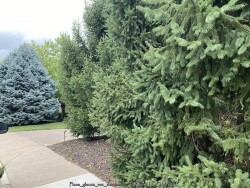
***Tree descriptions available with future update!***
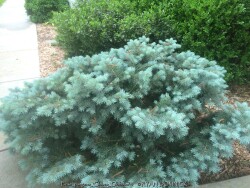
Blue Spruce (Picea pungens) is a truly beautiful and iconic specimen tree rated one of the most popular evergreens! Blue Spruce needles are bluish green with silvery undersides, rigid, and sharply pointed. It is native to the central Rocky Mountains in moist locations from 6000 to 11000 feet in elevation and commonly in ravines. Blue Spruce prefers good airflow, organic soil, and protection from afternoon sun and drying southwestern winds. Because this species is prone to drought and wind desiccation in Kansas, regular year-round watering during dry periods is important for maintaining good overall plant health. Drought tolerance is great however at higher elevations where cool night temperatures prevail. Ultra cold-hardy plants from northern climates normally dislike our long hot humid summers; although we are on the Southern and Eastern edge of this plants adaptability, it still survives reasonably well here. Due to its popularity, mature specimens can be found all throughout Kansas and even in Oklahoma (smaller and stunted). Generally this plant declines after a couple decades of Kansas climate but worth a try in well-cared for garden locations. Growth is slow even in ideal conditions. Look for a cold microclimate planting location such as East or North exposure. In the Kansas landscape, it will provide that classic Colorado mountains landscape theme. Several cultivars exist. Picea pungens 'Glauca Globosa' is an extreme dwarf form growing only 1-2" per year and maxing out at 4-5' after a few decades. The growth form is globular, often grafted on a high or low standard stock. High grafts can sometimes be slightly top-heavy and flop when young so staking is advised. Needle color is intensely silver-blue.
Mugo Pine is a dwarf needled evergreen pine usually ground as a small or large shrub. Native native to high elevation habitats from southern to central Europe, Mugo pine, also called Swiss Mountain Pine, handles plenty of subzero weather hardy down to at least -50. It also has pretty reasonable heat tolerance at least into zone 7. It prefers a rich, well-drained soil but will grow in just about anything including clay as long as it's not waterlogged. Growth rate is extremely variable depending on what cultivar or genetics of the seed grown variety you have. Growth can range from 1 to 15 feet. If needing several plants that will be consistent size, choose a cultivar. In the landscape, it is useful anywhere you need the structure of a needled evergreen shrub. It may also be grown in a raise container year-round as root hardiness will not be a problem in our eastern Kansas zone 6 climate. Maintenance is pretty easy, only needing to watch out for foliage devouring caterpillars and bagworms every so often. After many years, winter pruning is recommended to control size if planted in a tight area. Ultra cold-hardy plants from northern climates normally dislike our long hot humid summers; although we are close to the southern edge of this plants adaptability, it still survives reasonably well here. Look for a cooler microclimate planting location such as East or North exposure. Although not included in our edible plant database, the immature green cones can be picked and eventually dried out to yield drops of sweet tasting syrup and when boiled it is sometimes sold as "pine cone syrup". Obviously, we have not have the time or energy to try this! Much genetic diversity occurs within the species so if needing a specific sized plant, be sure to purchase a named cultivar.

***Tree descriptions available with future update!*** Pinus rigida x taeda is also known as Pitch Loblolly Pine

***Tree descriptions available with future update!*** Pinus taeda is also known as Loblolly Pine

***Tree descriptions available with future update!***>>>>>In Eastern Kansas, this tree species performs WELL with just about everything nature has to challenge it! Extreme heat and drought are tolerated. Cold tolerance is no problem in our zone 6. No disease or pest problems. Great plant for berms, hot West or South exposures, and most any other garden situations in full sun. Will tolerate clay soils and extra moisture in summer. Fall color is variable in the Northern part of its range; sometimes an early frost wipes out the foliage before color can form. Interestingly, Chinese pistache is the only tree to develop fall color in the low deserts of the Southwest and as far South as Orlando, unaffected by heat and not dependant on cool night temperatures. In Stillwater, Oklahoma, chinese pistache would often hold color into December.

American sycamore tree (Plantanus occidentalis) is a beautiful large shade tree native to the eastern half of the United States along river banks, floodplains, and rich wooded areas. It is very easy to spot out a sycamore tree in the forest due to its attractive white peeling bark on older trees. The branching pattern is very picturesque with well shaped "U" branch intersections. The wood is coarse grained and twisted making it resistant to storm damage along with the branch angles. As a result, this tree can grow to enormous proportions. Sycamores tolerate a wide range of growing conditions but prefer moist rich deep soil and floodplains. Drought is tolerated but with a slower growth rate, otherwise growth rate is very rapid. Sycamore anthracnose is a problem during wet cold spring like weather causing trees to sustain twig and leaf damage and fill out very slowly. They almost always outgrow this by June as the weather heats up but can be an issue in the Northern part of the country. Although it's beauty is unmatched, sycamores can be messy at certain times of the year, dropping twigs, seed balls, bark strips, and large leaves. But no tree is perfect right? Sometimes Sycamore is grown for timber production. The wood is highly prized by woodworkers for it's beautiful lustrous texture when polished. Sycamore is best used if you need a decent shade tree in under 10 years but with plenty of room to mature into a large shade tree for future generations. Several improved cultivars now exist.

***Tree descriptions available with future update!*** Plantanus x acerifolia 'Rockford Road' is also known as Rockford Road London Plane Tree

***Description for this perennial available with future update!***Dwarf Blue Balloonflower, is also known as Platycodon grandiflorus 'Sentimental Blue'

***Description for this grass available with future update!***>>>>>To keep bamboo from spreading into other landscape or formal lawn areas, you must install a continuous border around the grove.

Mayapple (Podophyllum peltatum) is a spring growing perennial with large green umbrella like leaves. White five petal flowers appear on mature plants with green "apple-like" fruits to follow. Mayapple is native to rich woodland areas in Kansas, the Midwest, and most of the eastern United States; it needs rich well-drained soils. Mayapple colonizes by rhizomes forming dense slow-spreading mats making this an easy plant to spot from a distance especially in the early spring. Early spring emergence is normally not a problem as foliage resists normal spring frosts. During the April deep freeze of 2007 in Lawrence, KS, temperatures bottomed out at 18°F after an extra warm March. As a comparison, hosta foliage had completely unfurled was killed to the ground but Mayapple foliage had no damage for several days of the cold blast with temperatures down to 22-24°F! Moderate damage occurred on the last night at 18°F but no long term problems persisted. After summer heat and drought sets in usually by mid June, the foliage disappears completely going dormant until the next spring. Because it goes dormant, summer drought is usually not a problem as long as soil is rich in organic matter and moisture-retentive. Fruit-set is uncommon as vegetative growth is the primary method of propagation. A single-leafed stem will not produce a flower that season. A forked stems bearing two leaves will have a tight flower bud nestled at the base of the two petioles and possible fruit if pollinated. Bees seem to do this work, especially queen bumble bees. Blooms occur at a time of year when other pollen sources are rare thus being very valuable for wild-life. Fruit is sweet and edible, however with caution. Usually one or two fruits is safe but toxic if eaten in larger quantities. Usually, raccoons or possums get to the fruit before humans. This native perennial gives a tropical vibe and is valuable for the early spring foliage, flower, and fruit but be prepared for a bare spot during the rest of summer unless you fill in with summer annuals, late emerging perennials, or mulch to stop weed growth.

***Description for this perennial available with future update!***Chinese Mayappple >>>>> ***Description for this perennial available with future update!***

Solomon Seal (Polygonatum sp.) is a very large genus of perennials comprising dozens of species. Many of the species that are appropriate for garden use in Kansas are native to seasonally dry to moist forests in North America and Asia. New growth arises each year from a finger-like slowly spreading rhizome system. The foliage has a central stem with architecturally arranged opposite leaves covering the length of the stem gradually getting smaller towards the end. Small bell-shaped white flowers appear in early spring followed by bluish-purple fruit. Flowers and new spring growth is frost-hardy. Most Solomon seals do well with average garden soils and moisture with many tolerating dry-shade well. Solomon's seal can grow for many years increasing in density without ever needing division. Over time this creates a nearly weed-proof groundcover. in eastern Kansas with 40 inches of rain per year on average, there seems to be plenty of moisture to create extremely healthy patches of Solomon seal that compete well with tree roots. While some species can tolerate sun, there are many better choices as sunburning will likely occur with afternoon sun in temperatures over 95 degrees F. Combine with hostas or other shade plants to create a dramatic effect. Included in our "edibles" database but depends on how hungry you are! Polygonatum biflorum, also known as Smooth solomon's-seal, is native to Kansas and Central U.S. forests in average to moist conditions including dry-shade. It adds a bright splash of light green to the shade garden. Fruiting does occur and desirable self-seeding occurs within the patch. Plants reach heights of 18-24" tall in Kansas. Fall color is a brilliant yellow for a week before going dormant. Maintenance is easy as stems easily detach when raking with fall clean-up. If cosmetic foliage leaf-rust is a problem, just cut back early. During the April deep freeze of 2007, temperatures bottomed out at 18°F after an extra warm March. Hosta and Solomon seal foliage had completely unfurled and was flowering. All hostas were killed to the ground but solomon seal foliage and flowers survived un-damaged! A great "Once it's there, it's there forever" plant for dry-shade!

Solomon Seal (Polygonatum sp.) is a very large genus of perennials comprising dozens of species. Many of the species that are appropriate for garden use in Kansas are native to seasonally dry to moist forests in North America and Asia. New growth arises each year from a finger-like slowly spreading rhizome system. The foliage has a central stem with architecturally arranged opposite leaves covering the length of the stem gradually getting smaller towards the end. Small bell-shaped white flowers appear in early spring followed by bluish-purple fruit. Flowers and new spring growth is frost-hardy. Most Solomon seals do well with average garden soils and moisture with many tolerating dry-shade well. Solomon's seal can grow for many years increasing in density without ever needing division. Over time this creates a nearly weed-proof groundcover. in eastern Kansas with 40 inches of rain per year on average, there seems to be plenty of moisture to create extremely healthy patches of Solomon seal that compete well with tree roots. While some species can tolerate sun, there are many better choices as sunburning will likely occur with afternoon sun in temperatures over 95 degrees F. Combine with hostas or other shade plants to create a dramatic effect. Included in our "edibles" database but depends on how hungry you are! Polygonatum commutatum, also known as Great Solomon's seal, is native to Eastern U.S. forests in average to moist conditions. It adds a bright splash of light green to the shade garden. Fruiting does occur and desirable self-seeding occurs within the patch. Plants reach heights of 24-36" tall in Kansas. Fall color is a brilliant yellow for a week before going dormant. Maintenance is easy as stems easily detach when raking with fall clean-up. If cosmetic foliage leaf-rust is a problem, just cut back early. During the April deep freeze of 2007, temperatures bottomed out at 18°F after an extra warm March. Hosta and Solomon seal foliage had completely unfurled and was flowering. All hostas were killed to the ground but solomon seal foliage and flowers survived un-damaged! A great "Once it's there, it's there forever" plant for dry-shade!

Solomon Seal (Polygonatum sp.) is a very large genus of perennials comprising dozens of species. Many of the species that are appropriate for garden use in Kansas are native to seasonally dry to moist forests in North America and Asia. New growth arises each year from a finger-like slowly spreading rhizome system. The foliage has a central stem with architecturally arranged opposite leaves covering the length of the stem gradually getting smaller towards the end. Small bell-shaped white flowers appear in early spring followed by bluish-purple fruit. Flowers and new spring growth is frost-hardy. Most Solomon seals do well with average garden soils and moisture with many tolerating dry-shade well. Solomon's seal can grow for many years increasing in density without ever needing division. Over time this creates a nearly weed-proof groundcover. in eastern Kansas with 40 inches of rain per year on average, there seems to be plenty of moisture to create extremely healthy patches of Solomon seal that compete well with tree roots. While some species can tolerate sun, there are many better choices as sunburning will likely occur with afternoon sun in temperatures over 95 degrees F. Combine with hostas or other shade plants to create a dramatic effect. Included in our "edibles" database but depends on how hungry you are! Hidden Flower Solomon's Seal (Polygonatum cryptanthum 'Crug') is one of the most attractive solomon seals in our display garden. This species forms a tight clump of slow-spreading rhizomes with bubbly, shiny green foliage 12" tall. Stems feature rows of small, white, clustered bells that do not open fully and are attached just below the leaf intersections. Brilliant blue fruit ripens late summer and fall. Fall color is a brilliant yellow for a week before going dormant. Maintenance is easy as stems easily detach when raking with fall clean-up. If cosmetic foliage leaf-rust is a problem, just cut back early. A great "Once it's there, it's there forever" plant for dry-shade! Rarely available for sale as propagation is slow.

Solomon Seal (Polygonatum sp.) is a very large genus of perennials comprising dozens of species. Many of the species that are appropriate for garden use in Kansas are native to seasonally dry to moist forests in North America and Asia. New growth arises each year from a finger-like slowly spreading rhizome system. The foliage has a central stem with architecturally arranged opposite leaves covering the length of the stem gradually getting smaller towards the end. Small bell-shaped white flowers appear in early spring followed by bluish-purple fruit. Flowers and new spring growth is frost-hardy. Most Solomon seals do well with average garden soils and moisture with many tolerating dry-shade well. Solomon's seal can grow for many years increasing in density without ever needing division. Over time this creates a nearly weed-proof groundcover. in eastern Kansas with 40 inches of rain per year on average, there seems to be plenty of moisture to create extremely healthy patches of Solomon seal that compete well with tree roots. While some species can tolerate sun, there are many better choices as sunburning will likely occur with afternoon sun in temperatures over 95 degrees F. Combine with hostas or other shade plants to create a dramatic effect. Tiny Green Solomon's Seal (Polygonatum humile) is a miniture groundcover solonons seal only 4-8" tall. This cute plant is everything "solomon seal" just miniture! Best growth occurs in average to wet soils in part shade to full shade. Slowly spreading thin rhizomes form a colony in optimum growing conditions. In dry shade, the plant survives but goes dormant by mid-summer paving the way for weeds to come in so avoid these conditions.

Solomon Seal (Polygonatum sp.) is a very large genus of perennials comprising dozens of species. Many of the species that are appropriate for garden use in Kansas are native to seasonally dry to moist forests in North America and Asia. Orange Flowering Climbing Solomon's Seal (Polygonatum kingianum / huanum) is definitely not typical of the genus! This plant has "climbed" above other Solomon seals! New vining growth several feet tall arises each year from a non-spreading rhizome. The foliage has a central stem with architecturally arranged opposite leaves covering the length of the stem gradually getting smaller towards the end. Two tiny hooks are located on the tips of each leaf, helping it to gently cling onto a structure or other plant for support. Elongated bell-shaped flowers appearing in spring are orange with green tips, yes ORANGE! This small "vine-like" plant is a curiosity and specimen plant. Grow in moist, well drained forest soil with average irrigation. This beauty can reach 12' tall but in our Kansas display garden, we are on year 3 (2021) with growth about 3' and increasing each year.

Solomon Seal (Polygonatum sp.) is a very large genus of perennials comprising dozens of species. Many of the species that are appropriate for garden use in Kansas are native to seasonally dry to moist forests in North America and Asia. New growth arises each year from a finger-like slowly spreading rhizome system. The foliage has a central stem with architecturally arranged opposite leaves covering the length of the stem gradually getting smaller towards the end. Small bell-shaped white flowers appear in early spring followed by bluish-purple fruit. Flowers and new spring growth is frost-hardy. Most Solomon seals do well with average garden soils and moisture with many tolerating dry-shade well. Solomon's seal can grow for many years increasing in density without ever needing division. Over time this creates a nearly weed-proof groundcover. in eastern Kansas with 40 inches of rain per year on average, there seems to be plenty of moisture to create extremely healthy patches of Solomon seal that compete well with tree roots. While some species can tolerate sun, there are many better choices as sunburning will likely occur with afternoon sun in temperatures over 95 degrees F. Combine with hostas or other shade plants to create a dramatic effect. Included in our "edibles" database but depends on how hungry you are! Wide-leaf Solomon's Seal (Polygonatum latifolium / hirtum 'Heronswood') is one of the most attractive solomon seals in our display garden. This species forms a tight clump of slow-spreading rhizomes with bubbly, shiny green foliage on stems 12" tall. Stems feature rows of small, white, clustered bells, attached just below the leaf intersections. Brilliant blue fruit ripens late summer and fall. Fall color is a brilliant yellow for a week before going dormant. Maintenance is easy as stems easily detach when raking with fall clean-up. If cosmetic foliage leaf-rust is a problem, just cut back early. A great "Once it's there, it's there forever" plant for dry-shade! Rarely available for sale as propagation is slow.

Solomon Seal (Polygonatum sp.) is a very large genus of perennials comprising dozens of species. Many of the species that are appropriate for garden use in Kansas are native to seasonally dry to moist forests in North America and Asia. New growth arises each year from a finger-like slowly spreading rhizome system. The foliage has a central stem with architecturally arranged opposite leaves covering the length of the stem gradually getting smaller towards the end. Small bell-shaped white flowers appear in early spring followed by bluish-purple fruit. Flowers and new spring growth is frost-hardy. Most Solomon seals do well with average garden soils and moisture with many tolerating dry-shade well. Solomon's seal can grow for many years increasing in density without ever needing division. Over time this creates a nearly weed-proof groundcover. in eastern Kansas with 40 inches of rain per year on average, there seems to be plenty of moisture to create extremely healthy patches of Solomon seal that compete well with tree roots. While some species can tolerate sun, there are many better choices as sunburning will likely occur with afternoon sun in temperatures over 95 degrees F. Combine with hostas or other shade plants to create a dramatic effect. Included in our "edibles" database but depends on how hungry you are! Big Footed Solomon's Seal (Polygonatum macropodum) is the largest and most architectural solomon seal in our display garden. This species forms a tight clump of slow-spreading rhizomes with symmetrical foliage upto 4' long. Stems feature long rows of small, white, clustered bells, attached just below the leaf intersections. Blue fruit ripens late summer and fall. Fall color is a brilliant yellow for a week before going dormant. Maintenance is easy as stems easily detach when raking with fall clean-up. If cosmetic foliage leaf-rust is a problem, just cut back early. During the April deep freeze of 2007, temperatures bottomed out at 18°F after an extra warm March. Hosta and Solomon seal foliage had completely unfurled and was flowering. All hostas were killed to the ground but solomon seal foliage and flowers survived un-damaged! A great "Once it's there, it's there forever" plant for dry-shade! Rarely available for sale as propagation is slow.

Solomon Seal (Polygonatum sp.) is a very large genus of perennials comprising dozens of species. Many of the species that are appropriate for garden use in Kansas are native to seasonally dry to moist forests in North America and Asia. New growth arises each year from a finger-like slowly spreading rhizome system. The foliage has a central stem with architecturally arranged opposite leaves covering the length of the stem gradually getting smaller towards the end. Small bell-shaped white flowers appear in early spring followed by bluish-purple fruit. Flowers and new spring growth is frost-hardy. Most Solomon seals do well with average garden soils and moisture with many tolerating dry-shade well. Solomon's seal can grow for many years increasing in density without ever needing division. Over time this creates a nearly weed-proof groundcover. in eastern Kansas with 40 inches of rain per year on average, there seems to be plenty of moisture to create extremely healthy patches of Solomon seal that compete well with tree roots. While some species can tolerate sun, there are many better choices as sunburning will likely occur with afternoon sun in temperatures over 95 degrees F. Combine with hostas or other shade plants to create a dramatic effect. Included in our "edibles" database but depends on how hungry you are! Medium Green Japanese Solomon's Seal (Polygonatum odoratum) adds a bright splash of light green to the shade garden. Fruiting does not occur on this variety like others. Height is uniformly 18-24" tall. Fall color is a brilliant yellow for a week before going dormant. Maintenance is easy as stems easily detach when raking with fall clean-up. If cosmetic foliage leaf-rust is a problem, just cut back early. During the April deep freeze of 2007, temperatures bottomed out at 18°F after an extra warm March. Hosta and Solomon seal foliage had completely unfurled and was flowering. All hostas were killed to the ground but solomon seal foliage and flowers survived un-damaged! A great "Once it's there, it's there forever" plant for dry-shade!

Solomon Seal (Polygonatum sp.) is a very large genus of perennials comprising dozens of species. Many of the species that are appropriate for garden use in Kansas are native to seasonally dry to moist forests in North America and Asia. New growth arises each year from a finger-like slowly spreading rhizome system. The foliage has a central stem with architecturally arranged opposite leaves covering the length of the stem gradually getting smaller towards the end. Small bell-shaped white flowers appear in early spring followed by bluish-purple fruit. Flowers and new spring growth is frost-hardy. Most Solomon seals do well with average garden soils and moisture with many tolerating dry-shade well. Solomon's seal can grow for many years increasing in density without ever needing division. Over time this creates a nearly weed-proof groundcover. in eastern Kansas with 40 inches of rain per year on average, there seems to be plenty of moisture to create extremely healthy patches of Solomon seal that compete well with tree roots. While some species can tolerate sun, there are many better choices as sunburning will likely occur with afternoon sun in temperatures over 95 degrees F. Combine with hostas or other shade plants to create a dramatic effect. Included in our "edibles" database but depends on how hungry you are! Double Stuff Variegated Solomon's Seal (Polygonatum odoratum 'Double Stuff') grows very slowly and is too weak to be sustainable in our garden: it is only included in our library as an interesting improved variegated type.

Solomon Seal (Polygonatum sp.) is a very large genus of perennials comprising dozens of species. Many of the species that are appropriate for garden use in Kansas are native to seasonally dry to moist forests in North America and Asia. New growth arises each year from a finger-like slowly spreading rhizome system. The foliage has a central stem with architecturally arranged opposite leaves covering the length of the stem gradually getting smaller towards the end. Small bell-shaped white flowers appear in early spring followed by bluish-purple fruit. Flowers and new spring growth is frost-hardy. Most Solomon seals do well with average garden soils and moisture with many tolerating dry-shade well. Solomon's seal can grow for many years increasing in density without ever needing division. Over time this creates a nearly weed-proof groundcover. in eastern Kansas with 40 inches of rain per year on average, there seems to be plenty of moisture to create extremely healthy patches of Solomon seal that compete well with tree roots. While some species can tolerate sun, there are many better choices as sunburning will likely occur with afternoon sun in temperatures over 95 degrees F. Combine with hostas or other shade plants to create a dramatic effect. Included in our "edibles" database but depends on how hungry you are! Ruby Slippers Solomon's Seal (Polygonatum odoratum 'Ruby Slippers') adds a bright splash of light green foliage and ruby-red stems to the shade garden. Height is uniformly 18-24" tall. Fall color is a brilliant yellow for a week before going dormant. Maintenance is easy as stems easily detach when raking with fall clean-up. A great "Once it's there, it's there forever" plant for dry-shade!

Solomon Seal (Polygonatum sp.) is a very large genus of perennials comprising dozens of species. Many of the species that are appropriate for garden use in Kansas are native to seasonally dry to moist forests in North America and Asia. New growth arises each year from a finger-like slowly spreading rhizome system. The foliage has a central stem with architecturally arranged opposite leaves covering the length of the stem gradually getting smaller towards the end. Small bell-shaped white flowers appear in early spring followed by bluish-purple fruit. Flowers and new spring growth is frost-hardy. Most Solomon seals do well with average garden soils and moisture with many tolerating dry-shade well. Solomon's seal can grow for many years increasing in density without ever needing division. Over time this creates a nearly weed-proof groundcover. in eastern Kansas with 40 inches of rain per year on average, there seems to be plenty of moisture to create extremely healthy patches of Solomon seal that compete well with tree roots. While some species can tolerate sun, there are many better choices as sunburning will likely occur with afternoon sun in temperatures over 95 degrees F. Combine with hostas or other shade plants to create a dramatic effect. Included in our "edibles" database but depends on how hungry you are! Variegated Solomon's Seal (Polygonatum odoratum 'Variegatum') adds a bright splash of light green and cream color to the shade garden. Fruiting does not occur on this variety like others. Height is uniformly 18-24" tall. Fall color is a brilliant yellow for a week before going dormant. Maintenance is easy as stems easily detach when raking with fall clean-up. During the April deep freeze of 2007, temperatures bottomed out at 18°F after an extra warm March. Hosta and Solomon seal foliage had completely unfurled and was flowering. All hostas were killed to the ground but solomon seal foliage and flowers survived un-damaged! A great "Once it's there, it's there forever" plant for dry-shade!