

Solomon Seal (Polygonatum sp.) is a very large genus of perennials comprising dozens of species. Many of the species that are appropriate for garden use in Kansas are native to seasonally dry to moist forests in North America and Asia. New growth arises each year from a finger-like slowly spreading rhizome system. The foliage has a central stem with architecturally arranged opposite leaves covering the length of the stem gradually getting smaller towards the end. Small bell-shaped white flowers appear in early spring followed by bluish-purple fruit. Flowers and new spring growth is frost-hardy. Most Solomon seals do well with average garden soils and moisture with many tolerating dry-shade well. Solomon's seal can grow for many years increasing in density without ever needing division. Over time this creates a nearly weed-proof groundcover. in eastern Kansas with 40 inches of rain per year on average, there seems to be plenty of moisture to create extremely healthy patches of Solomon seal that compete well with tree roots. While some species can tolerate sun, there are many better choices as sunburning will likely occur with afternoon sun in temperatures over 95 degrees F. Combine with hostas or other shade plants to create a dramatic effect. Included in our "edibles" database but depends on how hungry you are! Variegated Solomon's Seal (Polygonatum odoratum 'Variegatum') adds a bright splash of light green and cream color to the shade garden. Fruiting does not occur on this variety like others. Height is uniformly 18-24" tall. Fall color is a brilliant yellow for a week before going dormant. Maintenance is easy as stems easily detach when raking with fall clean-up. During the April deep freeze of 2007, temperatures bottomed out at 18°F after an extra warm March. Hosta and Solomon seal foliage had completely unfurled and was flowering. All hostas were killed to the ground but solomon seal foliage and flowers survived un-damaged! A great "Once it's there, it's there forever" plant for dry-shade!

Solomon Seal (Polygonatum sp.) is a very large genus of perennials comprising dozens of species. Many of the species that are appropriate for garden use in Kansas are native to seasonally dry to moist forests in North America and Asia. New growth arises each year from a finger-like slowly spreading rhizome system. The foliage has a central stem with architecturally arranged opposite leaves covering the length of the stem gradually getting smaller towards the end. Small bell-shaped white flowers appear in early spring followed by bluish-purple fruit. Flowers and new spring growth is frost-hardy. Most Solomon seals do well with average garden soils and moisture with many tolerating dry-shade well. Solomon's seal can grow for many years increasing in density without ever needing division. Over time this creates a nearly weed-proof groundcover. in eastern Kansas with 40 inches of rain per year on average, there seems to be plenty of moisture to create extremely healthy patches of Solomon seal that compete well with tree roots. While some species can tolerate sun, there are many better choices as sunburning will likely occur with afternoon sun in temperatures over 95 degrees F. Combine with hostas or other shade plants to create a dramatic effect. Included in our "edibles" database but depends on how hungry you are!

***Description for this perennial available with future update!*** Polystichum acrostichoides is also known as Christmas Fern >>>>>>>>>>>>is planted for its coarse, divided, triangular fronds in a medium green color. Native all continents in the Northern Hemisphere, it forms large colonies in forests with poor to average soil in sun to shade preferring sandy or peaty acidic soils. It colonizes medium to dry woodland areas, fields, old pastures, thickets, areas with disturbed soils, burned-out areas, and marsh edges. It can handle some Kansas drought in slightly acidic moisture-retentive soils but not full-on dry-shade. Foliage finally dies back to the ground in early autumn with "fiddle-heads" emerging and unfurling in mid-spring. Generally this plant holds its own in Kansas climates but fails to spread very quickly. Leaves can depreciate considerably in extremely hot weather and/or too much sun, particularly if soils are allowed to dry out to extremely. Root rot may occur in wet, poorly drained soils. With proper siting, it can be a "Once it's there, it's there forever" plant! I have seen an established planting thriving on the north side of a house for 20 plus years in Lawrence, KS.

Hardy Orange (Poncirus trifoliata) makes an extremely architectural, well-branched, deciduous shrub with numerous thorns reminding me of the Sleeping Beauty Thorn Forest. One of the hardiest close relative of Citrus, Poncirus trifoliata in native to China and Korea. Hardy Orange makes an excellent privacy hedge for background areas away from foot traffic. Although deciduous, plants grow so dense that is virtually impenetrable. Also effective as an accent specimen in the sense of being an interesting and unusual. The root stock is used for grafting in the citrus industry. Growth requirements are simple; plant in almost any soil in full sun to full shade. As for ornamental qualities, these shrubs are covered with aromatic white flowers in spring followed by "edible" green fruits that turn yellowish orange by fall. Fruits of this citrus relative are edible with a strong lemony flavor but are very acidic and seedy. Fruits can used to make marmalade or left on the shrub where they persist well into winter providing significant ornamental interest. Growth is more open in shade with less flowering and fruits. It survived -16 degrees F and a week of single digit highs in February, 2021 after regrowing from the ground. Oklahoma State University in Stillwater, OK once had dozens of sidewalks lined with trifoliate orange pruned into long perfectly shaped 4'x4' rectangular cuboid. The woody growth was so dense that one could stand on top of this hedge; I personally witnessed this with amazement.

Hardy Orange (Poncirus trifoliata 'Flying Dragon') makes an extremely architectural, well-branched, deciduous shrub with numerous thorns reminding me of the Sleeping Beauty Thorn Forest. One of the hardiest close relative of Citrus, Poncirus trifoliata in native to China and Korea. Hardy Orange makes an excellent privacy hedge for background areas away from foot traffic. Although deciduous, plants grow so dense that is virtually impenetrable. Also effective as an accent specimen in the sense of being an interesting and unusual. The root stock is used for grafting in the citrus industry. Growth requirements are simple; plant in almost any soil in full sun to full shade. As for ornamental qualities, these shrubs are covered with aromatic white flowers in spring followed by "edible" green fruits that turn yellowish orange by fall. Fruits of this citrus relative are edible with a strong lemony flavor but are very acidic and seedy. Fruits can used to make marmalade or left on the shrub where they persist well into winter providing significant ornamental interest. Growth is more open in shade with less flowering and fruits. Oklahoma State University in Stillwater, OK once had dozens of sidewalks lined with trifoliate orange pruned into long perfectly shaped 4'x4' rectangular cuboid. The woody growth was so dense that one could stand on top of this hedge; I personally witnessed this with amazement. In our trial gardens in Lawrence, KS (zone 6a), a well established specimen planted 15 years ago survived -17 degrees F with no damage. Poncirus trifoliata 'Flying Dragon' is a beautiful contorted form of this plant that can best be described as a living piece of sculpture with its weaving branches and twisted thorns. Growth is much slower than the species. During the arctic blast of February, 2021, lows down to -17 degrees F on Feb 16th, 2021 were recorded. The longevity of this cold blast was also impressive: 10 days on a row with highs of 10-15 degrees F or lower, 8 nights of lows in the single digits and negatives, and 36 straight hours of 0 degrees F and mostly lower.

***Description for this water plant available with future update!*** Pontederia cordata is also known as Pickerel / Water Plant >>>>>This plant is usually grown as a bog plant needing constantly moist soil rich in organic matter. As a rain garden plant, it will thrive is a depressed area in the landscape that collects rain water from a roof during spring and summer periods of rain but then go dormant if the water hole dries out completely. For the home garden, the species is generally too aggressive to mix with other plants

***Description for this water plant available with future update!***>>>>>Water Hyacinth (Tropical), is also known as Pontederia crassipes

***Description for this plant available with future update!*** Portulaca grandiflora is also known as Mixed Rose Moss (Tropical).

***Description for this plant available with future update!***

***Description for this plant available with future update!*** Portulacaria afra is also known as Elephant Bush (Tropical)>>>>>> Listed as Edible like other members in the portulaca family
***Description for this plant available with future update!*** Portulacaria afra is also known as Elephant Bush (Tropical)>>>>>> Listed as Edible like other members in the portulaca family

***Tree descriptions available with future update!*** Prunus americana is also known as American Plum

***Shrub descriptions available with future update!***Native Edible Sand Plum, is also known as Prunus angustifolia
***Tree descriptions available with future update!***
***Tree descriptions available with future update!***
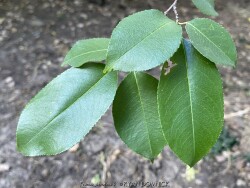
***Tree descriptions available with future update!***

They say life is just a bowl of cherries...and Easy As Pie bush cherry (Prunus x) will give you bowls and bowls of fresh fruit every summer without any spraying or fussy pruning. This is an easy-going, easy-growing bush cherry that takes up just a fraction of the space as a cherry tree but produces abundant crops of very juicy, very tart cherries. It also has none of the disease issues that plague cherry trees, making it an easy choice for any sunny spot in a landscape or garden. Plant one as a standalone, as no pollinator is needed, or imagine an edible hedge with enough fruit for cooking, baking, and canning. White flowers in spring and vivid yellow and orange fall foliage keep it interesting all season long. All Proven Winners® plants are legally propagated, healthy and vigorous, true to name, and tagged with color pictures and growing information.

Bracken Fern (Pteridium aquilinum) is planted for its coarse, divided, triangular fronds in a medium green color. Native to all continents in the Northern Hemisphere, it forms large colonies in forests with poor to average soil in sun to shade preferring sandy or peaty acidic soils. It colonizes medium to dry woodland areas, fields, old pastures, thickets, areas with disturbed soils, burned-out areas, and marsh edges. It can handle some Kansas drought in slightly acidic moisture-retentive soils but not full-on dry-shade. Foliage finally dies back to the ground in early autumn with "fiddle-heads" emerging and unfurling in mid-spring. Generally this plant holds its own in Kansas climates but fails to spread very quickly. Leaves can depreciate considerably in extremely hot weather and/or too much sun, particularly if soils are allowed to dry out to extremely. Root rot may occur in wet, poorly drained soils. With proper siting, it can be a "Once it's there, it's there forever" plant! I have seen an established planting thriving on the north side of a house for 20 plus years in Lawrence, KS.

Lungwort (Pulmonoria saccharata) is planted for its unusual evergreen spekled white and green foliage. Foliage maintains well all summer provided that basic cultural conditions are met. Late spring flowers are a bright and colorful mix of blue, purple, and pink on the same plant changing colors as they age. Flowering last about 3-4 weeks and requires no dead-heading as new foliage swallows up dying flower stalks. Native to Europe, it slowly colonizes forests in humusy, medium well-drained soil in part shade to full shade. It can handle a little Kansas drought in in moisture-retentive soils but not full-on dry-shade. Foliage will flatten to the ground during drought then spring back up when moisture is available again. If low temperatures hit 0 degrees F, foliage finally dies back to the ground and re-emerges in early spring. Generally this plant holds its own in Kansas climates but fails to spread much. Leaves can depreciate considerably in extremely hot weather and/or too much sun, particularly if soils are allowed to dry out. Root rot may occur in wet, poorly drained soils. It is worth a try if you have a small spot to fill in a well-tended shade gardens.

***Description for this plant available with future update!***Hardy Pomegranite (Tropical), is also known as Punica granatum 'Wonderful'

***Description for this perennial available with future update!***Narrow-Leaf Mountain Mint, is also known as Pycanthemum tenuifolium

***Tree descriptions available with future update!*** Quercus acutissima is also known as Sawtooth Oak

***Tree descriptions available with future update!*** Quercus macrocarpa is also known as Bur Oak
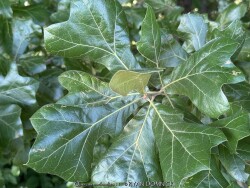
***Tree descriptions available with future update!***

***Tree descriptions available with future update!*** Quercus palustris is also known as Pin Oak

***Tree descriptions available with future update!*** Quercus rubra is also known as Northern Red Oak

***Tree descriptions available with future update!*** Quercus shumardii is also known as Shumard Oak

***Description for this perennial available with future update!*** Quincula / Physalis lobata is also known as Purple Ground Cherry.

***Description for this perennial available with future update!*** Mexican Hat, is also known as Ratibida columnifera

***Description for this perennial available with future update!***Red Mexican Hat, is also known as Ratibida columnifera 'Red'

***Description for this perennial available with future update!***Grey-headed Coneflower, is also known as Ratibida pinnata

***Shrub descriptions available with future update!***Fine Line Columnar Buckthorn, is also known as Rhamnus frangula 'Fine Line'

***Shrub descriptions available with future update!***Fine Line Columnar Buckthorn, is also known as Rhamnus frangula 'Fine Line'

***Shrub descriptions available with future update!***Fine Line Columnar Buckthorn, is also known as Rhamnus frangula 'Fine Line' This item is intended for creating a living fence. Plant 12-18" apart for fastest results. This pack of Fine Line Columnar Buckthorn will cover 8 to 12 linear feet depending on spacing. (Living Fence 8-pack)

***Shrub descriptions available with future update!***Fine Line Columnar Buckthorn, is also known as Rhamnus frangula 'Fine Line'

Needle palm (Rhapidophyllum hystrix) is a very special plant in that it is the world's most cold-hardy palm. Needle palm is native to the lower Southeast US with its original native range probably pushed south during the last Ice Age. This would explain its -20°F cold hardiness rating. Bright green foliage is shiny and fan-like; typical of any fan palm. When grown in a northern climate such as Kansas, growth is pretty slow at first and some winter damage should be expected if temperatures drop below -5 degrees F. It is advisable to mulch the crown of a newly planted Needle Palm with 6 to 8 inches of mulch for the first few years. Established plants get about 3 to 4 feet tall after 10-20 years. Needle Palms tolerate excessive moisture and rain gardens but prefer rich well-drained soil. Needle palm grow in full sun to full shade (much slower growth).They are also notably drought tolerant if grown in full sun but not in dry shade. They do need a hot and humid (Kansas) summer to build up stored energy for the next winter. There have been problems in the Eastern United States with crown-rot from winter moisture but generally in Kansas with pretty dry winters, this has not been a problem. Useful in the landscape as a tropical looking evergreen specimen plant. Unlike other Evergreens, needle palm maintains bright green foliage, not dingy olive green like many conifers. Combine with just about any other flowering plants and most garden themes. This true palm, however, is a must for any tropical theme garden. Mix with hardy banana (Musa basjoo), canna, or crinum lily! Rhapidophyllum hystrix has been planted in our trial gardens and at several residential gardens in Lawrence, KS (zone 6a) 10-15 years ago. During the arctic blast of February, 2021, lows down to -17 degrees F on Feb 16th, 2021 were recorded. The longevity of this cold blast was also impressive: 10 days on a row with highs of 10-15 degrees F or lower, 8 nights of lows in the single digits and negatives, and 36 straight hours of 0 degrees F and mostly lower. Minimal foliage damage resulted on established plants, more damage occured on small plants but they recovered by mid-summer.

Needle palm (Rhapidophyllum hystrix) is a very special plant in that it is the world's most cold-hardy palm. Needle palm is native to the lower Southeast US with its original native range probably pushed south during the last Ice Age. This would explain its -20°F cold hardiness rating. Bright green foliage is shiny and fan-like; typical of any fan palm. When grown in a northern climate such as Kansas, growth is pretty slow at first and some winter damage should be expected if temperatures drop below -5 degrees F. It is advisable to mulch the crown of a newly planted Needle Palm with 6 to 8 inches of mulch for the first few years. Established plants get about 3 to 4 feet tall after 10-20 years. Needle Palms tolerate excessive moisture and rain gardens but prefer rich well-drained soil. Needle palm grow in full sun to full shade (much slower growth).They are also notably drought tolerant if grown in full sun but not in dry shade. They do need a hot and humid (Kansas) summer to build up stored energy for the next winter. There have been problems in the Eastern United States with crown-rot from winter moisture but generally in Kansas with pretty dry winters, this has not been a problem. Useful in the landscape as a tropical looking evergreen specimen plant. Unlike other Evergreens, needle palm maintains bright green foliage, not dingy olive green like many conifers. Combine with just about any other flowering plants and most garden themes. This true palm, however, is a must for any tropical theme garden. Mix with hardy banana (Musa basjoo), canna, or crinum lily! Rhapidophyllum hystrix has been planted in our trial gardens and at several residential gardens in Lawrence, KS (zone 6a) 10-15 years ago. During the arctic blast of February, 2021, lows down to -17 degrees F on Feb 16th, 2021 were recorded. The longevity of this cold blast was also impressive: 10 days on a row with highs of 10-15 degrees F or lower, 8 nights of lows in the single digits and negatives, and 36 straight hours of 0 degrees F and mostly lower. Minimal foliage damage resulted on established plants, more damage occured on small plants but they recovered by mid-summer.

***Shrub descriptions available with future update!*** Rhodotypos scandens is also known as Black Dry-Shade Jetbead.

***Shrub descriptions available with future update!*** Rhus aromatica is also known as Dry Shade Fragrant Sumac.

Gro-low sumac (Rhus aromatica 'Gro-low') is a dwarf spreading cultivar of Rhus aromatica native to much of the central United States including Kansas. It features bright green leaves that turn brilliant red in the fall. Light yellow flowers and occasional red berries are also ornamental features. This sumac is commonly grown as a spreading groundcover shrub for difficult areas. It will grow in full sun or full shade in medium to dry soils including dry-shade. However, fall color is quite a bit reduced in full shade. In the landscape, it is commonly used as large mass planting on hills. Because of its tolerance for adverse conditions including poor soil and rock, it is often one of the last resort plants that will survive in certain areas. It competes well under large shade trees and helps absorb leaf litter allowing it to break down and add nutrients back to the soil. It is important to keep on the dry side to discourage root rot disease. This plant also does well in hot dry parking lot islands or along busy roads. Plants adapt well to hot south or west sides of the house enduring temperatures of over 100 degrees F with no foliage burn. Plants can also be planted on the north side of a house being extremely cold hardy with no winterkill. Another great spot is planting on top of a retaining wall allowing it to cascade down. We do not recommend planting in small areas or in spaces that it will overrun neighboring plants. Unlike other sumac, it only spreads above ground as horizontally growing stems touch the ground and root. This does make maintenance easier to control the spread of the plant versus digging out rhizomes. Considered one of the most versatile and best plants for solving your most difficult landscape challenges.

Gro-low sumac (Rhus aromatica 'Lacette') is a dwarf spreading cultivar of Rhus aromatica native to much of the central United States including Kansas. It differs from "Gro-low' with its fine textured leaves. It features bright foliage that turn brilliant red in the fall. Light yellow flowers and occasional red berries are also ornamental features. This sumac is commonly grown as a spreading groundcover shrub for difficult areas. It will grow in full sun or full shade in medium to dry soils including dry-shade. However, fall color is quite a bit reduced in full shade. In the landscape, it is commonly used as large mass planting on hills. Because of its tolerance for adverse conditions including poor soil and rock, it is often one of the last resort plants that will survive in certain areas. It competes well under large shade trees and helps absorb leaf litter allowing it to break down and add nutrients back to the soil. It is important to keep on the dry side to discourage root rot disease. This plant also does well in hot dry parking lot islands or along busy roads. Plants adapt well to hot south or west sides of the house enduring temperatures of over 100 degrees F with no foliage burn. Plants can also be planted on the north side of a house being extremely cold hardy with no winterkill. Another great spot is planting on top of a retaining wall allowing it to cascade down. We do not recommend planting in small areas or in spaces that it will overrun neighboring plants. Unlike other sumac, it only spreads above ground as horizontally growing stems touch the ground and root. This does make maintenance easier to control the spread of the plant versus digging out rhizomes. Considered one of the most versatile and best plants for solving your most difficult landscape challenges.

***Shrub descriptions available with future update!*** Rhus glabra is also known as Smooth Sumac >>>>>>>>>>>>>Smooth Sumac (Rhus glabra) features bright green leaves that turn brilliant red in the fall. Light yellow flowers and occasional red berries are also ornamental features.>>>>>>It will thrive in full sun in medium to bone dry soils. In the landscape, it is commonly used as large mass planting on hills and berms. Because of its tolerance for adverse conditions including poor soil and rock, it is often one of the last resort plants that will survive in certain areas. This plant also does well in hot dry parking lot islands (hell-strips) or along busy roads. Plants adapt well to hot south or west sides of the house enduring temperatures of over 100 degrees F with no foliage burn. Another great spot is planting on top of a retaining wall allowing it to cascade down. We do not recommend planting in small areas or in spaces that it will overrun neighboring plants. Avoid potentially poorly drained areas or root-rot will occur. >>>>>>>>>Rough-leaf dogwood is a suckering shrub or rarely a small tree to 15 ft. It is native woodland edges and tall-grass prairie ravines in Kansas olong with the Great Plains and Midwestern regions of the United States. This dogwood is easily recognized by the rough, upper leaf surfaces with flat-topped clusters of creamy-yellow flowers and white fruit on reddish brown or gray twigs. Fall color is purplish-red. Cream-white flowers about 1/4 inch wide, with 4 petals characteristic of all dogwoods. Numerous flowers are in broad clusters at the ends of branches, appearing from April to early June. White fruit then appears in late summer and early fall. A favorite of many wild birds, the fruit is usually stripped clean within a couple weeks. It spreads from root sprouts and provides cover for wildlife and erosion control along ditches. Other uses of roughleaf dogwood include buffer strip around parking lots, highway medians, dust screens along country roads, and naturalizing. It will grow in full sun or full shade in medium to dry soils including dry-shade. However, fall color is quite a bit reduced in full shade. Because of its tolerance for adverse conditions including poor soil and rock, it is often one of the last resort plants that will survive in certain areas. For the home garden, the species is generally too aggressive to mix with other plants especially when irrigated and growing in rich soil. However, in a difficult dry-shade garden, it will thrive, flower, and be relatively tame with little spreading.

***Shrub descriptions available with future update!***Cutleaf Staghorn Sumac, is also known as Rhus typhina 'Lanciniata'

When Tiger Eyes® sumac (Rhus typhina 'Tiger Eyes') was released, it shocked the horticulture world with unseen beauty. It started as a random mutation from cutleaf staghorn sumac (Rhus typhina 'Laciniata') that was successfully propagated. Foliage emerges in spring as a lovely chartreuse color tinged with pink new growth and contrasting leaf petioles. Growth matures to a bright yellow golden color throughout the summer. By October, especially before and around Halloween, foliage turns bright orange with hints of red. Foliage quickly freezes and drops off for the year when temperatures reach 30 degrees F. The overall architectural shape of the shrub is attractive in winter often looking like a deciduous bonsai tree up to 6 feet tall. While the original species, staghorn sumac (R. typhina), is highly aggressive and considered invasive in the garden, the Tiger Eyes cultivar (lacking as much chlorophyll) is quite a bit less aggressive from rhizomes. Some spreading will occur each year and can be clipped off with no further efforts by the plant to spread until the following year. However if soil conditions are rich and moist, some spreading can still occur. This also makes the plant more susceptible to verticillium wilt so it's best to just avoid these kind of pampered garden conditions. We recommend planting Tiger Eyes sumac on berms, tops of retaining walls and/or non-irrigated gardens in poor/dry soils. Another good micro-climate is the hot South or West side of a house; heat and drought are never an issue with no foliage burn in our zone 6a garden of Eastern Kansas. During some years with excessive humidity and rainfall, foliage can become diseased and drop off before fall color can develop but this does not seem to hurt the plant. This problem is usually avoided if planting in good air circulation in full sun or on top of a berm. Another point of advice with Tiger Eyes sumac is to allow a few nearby shoots from the root system to grow and eventually replace the mother plant. Individual top growths will usually last about 5 to 7 years before declining and dying. A plant in our display gardens has survived 15 years using this previously described method. Nowadays, there are several different ornamental shrub choices for gold summer color and while tiger eyes sumac was one of the first, it is still a great choice. Rhus typhina 'Bailtiger' TIGER EYES® if offered for sale, are original (non-propagated) plants from Bailey Nurseries Inc.

***Shrub descriptions available with future update!***

Missouri Gooseberry (Ribes missouriense) is a spreading shrub native to the north central United States including Kansas. It features green leaves that remain attractive all summer. Light yellow to whitish-green flowers are noticeable and attractive upon close inspection. Green semi-translucent berries develop in summer and ripen to a purplish-black color by late summer and early fall. Tart berries are attractive and highly edible when eaten fresh or baked into pies. Any fruits not eaten by humans are harvested by wildlife. Fall color is reddish-orange and will occur in sun or shade. This shrub eventually grows into a dense thicket 3-5' tall with small thorns or prickles. It will grow in part sun or full shade in medium to dry soils including dry-shade. In the landscape, it is commonly used as background planting on a hill or along a fence. It also makes a great barrier shrub naturally discouraging trespassers. Because of its tolerance for adverse conditions including poor soil and rock, it is often one of the last resort plants that will survive in certain areas especially in the worst of all dry-shade areas. It competes well under large shade trees and helps absorb leaf litter allowing it to break down and add nutrients back to the soil. Plants can also be planted on the Northside of a house, being extremely cold hardy with no winterkill. We do not recommend planting in small areas or in spaces that will overrun neighboring plants. It can spread by shallow horizontally growing roots but not very far. It will grow in moist rich soils but will spread quite a bit faster and grow taller. (and produce more fruit) You'll have to decide if that's desirable or not for your planting location. I have seen this plant growing exclusively in heavily shaded rocky outcroppings around Clinton lake near Lawrence Kansas with almost no other plants growing there except Coralberry(Symphoricarpos orbiculatus). Considered one of the best plants for solving your most difficult dry-shade landscape challenges.

Castor Bean (Ricinus communis) is a giant annual grown for its large star shaped leaves and highly ornamental summer flowers and spiky seed pods. Being one of the fastest growing plants, it will germinate from a seed and can reach 5 feet tall in one month. Ultimate height at the end of the season is usually 8 to 12 feet. Growth rate, however, is directly proportional to available water and soil quality. In poor dry soil areas, a height of 3 feet may be achieved with some flowering by fall. In the landscape, this amazing annual can be used for lots of coverage is needed quick. Maintenance is considered medium. Staking by mid-summer may be necessary to prevent plants from blowing over. All dead foliage should be removed right before or promptly after the first fall freeze. At that time, seeds can be clipped off and immediately planted if you would like castor beans to return next spring. Seeds may also be harvested and stored and will not survive winter outside unless planted or covered by a deep layer of mulch. If planting seed in the spring, wait till soil warms up in early May. Seeds germinate quickly and extremely easily with almost no effort. Castor Bean plants do not easily overwinter indoors as a house plant due to their need for tropical growing conditions and high humidity. Another word of caution is that castor bean seeds are extremely toxic. However there is almost never any poisonings because the seed tastes so bad if chewed that anyone in their right mind would spit it out. Seeds that are swallowed whole usually survive the digestive system and not cause poisoning. The plant itself is not very toxic so there is no reason not to grow it. If you are concerned about the beans, or you have small children, just cut off and dispose of the flowers after they bloom and before seeds ripen. You'll have plenty of time (1-2 months) before the bright red spiky seed pods open and turn brown. Purple Castor Bean (Ricinus communis 'Carmencita Bright Red') features bright reddish-purple foliage and dark red seed pods. Overall size is smaller with slower growth rate.

Castor Bean (Ricinus communis) is a giant annual grown for its large star shaped leaves and highly ornamental summer flowers and spiky seed pods. Being one of the fastest growing plants, it will germinate from a seed and can reach 5 feet tall in one month. Ultimate height at the end of the season is usually 8 to 12 feet. Growth rate, however, is directly proportional to available water and soil quality. In poor dry soil areas, a height of 3 feet may be achieved with some flowering by fall. In the landscape, this amazing annual can be used for lots of coverage is needed quick. Maintenance is considered medium. Staking by mid-summer may be necessary to prevent plants from blowing over. All dead foliage should be removed right before or promptly after the first fall freeze. At that time, seeds can be clipped off and immediately planted if you would like castor beans to return next spring. Seeds may also be harvested and stored and will not survive winter outside unless planted or covered by a deep layer of mulch. If planting seed in the spring, wait till soil warms up in early May. Seeds germinate quickly and extremely easily with almost no effort. Castor Bean plants do not easily overwinter indoors as a house plant due to their need for tropical growing conditions and high humidity. Another word of caution is that castor bean seeds are extremely toxic. However there is almost never any poisonings because the seed tastes so bad if chewed that anyone in their right mind would spit it out. Seeds that are swallowed whole usually survive the digestive system and not cause poisoning. The plant itself is not very toxic so there is no reason not to grow it. If you are concerned about the beans, or you have small children, just cut off and dispose of the flowers after they bloom and before seeds ripen. You'll have plenty of time (1-2 months) before the bright red spiky seed pods open and turn brown. Purple Castor Bean (Ricinus communis 'New Zealand Purple') features bright purple foliage and dark red seed pods.

Chinese Sacred Lily (Rohdea japonica) is a tropical-looking evergreen herbaceous perennial native to China and Japan. They are considered the ultimate dry-shade plant for eastern Kansas landscapes. They have everything a gardener might ask for; dependable dark green foliage, colorful red long-lasting fruits, evergreen during winter, and ease of care with very low maintenance. Evergreen foliage is daylily-like and hardy to about -10°F. If it gets colder than that, rohdea will be deciduous with no detrimental effects. The red fruits in the crowns of established plants persist many months through the winter! Rohdeas are also not the best choice for full sun. While they will survive, they will get foliage burn in the summer when over 100°F in afternoon sun. With poisonous foliage, these plants resist deer and rabbit browsing. Rohdea tolerates most soils except for poorly drained ones. Growth is quite slow with young plants but speeds up with establishment and rich soils with regular water. Established plants have thrived in our Lawrence Kansas zone 6a display garden for over 15 years enduring temperatures as low as -18°F. and periods with many days in a row in the single digits and negative low temps. Repeated or successive cold winters with complete foliage loss can be an issue with this and many evergreen zone 6/7 plants. One occasional difficult winter followed by mild winters is more tolerable. It's tolerance for deep shade makes up for this though. What a great plant for the dry shade garden!

Chinese Sacred Lily (Rohdea japonica) is a tropical-looking evergreen herbaceous perennial native to China and Japan. They are considered the ultimate dry-shade plant for eastern Kansas landscapes. They have everything a gardener might ask for; dependable dark green foliage, colorful red long-lasting fruits, evergreen during winter, and ease of care with very low maintenance. Evergreen foliage is daylily-like and hardy to about -10°F. If it gets colder than that, rohdea will be deciduous with no detrimental effects. The red fruits in the crowns of established plants persist many months through the winter! Rohdeas are also not the best choice for full sun. While they will survive, they will get foliage burn in the summer when over 100°F in afternoon sun. With poisonous foliage, these plants resist deer and rabbit browsing. Rohdea tolerates most soils except for poorly drained ones. Growth is quite slow with young plants but speeds up with establishment and rich soils with regular water. Established plants have thrived in our Lawrence Kansas zone 6a display garden for over 15 years enduring temperatures as low as -18°F. and periods with many days in a row in the single digits and negative low temps. Repeated or successive cold winters with complete foliage loss can be an issue with this and many evergreen zone 6/7 plants. One occasional difficult winter followed by mild winters is more tolerable. It's tolerance for deep shade makes up for this though. What a great plant for the dry shade garden! Rohdea japonica 'Variegata' is a beautiful variegated variety with dark green and yellow stripes; very dramatic in winter!